
New Database Boosts Subsurface Energy Storage for Natural Gas
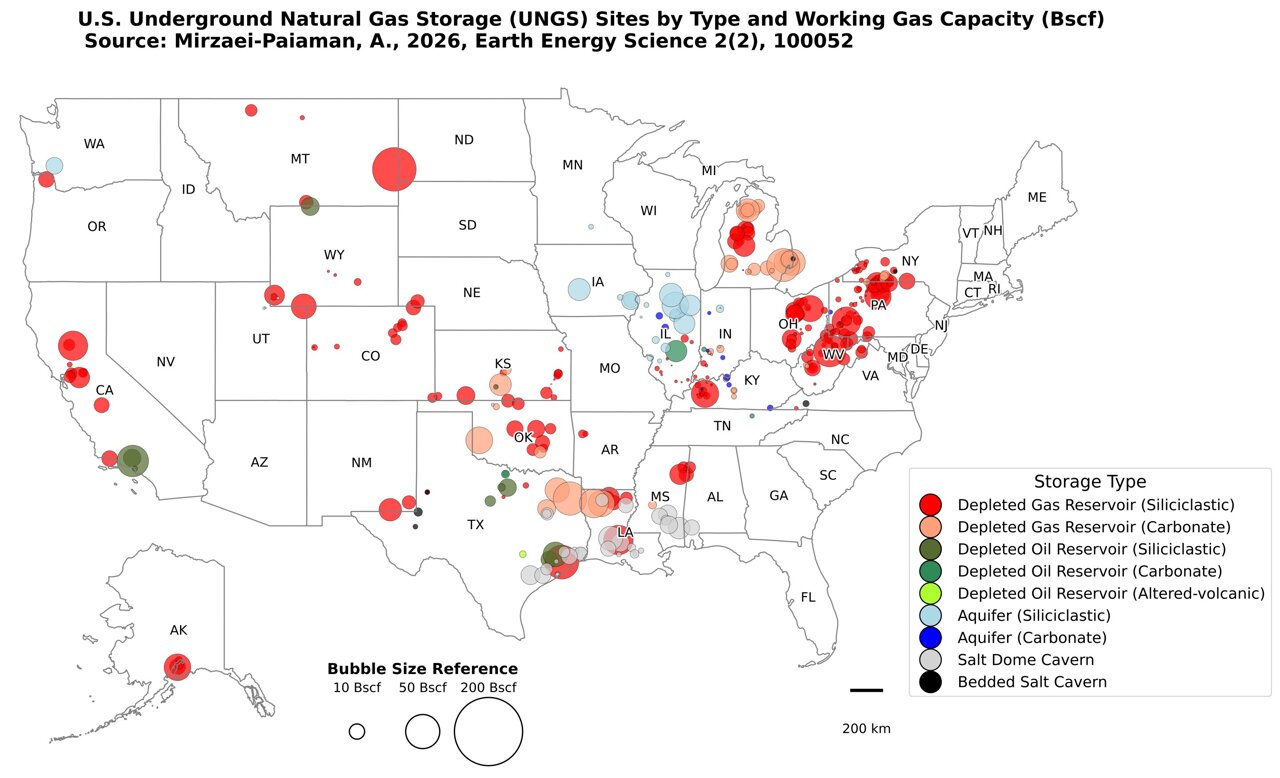
New Analysis Offers Insights into Underground Natural Gas Storage
Researchers at the University of Texas at Austin have developed a groundbreaking analysis of underground natural gas storage sites across the United States. This study provides essential insights that can guide future expansion of natural gas storage capacity, optimize existing facilities, and support the development of emerging industries such as hydrogen and carbon storage.
The study, titled "Geoscience-Informed Evaluation of U.S. Natural Gas Storage Reservoirs, Aquifers, and Salt Caverns," was published in the journal Earth Energy Science. It marks the first comprehensive effort to combine geological assessments, reservoir engineering, and operational data from the nationwide network of underground storage systems that serve the country's energy needs.
Abouzar Mirzaei Paiaman, a research assistant professor at the Bureau of Economic Geology at the UT Jackson School of Geosciences, emphasized the importance of this database for companies aiming to expand natural gas storage systems. He stated:
"This database and the insights derived from it can be used to screen and identify the most suitable candidates for gas storage. We have ranked facilities using a range of performance metrics, creating a valuable resource that helps pinpoint the most promising locations for expanding existing storage operations or developing new gas storage projects."
A Vast System Under Strain
The United States possesses the largest underground natural gas storage and pipeline system globally. This network includes nearly 400 underground storage facilities located in depleted oil and gas reservoirs, saline aquifers, and engineered solution-mined salt caverns. These facilities collectively have a storage capacity of approximately 9.2 trillion cubic feet. For context, the U.S. consumes about 92 billion cubic feet of natural gas daily.
Given the sheer volume of natural gas used in the country, underground storage in large geological structures is the only feasible way to ensure a readily available supply. This necessity underscores the importance of maintaining and optimizing these storage systems.
Turning Scattered Records into a Tool
The new study builds upon and significantly expands two existing databases: one maintained by the U.S. Energy Information Administration and another by the U.S. Pipeline and Hazardous Materials Safety Administration. While these databases provide basic facility-level information, Mirzaei Paiaman and his team took the analysis further by compiling detailed geological, subsurface, and operational data for underground gas storage facilities across the country.
The integrated database offers a more comprehensive and valuable resource for gas storage engineering, enabling analyses that were previously not possible using publicly available datasets alone, according to researchers.
Mark Shuster, deputy director of the bureau's energy division, highlighted the significance of the study:
"Underground geological storage in depleted fields, saline aquifers, and engineered salt caverns are the only viable options that provide the storage capacity for a system that stretches across the country supplying natural gas to industry, and commercial and residential users. This study provides insights on the geological, engineering, and operational attributes of the different storage types to provide a straightforward framework to inform developing new underground storage or repurposing existing storage."
Extending Storage Beyond Natural Gas
Beyond natural gas, the researchers noted that the new database can be utilized by companies interested in storing other energy sources and greenhouse gases. This includes hydrogen, a carbon-free fuel source, or CO₂, which could be permanently stored underground to reduce atmospheric emissions.
The study was supported by the State of Texas Advanced Resource Recovery program, a research initiative focused on maximizing the responsible production and profitability of earth resources in Texas.
Ongoing related research includes:
- Studying the integration of hydrogen storage with natural gas storage
- Developing strategies for improving the performance and use of existing storage facilities
- Evaluating the use of alternative gases as "cushion gas" in existing and future natural gas storage facilities
About half of the country's stored natural gas is considered "cushion gas," which is gas that is permanently stored to maintain sufficient pressure in the underground reservoir so the other half can be accessed when needed. Replacing it with CO₂, for example, could free up more natural gas for beneficial use while providing a way to trap CO₂ underground.
Additional Information
For more details, refer to the following publication:
- Abouzar Mirzaei-Paiaman, Geoscience-informed evaluation of U.S. natural gas storage reservoirs, aquifers and salt caverns, Earth Energy Science (2026). DOI: 10.1016/j.ees.2026.100052
This research was conducted by the University of Texas at Austin and has been shared through various platforms.
Post a Comment for "New Database Boosts Subsurface Energy Storage for Natural Gas"