
Satellite Rescue Mission to NASA Observatory Delayed
The Mission to Save a Satellite
A groundbreaking mission aimed at saving an aging U.S. satellite observatory has been indefinitely postponed due to weather and technical issues. NASA, in collaboration with Katalyst Space Technologies, had planned to use a robot spacecraft to tow the Neil Gehrels Swift Observatory into a safer orbit. This mission was seen as a critical test of orbital-grappling technology, with significant implications for both the commercial satellite industry and the U.S.-China space race.
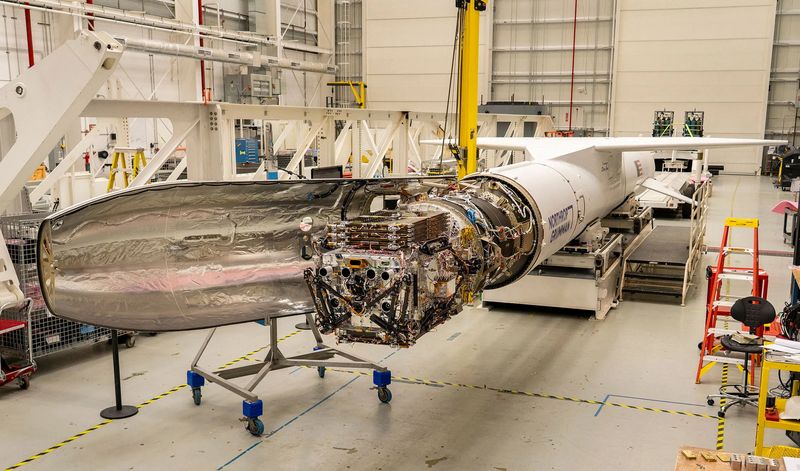
The mission, which was organized on a tight nine-month production schedule, faced repeated delays this week. The primary issue involved the launch vehicle, a Pegasus XL rocket built by Northrop Grumman. This rocket is responsible for carrying Katalyst's half-ton spacecraft, called LINK, into low-Earth orbit.
LINK was specifically designed to rescue the $500 million Neil Gehrels Swift Observatory by latching onto the crippled satellite and moving it to a higher, sustainable orbit. This could potentially extend the mission by years. The observatory, known as SWIFT, lacks onboard propulsion capabilities and would otherwise drift toward Earth and burn up in the atmosphere by later this year.
Katalyst Space Technologies, based in Flagstaff, Arizona, developed, constructed, and tested the LINK vehicle on an unprecedented nine-month production schedule under a $30 million NASA contract. The spacecraft is set to be deployed from the payload compartment of the Pegasus rocket, which will soar into space after being released from the belly of a Lockheed TriStar jetliner flying at around 40,000 feet (12,200 meters) over the Pacific.
The plane is scheduled to take off heading east from a U.S. air base on the Kwajalein Atoll in the Marshall Islands. Once jettisoned from the Pegasus rocket, LINK will embark on a month-long journey to the vicinity of NASA's orbiting telescope, which has been observing distant galaxies and black holes since 2004. Originally designed for the study of gamma ray bursts in the cosmos, the observatory is now the focus of this ambitious rescue mission.
By late July, if all goes according to plan, LINK will fly to within roughly 6 miles (9.6 km) of the observatory before initiating its final approach and "proximity operations." The autonomous spacecraft, equipped with three sets of thrusters and five sensor systems, is expected to take another week to rendezvous with SWIFT and use its three robot arms, each fitted with hand-like grippers, to gently grab hold of the satellite. The pair will then orbit Earth together at approximately 17,000 miles (27,360 km) per hour.
Once LINK has firmly grasped the observatory, it will take another 60 days to tow it to its target altitude about 373 miles (600 km) above Earth, doubling the height it would have fallen to just before rescue, according to Katalyst. The spacecraft is expected to complete its primary mission of satellite recovery with enough propellant left over to practice additional close-proximity maneuvers using SWIFT as a stationary dance partner in orbit.
The SWIFT orbital boost effort, the first U.S. mission of its kind, is being closely watched as a trial run of a key satellite-maintenance technology with potential dual-use military applications. This mission represents some of the latest advances propelled by U.S.-China geopolitical rivalry.
"The U.S. Space Command cares a lot about this, because ultimately this is a core element of space superiority," said Katalyst CEO Ghonhee Lee in a recent interview. China last year demonstrated two satellites orbiting in close proximity, following a 2022 test in which one Chinese satellite grappled onto and yanked another into a different orbit — alarming U.S. officials who said China could one day employ such tactics on American spacecraft.
Post a Comment for "Satellite Rescue Mission to NASA Observatory Delayed"