
Generating Your Own Power: How Home Solar Can Shield You from Energy Crises
The world has been grappling with an escalating energy crisis, significantly amplified by recent geopolitical events. This reliance on imported fossil fuels has left many nations vulnerable, with experts warning that "no country will be immune to the effects of this crisis." But what if you, as a consumer, could significantly reduce your dependence on the national grid and tap into your own localised energy supply? The answer, for many, lies in the sun.
The Sunny Side of Energy Security: Home Solar Panels
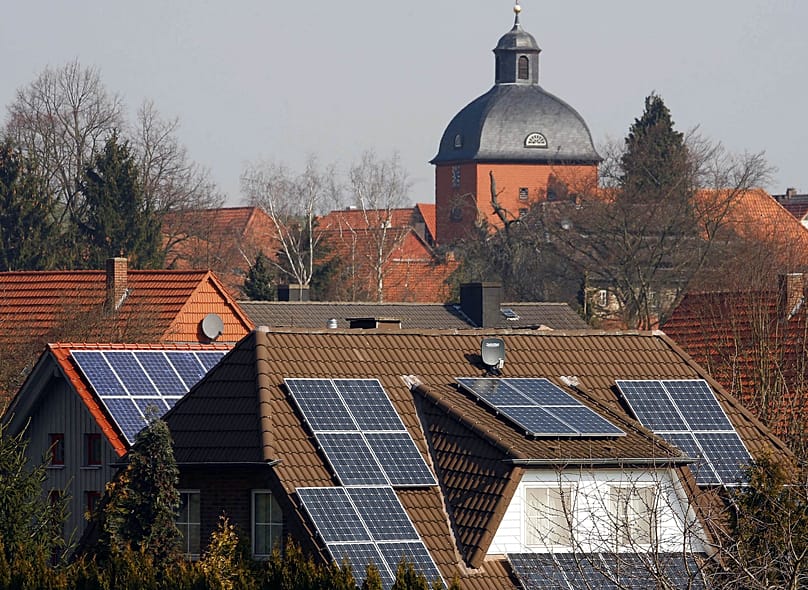
Installing solar panels on your home or business is no longer a niche pursuit; it's becoming a cornerstone of energy resilience. While common in sunnier climes, their true value shines during times of energy instability.
Matthew Clayton, CEO of Thrive Renewables, explains the significant advantage: "If you’ve got a solar roof on your home and you’ve got a battery, then, depending on how much energy you can generate, you are substantially insulated from importing electricity." This insulation is particularly crucial when energy prices are volatile.
Understanding Dynamic Tariffs and Solar Storage
A growing trend in Europe is the adoption of dynamic electricity tariffs. These tariffs mean the price you pay for electricity fluctuates throughout the day, often spiking during peak usage times, such as early evening when households are at their busiest.
This is where solar power truly comes into its own. By generating and storing solar energy during daylight hours, when the sun's rays are at their most potent, you can then utilise that stored power during the expensive peak periods. This fundamentally alters your relationship with the grid, as Clayton puts it, "Your relationship with the grid is totally changed."
Beyond Sunshine: Solar's Reach in Less Sunny Climates
While countries like Spain are making significant strides in reducing their reliance on imported fossil fuels through robust investment in wind and solar, the benefits of solar power are not confined to perpetually sunny regions. Energy think tank Ember highlights Spain's success, noting that "Spain’s wind and solar growth has reduced the influence of expensive fossil generators on the electricity price by 75 per cent since 2019." This rapid shift away from gas-reliant pricing was notably faster than in comparable countries like Italy and Germany.
However, even if your home isn't blessed with abundant sunshine year-round, technological advancements are making solar increasingly accessible. Sophisticated systems are being developed that allow individuals in less sunny countries to still harness the power of homegrown renewable energy.
Finding local experts who can assess your property's suitability for solar panels, provide cost estimates, and project potential energy generation is generally straightforward. These professionals can guide you through the process, ensuring you make an informed decision.
Plug-In Solar: A Revolution for Apartment Dwellers
For those living in apartments or rental properties where rooftop installations are not feasible, a new, innovative solution is emerging: plug-in solar. These compact solar panels are designed for easy installation and can be attached to external walls or balconies. They then simply plug into an indoor power socket, making solar energy generation accessible to a much wider audience.
Germany, in particular, has seen a surge in popularity for balcony solar installations, with over a million units fitted between 2022 and 2025. The cost has also become more attractive, with smaller models now around €200 and larger systems with integrated storage priced under €1,000.
According to Solar Power Europe, the payback period for these plug-in systems typically ranges from two to six years, depending on the initial cost, the size of the system, and its placement.
The UK Embraces Plug-In Solar: A New Era of Energy Independence
The recent announcement by the UK government permitting plug-in solar in British homes has been met with significant enthusiasm. This is particularly welcome news for UK residents, who currently face some of the highest electricity prices in Europe.
Entrepreneur Sara Kukovec captures the sentiment, stating, "This makes solar feel suddenly reachable for everyone. I love how it turns something complex into something as simple as plugging in a device. Suddenly energy independence feels practical."
The innovation doesn't stop there. Individuals are already exploring creative solutions for homes without balconies. Patent attorney Ed Clarke muses, "This sounds amazing. I'll need to design a contraption to attach them to the sunny front of my house!"
A Crucial Note on Electrical Safety
While the prospect of plug-in solar is exciting, it's imperative to address the existing electrical infrastructure in many UK homes. With older, modified, or poorly maintained wiring systems, a professional assessment is non-negotiable.
Mark Coles, Head of Technical Regulations at the Institution of Engineering and Technology, stresses the importance of this: "Before purchasing or plugging in any off-the-shelf generation product, householders should have their electrical installation checked by a competent electrician. What may be safe in one home may pose a significant risk in another. Professional verification is the only way to be sure." Ensuring your home's electrical system is up to scratch is paramount before adopting any new energy generation technology.


No comments:
Post a Comment