
Finnish recruits prepare for total war with Russia
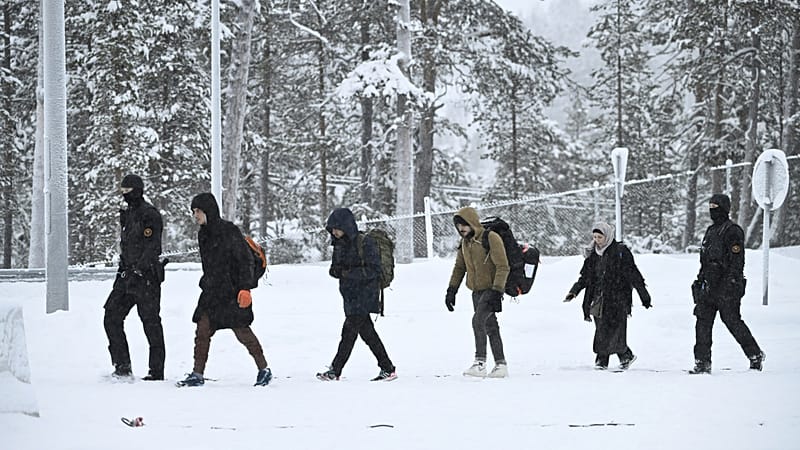 Finland's formidable 1,350 km frontier with Russia is a scene of heightened readiness, where male conscripts are meticulously trained to become expert snipers, ensuring the nation is prepared for any eventuality. On this heavily fortified border, Finnish border guards express confidence in their ability to counter a spectrum of threats, from sophisticated hybrid warfare tactics like GPS jamming and drone incursions to the weaponisation of migration. In this regard, Finland's robust defence strategy is increasingly being recognised as a benchmark for the rest of Europe.
A Nation on Alert
"We are prepared to be an integral part of Finland's territorial defence," states Mikko Lehmus, a Finnish border guard stationed at the Raja-Jooseppi border crossing. He elaborates on the rigorous training regime, noting, "We train our conscripts for, if necessary, for all-out war." The strategic significance of the location is underscored by Lehmus's observation that Murmansk, the home of Russia's nuclear fleet, is situated a mere 150-200 kilometres across the border.
The Specter of Hybrid Warfare
The year 2023 saw a disturbing escalation of tactics, with Russia intentionally directing migrant civilians across the Finnish border. This manoeuvre was part of a broader hybrid war strategy aimed at destabilising Ukraine's allies by fostering division and chaos. The weaponisation of vulnerable populations at national borders has become a recurring tactic employed by the Kremlin. Neighbouring countries, including Poland, Latvia, and Lithuania, have faced similar episodes at their borders with Russia-allied Belarus. Reports from EU and national officials in these countries detail how hundreds of migrants, including families with young children, were allegedly coerced into crossing from Belarus. In Poland, a tragic consequence of these border tensions was the reported deaths of at least two children, one an infant, from hypothermia. This occurred after Polish authorities, according to Polish medical workers and the Polish emergency medical team NGO, denied the migrants access to essential healthcare and shelter.
Finland's Decisive Stance
In response to these provocative actions, Finland made the significant decision in November 2023 to permanently close its extensive border with Russia. This decisive move was a direct reaction to Russia's deliberate policy of pushing migrants into Finnish territory. Helsinki also took the unprecedented step of suspending asylum application processing, a measure that typically safeguards individuals seeking refuge from war or persecution under international humanitarian law. The legislation enabling these temporary measures, titled the Act on Temporary Measures to Combat Instrumentalised Migration, has since been extended and will remain in effect until the close of the current year.
Anna-Maja Henriksson, who served as Finland's Justice Minister and was instrumental in initiating the border closure, expressed her conviction in the decision. "It was the right decision," Henriksson affirmed during an interview at the Jooseppi frontier. "I sleep well at night," she added, attributing this peace of mind to the understanding that "the whole point is that the Russians know that we have good border guards." She further emphasised, "They (Russians) know that we Finns, we have always been prepared." This preparedness is a deeply ingrained aspect of Finnish national identity, a vigilance that never waned, even during the brief post-Cold War period when East-West tensions seemed to recede.
The New Generation of Defenders
Among those embodying this readiness is 19-year-old conscript Lauri Stenback, a promising sniper in training. Stenback, who had never held a rifle before commencing his 10-month military service, discovered an unexpected aptitude for shooting. "My first time shooting was in the army," Stenback recounted at the Finnish army barracks in Jooseppi. He explained his progression: "You start off with the basic assault rifle, and I found out in the army that I have a gift for shooting, so, that's how I got into this marksman role." His current training focuses on reconnaissance missions. "We're training for reconnaissance," Stenback stated. "If the war were to start, we would go over the border behind enemy lines and produce information and try and find valuable targets," he detailed.
The Sami Community's Plight
Beyond the immediate geopolitical tensions, Russia's ongoing conflict in Ukraine has cast a long shadow over indigenous, cross-border communities, notably the Sami people. Descendants of nomadic tribes and traditional reindeer herders, the Sami population is estimated at around 100,000 individuals spread across Finland, Russia, Norway, and Sweden. However, Russia's aggression has effectively severed ties for the Russian segment of the community. Some Sami individuals have managed to escape the grim reality of forcible conscription into the Russian army and have successfully sought protection status in Norway, according to members of the Sami community who have shared their harrowing experiences.
Pirita Näkkäläjärvi, President of the Sami Parliament, spoke with profound sorrow from Lapland. "One of the terrible, terrible things is that, some of the Sami brothers on the Russian side have been forcibly conscripted to the Russian army, and sent to the war front in Ukraine," she revealed. The human cost of this conflict is starkly evident in the loss of life within this small community. Näkkäläjärvi added, "At least seven young Sami men have been killed in the war, fighting for Russia." She described this as "a huge loss, in a small community about 2,000" in Russia.
Post a Comment for "Finnish recruits prepare for total war with Russia"