
Iran Guards recruit children to ‘defend the homeland’, placing them in line of fire
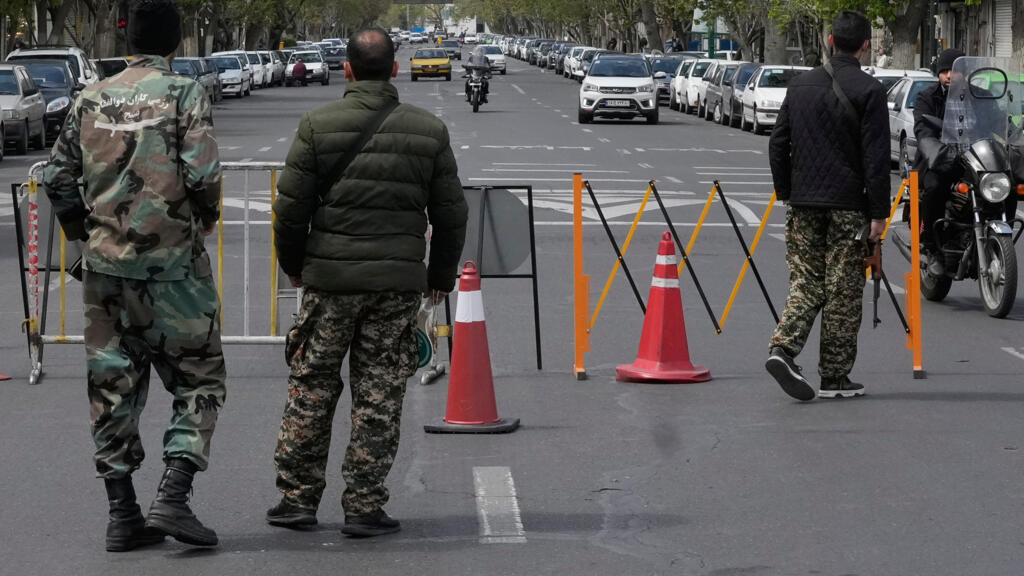 Iran's Revolutionary Guards Corps (IRGC) has reportedly initiated a recruitment drive targeting children as young as 12 for the supposed "defence of the homeland." This development comes more than a month into a conflict purportedly triggered by the United States and Israel. Human rights organisations have voiced grave concerns about the life-threatening risks faced by Iranian children and unequivocally state that the deployment of minors in military capacities constitutes a war crime.
A poster circulating as part of this campaign depicts a young teenager standing beside a member of the Basij militia, clad in combat fatigues, with a hand placed over their heart. The message conveyed is unambiguous: all Iranians, irrespective of age, are being called upon to defend the Islamic Republic amidst what is described as a relentless wave of attacks from the US and Israel.
In late March, an official within the IRGC for Greater Tehran, Rahim Nadali, announced on state television the commencement of a campaign aimed at enlisting citizens "aged 12 and over" as "volunteer fighters" to "defend the homeland."
According to the Iranian news agency ANA, this recruitment initiative is intended for both boys and girls. The agency suggests that these young recruits could be assigned roles in intelligence operations, "identity checks and patrols," as well as undertaking logistical tasks such as food preparation and the distribution of equipment and supplies.
However, numerous non-governmental organisations (NGOs) have issued warnings that children are already being involved in operational missions on the ground. These deployments reportedly include assignments for military objectives, such as manning security checkpoints, which place them directly in harm's way.
Amnesty International recently stated that eyewitness accounts and verified audiovisual evidence indicate the deployment of child soldiers at checkpoints and patrols operated by the IRGC. These minors have reportedly been armed with weapons, including AK-pattern rifles. Erika Guevara-Rosas, Amnesty's Senior Director for Research, Advocacy, Policy, and Campaigns, commented that "As US and Israeli strikes hit thousands of IRGC sites, including Basij facilities, across the country, including through drone attacks targeting security patrols and checkpoints, the deployment of child soldiers alongside IRGC personnel or in their facilities puts them at grave risk of death and injury."
A Fatal Drone Strike Incident
Such deployments are tragically exemplified by the death of 11-year-old Alireza Jafari. He was killed on March 11 by an Israeli drone strike that targeted security forces at a checkpoint on a Tehran motorway.
In an interview with the Iranian daily Hamshahri, published days after the incident, Sadaf Manfard, Alireza's mother, recounted that her husband had informed her on the night of the attack that he was taking their son to the checkpoint with him due to a "shortage of personnel." Her husband, who also perished in the attack, reportedly stated that Alireza would thus be "prepared for the days ahead."
The mother also noted that teenagers aged 16 and 17 have been regularly participating in street patrols organised by the Basij, a voluntary paramilitary force that has historically played a significant role in suppressing protest movements within Iran. The Basij is a multi-faceted militia with a strong presence in local communities, frequently organising educational, religious, and social activities for young people, particularly in more deprived areas where it draws many of its recruits.
Hengaw, a Norway-based NGO, reported that one of the Basij branches, the Basij Farhangian Organisation, confirmed that Alireza had been killed "while on duty."
A Tehran resident, contacted by FRANCE 24 in March, expressed profound distress at what they described as the "militarisation of the capital." They recalled witnessing "a boy stationed at a checkpoint with a weapon who didn’t even have a moustache yet."
War Crime Allegations
Hengaw and other human rights groups assert that the recruitment or use of children under the age of 15 in armed forces or warfare constitutes a war crime. They are urging the United Nations and its children's fund, UNICEF, to intensify legal and diplomatic pressure on Tehran to cease this practice.
Under the Geneva Conventions, a foundational element of international law, children are entitled to special protection, and their mobilisation in armed conflicts is strictly prohibited. Despite this, the Islamic Republic has a documented history of exploiting minors within its military and paramilitary organisations.
In a 2024 report, the US-based NGO Human Rights Activists in Iran (Hrana) detailed the recruitment of vulnerable groups, notably Afghan minors, to join the Fatemiyoun Division, a paramilitary group that has been engaged in conflict in Syria under the auspices of the IRGC.
Hrana's report, drawing on testimonies from former child soldiers, highlighted a "troubling pattern of manipulation, where minors and individuals in precarious visa situations are coerced into combat roles under threats of violence or death. Promises of financial compensation and legal status made to them are consistently broken."
In 2018, the United States imposed sanctions on the Bonyad Taavon Basij network, a vast financial network supporting Basij paramilitary forces. Subsequently, several companies and institutions were targeted for providing "financial infrastructure to the Basij's efforts to recruit, train, and indoctrinate child soldiers who are coerced into combat under the IRGC's direction."
Human rights groups also documented the use of child soldiers in 2011, when Basij units reportedly recruited teenagers aged 14 to 16 to assist in suppressing anti-government protests in Iran.
Echoes of the Iran-Iraq War
The Iranian regime has long espoused a culture of glorifying sacrifice and martyrdom, even among minors. During the Iran-Iraq War (1980–1988), children were reportedly sent to their deaths in "human waves" to clear minefields, facilitating the safe passage of troops. Bereaved families were often compensated financially for each child killed and received a martyr's card that entitled them to food and other privileges.
Iranian boys were indoctrinated from a very young age to participate in the conflict. They were allegedly given a "key to paradise," with the promise that they would ascend directly to heaven if they died as martyrs fighting the Iraqi enemy – a practice vividly described in the BBC documentary "Frontline Children."
In 1982, Ayatollah Ruhollah Khomeini, the regime's founder, decreed that parental consent was no longer required for children sent to the front lines. He also declared that volunteering for military service was a religious duty, and that service in the armed forces superseded all other forms of work or study.
To this day, murals glorifying the deaths of child soldiers are a common sight in Iran. One such mural in Tehran commemorates 13-year-old Mohammad Fahmideh, who reportedly detonated his belt of grenades after throwing himself under an Iraqi tank. He is depicted alongside Ayatollah Khomeini.
The legacy of this culture of self-sacrifice extends to some of the most influential figures in the Islamic Republic. This includes Parliament speaker Mohammed Bagher Ghalibaf, who joined the fight against Saddam Hussein's Iraq at the age of 19. He subsequently rose through the ranks to become a commander of the formidable Revolutionary Guards, a trajectory that paved the way for his current position at the apex of the Iranian state.
Decades after the conclusion of the Iran-Iraq War, and with the Islamic Republic once again perceived to be fighting for its survival, the official discourse remains remarkably consistent: the sacrifice of children continues to be celebrated, with apparent disregard for international law.
Post a Comment for "Iran Guards recruit children to ‘defend the homeland’, placing them in line of fire"