
Ukraine's Baltic Strikes: Targeting Russia's Iranian Oil War Chest
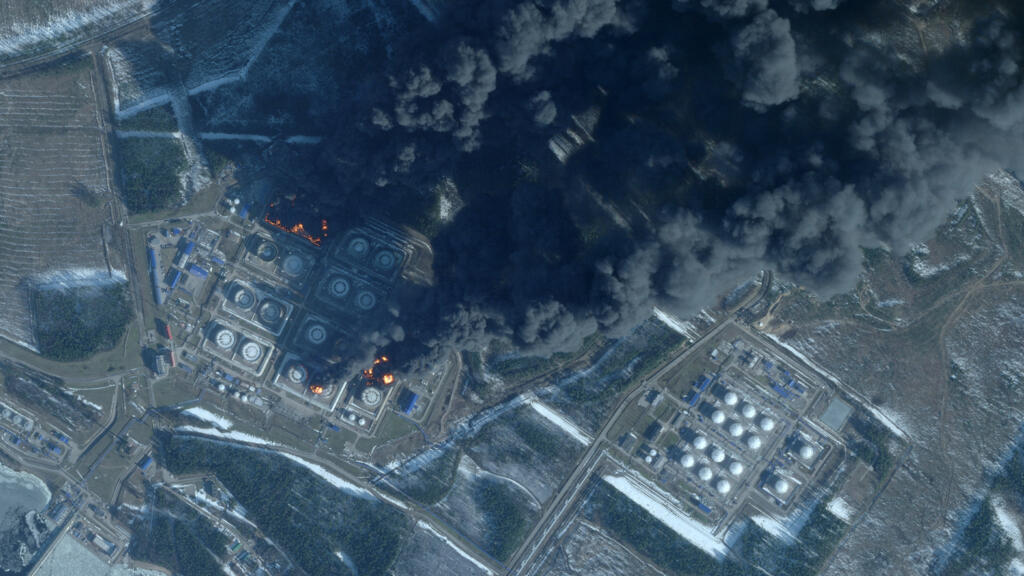 In recent days, Ukraine has escalated its drone assaults, targeting ports and refineries in Russia's Leningrad region, situated on the Baltic Sea. This strategic manoeuvre by Kyiv, aimed at disrupting Moscow's financial gains from Middle Eastern oil disruptions, is not without considerable risk.
Over the past week, Ukrainian drones have struck vital oil export infrastructure in Russia's Leningrad region on at least four separate occasions. Reports indicate that some facilities were ablaze for days following the attacks. Leningrad Region Governor Alexander Drozdenko confirmed damage at the Ust-Luga port on March 31 via Telegram, though he offered no specifics regarding the extent of the destruction.
This is not the first time Ukraine has targeted Russia's energy and electrical infrastructure. According to Huseyn Aliyev, an expert on the Ukrainian conflict at Glasgow University, the Ukrainian army has been engaged in a "sustained campaign [against Russian infrastructure objects] for almost a year."
However, by focusing on Russian oil ports, Kyiv appears to have struck a particularly sensitive chord. Energy analyst Boris Aronshtein, speaking to RadioFreeEurope, described these attacks as "the most serious threat to exports of Russian oil and oil products since the war began."
The implications of these strikes are significant enough that Ukrainian President Volodymyr Zelensky stated on March 30 that some of Ukraine's allies had conveyed "signals" to Kyiv, urging a de-escalation of long-range strikes on Russia's Baltic Sea oil sector.
Strategic Targeting of Sensitive Infrastructure
The energy infrastructure being targeted by Ukraine is particularly vulnerable. Jeff Hawn, a Russia specialist at the London School of Economics, explained that "Russia’s oil infrastructure is very heavily focused in the western part of Europe." This concentration is a legacy of the Soviet era, when Western Europe was Russia's primary market for energy supplies. Consequently, the ports of Primorsk and Ust-Louga have become Russia's principal oil terminals on the Baltic Sea, and these are the facilities that the Ukrainian military has been targeting recently.
Agata Loskot-Strachota, a European energy specialist at the Centre for Eastern Studies in Warsaw, noted that these two oil terminals "account for about 30% of Russian oil exports." Hawn further elaborated on their importance, stating they are crucial for "a state that has pretty much become reliant on the oil industry to continue to fund the war effort." While Kyiv likely had these ports in its sights for some time, it is only in the last six months that "the capacity and range of Ukrainian drones significantly increased," according to Aliyev.
The Evolution of Ukrainian Drone Capabilities
The recent drone strikes are seen as a "natural evolution of the Ukrainian strategy," Aliyev explained. This strategy initially focused on infrastructure closer to the border and in the Black Sea region, as these were the most accessible targets. However, as Ukrainian drones have gained greater capacity and range, the army has been able to strike deeper into Russian territory. Aliyev added that it is "even more natural that the Ukrainian army seriously damaged the infrastructure 'closer to Ukrainian borders and within comfortable range of Ukrainian drones'."
Will Kingston-Cox, a Russia specialist at the International Team for the Study of Security Verona, highlighted a "strategic change in [Ukraine’s] choice of targets." Previously, refinery strikes were aimed at "squeezing processing capabilities and creating bottlenecks in [domestic] fuel production." In contrast, targeting import and export terminals directly impacts "the routes [through which] Russia monetizes its hydrocarbons internationally."
Timing and Economic Pressure
The timing of these attacks is also noteworthy. Aliyev pointed out that "the demand for Russian oil has strongly increased because of the war in the Middle East and the blockade of the Strait of Hormuz." Following a near-complete halt in maritime traffic through the Strait of Hormuz, the United States issued a waiver allowing Russia to resume some oil sales. This situation, according to Loskot-Strachota, allowed Moscow to profit from a global market scenario that was "completely contrary to Ukraine’s interests."
The strikes on Russian oil infrastructure on the Baltic Sea represent Ukraine's response to this dynamic. Kingston-Cox suggested that if external economic pressure on Moscow is diminishing in the oil sector, Ukraine will "create some sort of military economic pressure itself." He described this move as "economically intelligent," as Ukraine can use relatively low-cost weapons like drones to directly impact Russia's finances.
Diplomatic Risks and Allied Concerns
However, this strategy is not without its diplomatic ramifications. As President Zelensky himself acknowledged, certain European nations have requested Ukraine to reduce its strikes on Russian oil facilities. Loskot-Strachota explained that while Europe aims to eventually phase out all Russian oil, the global oil market is interconnected. Any reduction in Russia's export capacity inevitably tightens global supply.
Aliyev characterised Ukraine's approach as "a bit of a gamble." Hawn suggested that Ukraine will likely persist with such strikes as long as it can do so without facing excessive pressure from its Western allies.
Potential Impact on Russia's Economy
The long-term impact of these Baltic Sea attacks on Russia's economy remains to be seen. Many vessels belonging to Russia's "phantom fleet," comprised of older cargo ships used to circumvent sanctions, depart from ports in this region. In theory, the strikes should diminish Russia's capacity to sustain itself financially under international pressure.
Ultimately, the effectiveness of these strikes will depend on the full extent of the damage inflicted and Russia's ability to undertake repairs. The port of Primorsk has already partially resumed its operations. For Ukraine to cripple Russia's oil export capacity further, it will need to intensify and prolong its attacks. However, in doing so, Kyiv risks encountering resistance from its Western allies, who may be hesitant to bear the full economic cost of deterring Russia.
Post a Comment for "Ukraine's Baltic Strikes: Targeting Russia's Iranian Oil War Chest"