
60% of Aussie Drivers Disable Safety Tech
The Gap Between Car Safety Technology and Driver Behavior
Modern vehicles are equipped with advanced technology designed to save lives, yet many Australians are not utilizing these features. A recent study reveals a significant gap between the availability of safety systems and how drivers actually use them. In fact, some drivers are actively disabling the very technologies that could prevent accidents.
According to research from IAG, which owns several insurance brands including NRMA Insurance, CGU, and WFI, smart car safety technology is not leading to fewer road accidents. This is due to a troubling trend: many drivers are manually turning off these life-saving systems.
Shawn Ticehurst, Head of the NRMA Insurance Research Centre, highlighted the global baseline for this technology and the stark reality in Australia. The issue is not just about the technology itself, but how it is being used—or not used—by drivers.
The Cost of Ignoring Safety Tech
To understand the impact of this disconnect, we can look at the latest accident data. NRMA Insurance received over 69,000 motor collision claims in 2026 alone. These crashes are exactly the types of incidents that smart car safety technology is designed to prevent.
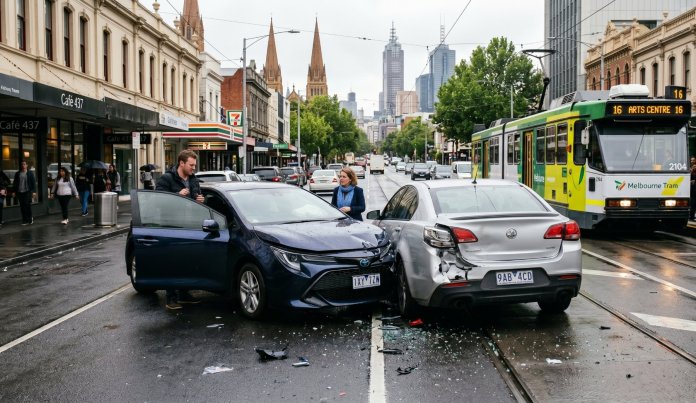
The most common causes of collisions include rear-end crashes and failure to give way. Reversing mishaps, hitting stationary objects, and animal collisions also rank highly. The full list of top collision types clearly shows that driver error is a major factor.
Rear-end collisions are the number one cause, followed by failure to give way. Reversing accidents and hitting stationary objects take third and fourth place. Single vehicle accidents, animal collisions, unsafe manoeuvres, and head-on collisions round out the top eight.
How ADAS Could Prevent These Accidents
Smart car safety technology is specifically engineered to reduce the severity of these common crash types. Features like Autonomous Emergency Braking (AEB) and cross-traffic alerts are built to mitigate rear-end collisions and unsafe manoeuvres. Lane departure warnings and parking sensors help prevent hitting stationary objects.
If drivers simply left their Advanced Driver Assistance Systems (ADAS) active, there could be a drastic reduction in these statistics. Good ADAS acts as a second set of eyes on the road, reacting faster than human reflexes allow. To address this tech aversion, the NRMA Insurance Research Centre is conducting an Australian-first field study.
The study is observing and analysing how drivers use ADAS in real-world conditions. The goal is to create opportunities for greater ADAS education to improve safety outcomes on our roads. IAG plans to publish its full ADAS research findings mid-year, which should provide fascinating insights into user interfaces and driver frustration.
Roadkill and the Wildlife Threat
It’s not just urban driving where this technology could make a difference. Animal collisions rank sixth on the list of top collision types across the country. NRMA Insurance received more than 15,000 animal collision claims in 2025, a 21% increase since 2024. This is especially impactful on regional and rural roads.
Good ADAS, particularly systems with low-light animal detection, could be a game-changer in rural areas. Kangaroos were the most common animals involved in collisions, accounting for 84% of all animal collisions. They are followed by wallabies, wombats, deer, and foxes.
Nick Kirkovski, Executive Manager Claims at NRMA Insurance, noted that seasonal changes significantly increase these risks. Drivers need to be especially cautious during certain times of the year when wildlife activity is high.
The Shift to Electric Vehicles
The NRMA Insurance Research Centre is the only facility of its kind in Australia. Its primary purpose is to research how emerging mobility technologies will affect operational and insurance risk in the future. This includes tracking the massive shift toward electrified transport and the tech integration that comes with it.
The centre collaborates with industry bodies and universities to research the expanding range of EVs entering the market. There are now over 100 EV models available to Australians, bringing even more advanced software to our roads. In recent months, NRMA Insurance has seen a 121% spike in EV quote starts in April compared to April 2025.
Fuel price volatility and concerns about supply continue to drive consumer interest in battery-powered alternatives. This trend marks a notable shift from two years ago when the Changing Gears report Part 1 was released. At that time, only 20% of Australians planning to buy a car in the next five years were considering an EV.
Upfront costs, range anxiety, and charging times were previously the key barriers to adoption. NRMA Insurance will be releasing the third iteration of its Changing Gears Report mid-year. This will investigate the impact of the current oil crisis on attitudes toward EV adoption in Australia.
Staying Safe on the Roads
While we wait for driver habits to catch up with vehicle capabilities, basic road safety remains crucial. NRMA Insurance recommends avoiding driving at dawn, dusk, or night-time where possible to reduce the risk of animal collisions. This is usually when animals are most active, and a lack of light makes it much more difficult to see them.
If you're heading out on a long trip, it's important to have a good night’s sleep beforehand. You should also schedule regular breaks, ideally taking a 15-minute break every two hours. Drivers should reduce their speed inside signposted wildlife areas to give themselves more reaction time.
If you see an animal on or near the road, try to slowly brake and avoid swerving. Swerving can often lead to a loss of vehicle control and result in far more severe accidents. If you hit an animal, and it is safe to do so, check the animal’s welfare and contact your local wildlife rescue service.
These insights are being shared as part of National Road Safety Week. NRMA Insurance supports the initiative and its central focus on encouraging drivers to take the Pledge to Drive So Others Survive. By publicly committing to safer choices and letting our car’s safety tech do its job, we can make Australian roads safer.
Post a Comment for "60% of Aussie Drivers Disable Safety Tech"