
Eurovision Final in Vienna: Music and Protests Take Center Stage
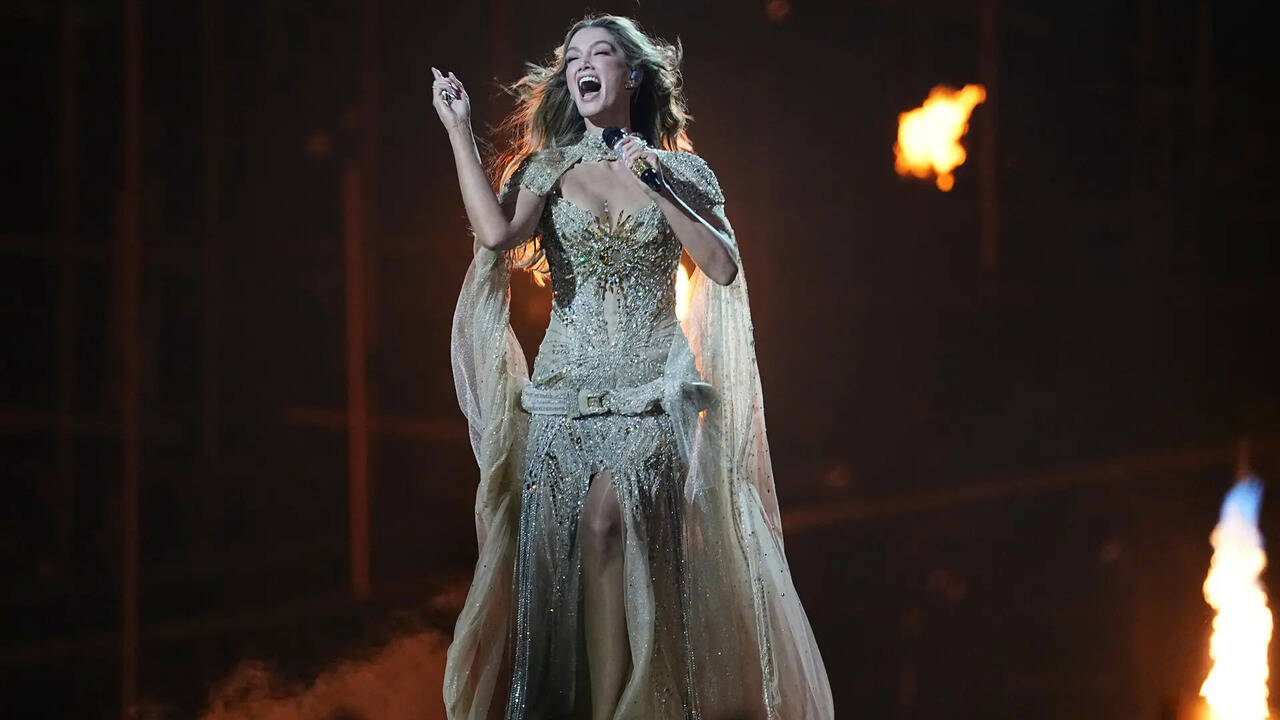
The Eurovision Song Contest: A Celebration of Music and Controversy
The Eurovision Song Contest, known for its vibrant performances and dazzling visuals, reached its thrilling climax in Vienna on Saturday. Despite the rainy weather and heightened security measures, the event showcased the unyielding enthusiasm of fans and the ongoing debates surrounding its political implications.
This year's contest marked the 70th anniversary of the competition, bringing together 25 countries at the Wiener Stadthalle arena. Performers from across Europe and beyond took the stage to compete for the prestigious title, with millions of viewers worldwide casting their votes. Among the acts were a fiery Finnish violinist, a Moldovan folk rapper, a Serbian metal band, and many others, each vying for the crown.
The contest, often compared to the World Cup but with songs instead of soccer, has historically been a platform where music and politics intersect. This year, the event has once again faced criticism over Israel's participation, with five countries—Spain, the Netherlands, Ireland, Iceland, and Slovenia—choosing to boycott in protest of the ongoing conflicts in Gaza.
The show kicked off with a performance by last year’s winner, Austrian singer JJ, and an Olympic-style flag parade featuring the 25 finalists. Following this, the musicians delivered their performances, each limited to three minutes to captivate the audience and national juries of music professionals.
Denmark’s Søren Torpegaard Lund was among the early favorites with his sultry song "Før Vi Går Hjem." Germany’s Sarah Engels followed with a powerful ballad "Fire," which featured jets of flame that added to the dramatic effect. Israeli competitor Noam Bettan received a warm reception for his rock ballad "Michelle," performed in Hebrew, French, and English. Earlier in the week, four individuals were ejected for attempting to disrupt his semifinal performance.
Other standout performances included Belgium's Essyla with "Dancing on the Ice," Ukrainian singer Leléka with the ethereal "Ridnym," and Australian star Delta Goodrem, who dazzled with her midtempo ballad "Eclipse." If she wins, Australia will likely host the event next year.
Serbian metal band Lavina provided a dramatic change of pace with their angsty track "Kraj Mene," while Malta's Aidan delivered a pleasant ballad "Bella." Croatian folk-pop group Lelek impressed with their harmonies, and France's Monroe captivated with her operatic voice. British act Look Mum No Computer brought humor with their quirky song "Eins, Zwei, Drei."
Newcomers like Moldovan rapper Satoshi and Greek artist Akylas offered unique perspectives. Satoshi's "Viva, Moldova" is a pro-European anthem from a country moving closer to the EU after years of Russian influence. Akylas' "Ferto" provides a playful take on consumerism in a country still recovering from the 2008 financial crisis.
The competition is decided by a mix of public votes and jury scores, with the highest total points determining the winner. Finland is currently the favorite with their fiery duet "Liekinheitin," but surprises are common in Eurovision.
Political controversies have long accompanied the event. The first boycott occurred in 1969 when Austria refused to send a delegation to Spain under Francisco Franco. Despite these challenges, Eurovision continues to thrive, with plans for a spinoff event in Bangkok later this year.
Protests against Israel's inclusion have been smaller in Vienna compared to previous years. Hundreds marched near the venue, some carrying signs reading "Block Eurovision," while pro-Palestinian groups held an outdoor concert titled "No stage for genocide."
Despite the political tensions, organizers urge viewers to focus on the music. Eurovision director Martin Green emphasized the importance of enjoying the "brilliant, wonderful, heartfelt show."
As the contest concludes, it remains a celebration of diversity, creativity, and the power of music to bring people together, even amid global challenges.
Post a Comment for "Eurovision Final in Vienna: Music and Protests Take Center Stage"