
Ketanji Brown Jackson's Sharp Critique of Conservatives as Supreme Court Tensions Rise
A Growing Divide on the Supreme Court
The U.S. Supreme Court has always been a place of intense legal debate, but recent events have highlighted a growing rift among its justices. The court is currently navigating a period of heightened tension, with liberal Justice Ketanji Brown Jackson taking a bold stand against her conservative colleagues. This has led to an open and public conflict that has captured national attention.
Jackson recently warned that the court risks appearing partisan after a controversial ruling in a voting rights case. The decision allowed Louisiana Republicans to redraw the congressional map and eliminate a majority-black district before the November midterms. This move has sparked concerns about the court's neutrality and its role in shaping political outcomes.
During a speech at the American Law Institute in Washington, D.C., Jackson emphasized the importance of maintaining public confidence in the judiciary. She stated, "It is so important for the public to perceive us as neutral, nonpartisan." For Jackson, this perception is crucial, as she believes it is the only asset the judiciary truly has.
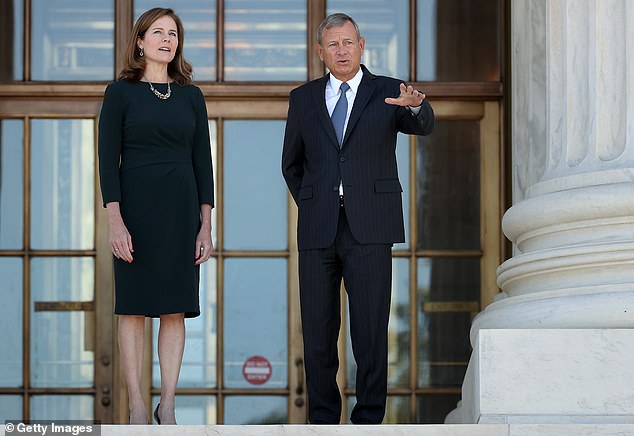
This moment marks a significant escalation in the ongoing tensions within the court. As the justices prepare for a series of public appearances following the close of oral arguments, several have used these opportunities to defend the court against criticism. Chief Justice John Roberts addressed a judicial conference in Pennsylvania, where he discussed the challenges of ruling against the public mood. He explained, "We're not simply part of the political process, and there's a reason for that."
Justice Amy Coney Barrett also spoke out at the George W. Bush Presidential Center in Dallas, addressing the misconception that the court functions like a political body. She acknowledged the perception of a politicized court, stating, "That's not how the court functions." However, she admitted that the issue of public perception troubled her, as it does not reflect the reality of the court’s operations.
At the heart of the current disputes is the court's 6-3 decision last month, which significantly limited the Voting Rights Act. This decision allowed Louisiana Republicans to impose a new congressional map before the November elections. Normally, the court allows 32 days for the losing side to seek a rehearing, but the conservatives waived this guideline, citing early voting already underway in Louisiana.
Jackson was the only justice to publicly dissent from this decision. She argued that the majority should have followed the standard procedure, stating, "My view was it would be a more neutral way to handle the matter to just stick with the rule that we always apply in situations like this." In her dissent, she criticized the move, claiming it compromised the appearance of neutrality.
Justice Samuel Alito, who wrote a concurrence joined by Justices Clarence Thomas and Neil Gorsuch, defended the majority's decision. He dismissed Jackson's concerns, calling them "trivial at best" and "baseless and insulting." Alito also criticized Jackson's accusation that the majority had acted in an "unprincipled" fashion, calling it "a groundless and utterly irresponsible charge."
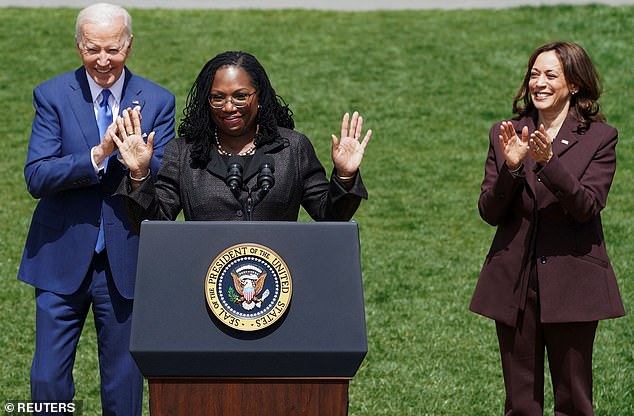
Jackson, appointed by President Joe Biden in 2022, has become the court's most vocal solo dissenter. She has consistently opposed majority rulings that favor Donald Trump and the GOP. In a recent dissent in the presidential-immunity case, she warned that the majority had "lit a five-alarm fire that threatens to consume democratic self-governance."
Her heated rhetoric has drawn criticism from other justices, including Barrett, who described her argument as "at odds with more than two centuries' worth of precedent." The liberal justices have increasingly distanced themselves from Jackson, signaling their discomfort with her approach.


Post a Comment for "Ketanji Brown Jackson's Sharp Critique of Conservatives as Supreme Court Tensions Rise"