
NATO Jets Shoot Down Ukrainian Drone Over Estonia
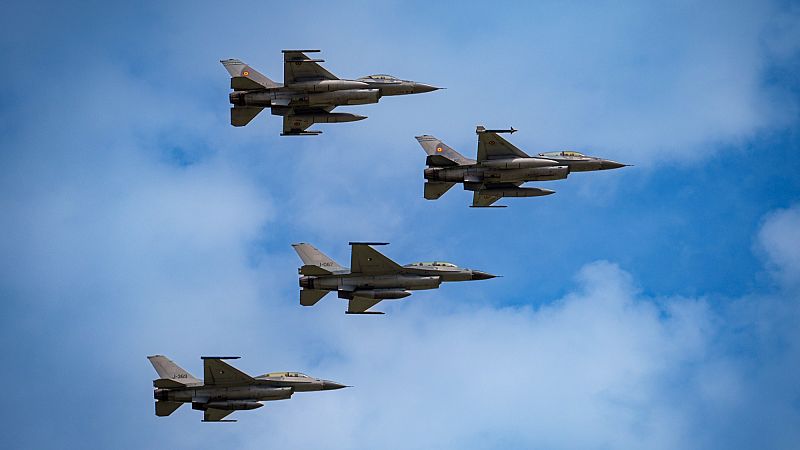
Incident Involving Ukrainian Drone Over Estonia
An F-16 fighter jet, part of NATO's air policing forces in the Baltic region, shot down a drone that is believed to have been a stray Ukrainian drone over southern Estonia on Tuesday. The incident has raised concerns among regional allies and highlighted the complex dynamics between Ukraine, Russia, and NATO members.
Estonian Defence Minister Hanno Pevkur explained the decision to take down the drone, stating that its trajectory indicated it was likely heading towards Russian targets. "We decided that we needed to take it down," he said. He added that the drone was most probably intended to strike Russian positions.
Ukrainian Foreign Ministry spokesperson Heorhii Tykhyi responded by saying that experts from both Ukraine and Estonia were working together to prevent similar incidents in the future. "We apologise to Estonia and all our Baltic friends for such unintended incidents," he said. Tykhyi emphasized that Ukraine remains in close cooperation with its Baltic partners through specialized institutions to investigate each case and find ways to prevent such occurrences.
He also accused Russia of deliberately redirecting Ukrainian drones into the Baltics using electronic warfare. "Moscow does this on purpose, together with intensified propaganda," he claimed.
Accusations and Denials
Russia’s Foreign Intelligence Service (SVR) issued a statement on Tuesday, claiming that Ukraine was preparing to launch drone attacks against Russia from the territory of the Baltic states. It warned of potential "retaliation." Moscow alleged that Latvia had agreed to allow Kyiv to use its territory for such operations, despite fears of becoming a target for retaliatory strikes.
The SVR criticized Latvia's leadership, stating, "The primitive Russophobia of Latvia’s current rulers proved stronger than their capacity for critical thinking or their sense of self-preservation." However, both Latvia and Ukraine denied these claims, calling them "yet another disinformation campaign."
Latvian Prime Minister Evika Siliņa clarified that Riga had never given Ukraine permission to use its territory or airspace for defensive strikes against Russia or any other country. "We have explained this many times on the international stage. Russia is the aggressor, and Ukraine has every right to defend itself," she stated.
Political Turmoil in Latvia
Last week, Latvia’s government collapsed after the prime minister resigned following the defense minister’s departure over the handling of multiple incidents involving stray drones suspected to have come from Ukraine. His party subsequently withdrew its support for the coalition.
A spokesperson for Ukraine’s Foreign Ministry reiterated that neither Estonia, Latvia, Lithuania, nor Finland has ever allowed the use of its airspace for strikes against Russia. "Ukraine exercises its right to self-defence under Article 51 of the UN Charter. Our legitimate military targets are located in Russia, and we use Russian airspace to reach them," the spokesperson said.
They also condemned Russia's accusations, stating, "Moscow has no right to blame Ukraine, the Baltic states or Finland for the consequences of its actions and, more broadly, its war of aggression."
Escalation of Tensions
Moscow has repeatedly threatened Latvia and other Baltic states with what the Kremlin calls "retaliatory strikes" over Ukrainian drone attacks on Russia. The SVR now claims that "despite Latvia’s fears of becoming a target of a retaliatory strike by Moscow, the authorities in Kyiv convinced Riga to agree to the operation."
The SVR also claims that servicemen from the Ukrainian Armed Forces’ Unmanned Systems Forces "have already been deployed to Latvia." It added, "One can only pity the naivety of Latvia’s leaders," issuing a thinly veiled threat to Riga.
"It is worth recalling that the coordinates of decision-making centres on Latvian territory are well known, and the country’s NATO membership will not protect those who aid terrorists from just retribution."
Since the start of its full-scale invasion of Ukraine, Moscow has repeatedly used similar language when threatening what it calls "decision-making centres" in Ukraine. Earlier, Ukrainian President Volodymyr Zelenskyy said that, according to Ukrainian intelligence, Russian forces were preparing new missile and drone strikes against what the Kremlin described as "decision-making centres."
"Among these are nearly two dozen political centres and military command posts," Zelenskyy said on 15 May.
Post a Comment for "NATO Jets Shoot Down Ukrainian Drone Over Estonia"