
A Groundbreaking Procedure for Opioid Addiction
A man who was taking over 100 painkillers daily has been successfully cured of his addiction through a revolutionary 20-minute procedure. The patient, identified only as 'H,' is in his 40s and resides in Israel. His journey began several years ago when he suffered a neck injury that required opioid medication to manage the pain. As time passed, H became dependent on the medication, eventually consuming up to 130 pills each day just to function.
Opioid medications work by binding to receptors in the brain, which not only block pain signals but also trigger a significant release of dopamine—a neurotransmitter associated with pleasure. This mechanism makes these drugs highly addictive, affecting millions of people globally, including 6 million Americans. Despite no longer experiencing physical pain, H's body had become so reliant on the medication that without it, he would face severe withdrawal symptoms such as sweating, muscle aches, nausea, vomiting, and extreme restlessness.
Doctors at Rambam Health Care Campus in Israel employed an experimental treatment using sound waves to measure activity in a specific region of the brain known as the nucleus accumbens (NAc). This area is part of the brain's reward and motivation system where opioids bind and dopamine is released. The noninvasive procedure aimed to dampen opioid receptors and reduce H's cravings for the medication.
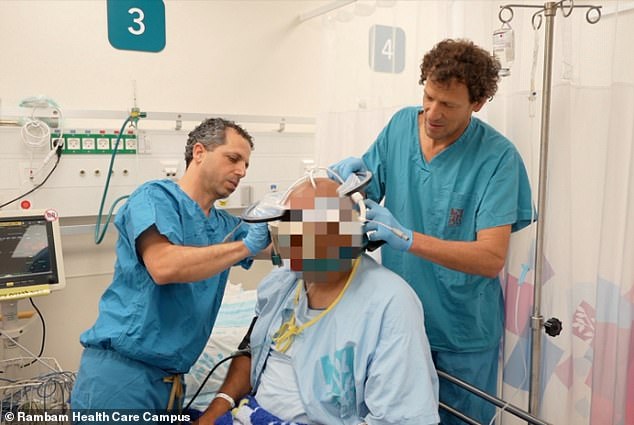
During the 20-minute session, H immediately reported a decrease in his cravings. One week later, urine drug tests confirmed that he had no opioids or other substances in his system. H described his craving score as zero out of ten. Additionally, he had significantly reduced his smoking habits, going from three packs a day to just a few cigarettes. He also showed no desire to drink alcohol.
The doctors involved in H's treatment believe this therapy could revolutionize the way opioid dependence is addressed worldwide, eliminating the need for detox programs and invasive procedures. Dr. Lior Lev-Tov, lead investigator and head of the Functional Neurosurgery Unit at Rambam Health Care Campus, emphasized the potential of this new therapeutic platform.
"This is a new therapeutic platform that allows us to offer a range of noninvasive treatments for many problems affecting people around the world," said Lev-Tov. "This is a major scientific breakthrough that could have far-reaching implications and reshape the way we approach treatment."
H was part of a 22-person study conducted by Lev-Tov's team, testing the treatment at a small number of medical centers in the US and Israel. He was the first participant to undergo the treatment while in active withdrawal. The researchers used sound waves delivered in an MRI-like machine to perform neuromodulation, which alters nerve activity deep within the brain. This technique has been likened to a pacemaker in the heart, which sends mild electrical signals to maintain a normal beat.
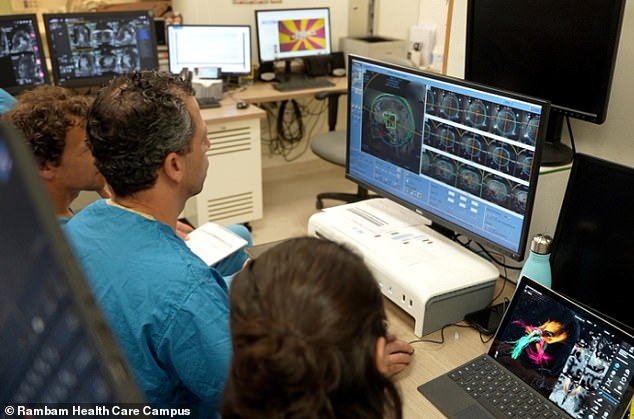
More invasive forms of neuromodulation, such as deep brain stimulation, involve surgically implanting electrodes in certain areas of the brain. These have been used for conditions like Parkinson's disease, disrupting faulty nerve signals to reduce tremors and stiffness. For H, the researchers targeted his nucleus accumbens (NAc), a brain structure that releases dopamine in response to opioids in addiction, without causing damage to surrounding tissue.
H experienced no negative side effects or complications from the treatment. "In a treatment that took about 20 minutes, our patient was able to detox from an extreme dependence that had been part of his daily life for years," Lev-Tov stated. "This is nothing less than a medical and therapeutic revolution."
Two weeks after the treatment, H remained opioid-free, telling his doctors that he now had his life back. The experts at Rambam also noted that study patients in the US have reported a decrease in cravings for heroin, a process that can take years.
"We hope this new development will be able to help many thousands of people dependent on opioids, in a safe and less traumatic way," said Dr. Amir Minerbi, director of Rambam's Institute for Pain Medicine.


No comments:
Post a Comment