
RBNZ's Inflation Push Under Scrutiny Amid Job Market Fears
The Dilemma of New Zealand's Central Bank
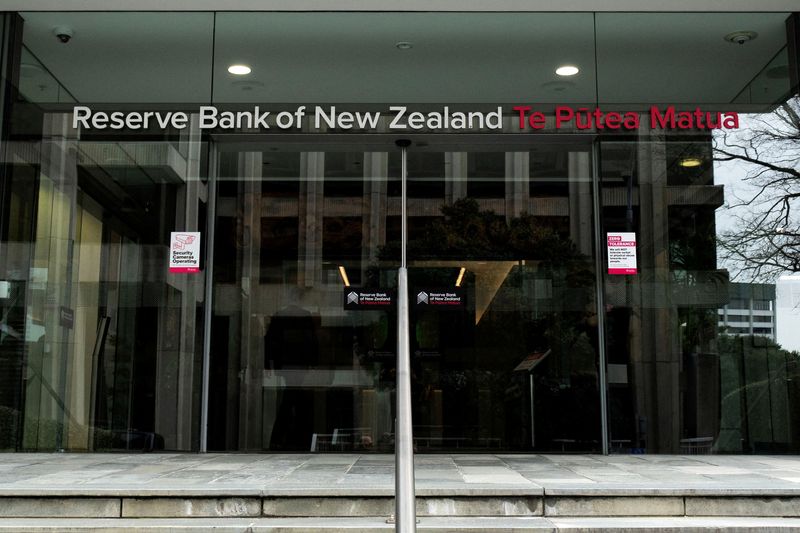
New Zealand's central bank is facing a challenging situation as it balances the need to control inflation with the potential impact on employment. With interest rates rising, the jobless rate could increase, which may cast doubt on the government's focus on inflation. This situation has raised questions about whether the central bank should return to a dual mandate that includes both inflation and employment goals.
The Reserve Bank of New Zealand (RBNZ) expects inflation to rise to 4.3% due to the energy shock from the Iran war, far exceeding its target range of 1% to 3%. However, the jobless rate is currently at a decade high, creating a difficult decision for policymakers.
In 2023, the National Party-led coalition government removed the obligation for the RBNZ to support full employment from its mandate. This move was part of their campaign promise after taking office. RBNZ Assistant Governor Karen Silk emphasized that while the bank has secondary objectives around not causing unnecessary volatility in output and employment, the primary focus remains on inflation.
Despite the challenges, the RBNZ decided not to raise interest rates at its last meeting, marking the closest call in its history. However, the bank still projects at least two quarter-point hikes by year-end. The forecasted unemployment rate of 5.4% is expected to persist for at least a year, which may suppress wage growth and discourage workforce participation.
Faraz Syed, a senior economist at Citi, noted that no other country has a labor market as weak as New Zealand's. He suggested that if the RBNZ had a dual mandate, it would be difficult to justify raising rates at this stage.
Labour Eyes Reinstating Dual Mandate
Labour, the opposition party, introduced a dual mandate in 2018 and is considering reinstating it if elected in the upcoming general election on November 7. Barbara Edmonds, Labour's finance spokesperson, highlighted that a dual mandate includes both inflation and maximum sustainable employment. She mentioned that this would provide an additional tool for the Monetary Policy Committee.
The current situation puts Prime Minister Christopher Luxon in a difficult position as the election approaches. When Luxon took over in 2023, inflation was the main concern, with rates double the top end of the RBNZ's target. Unemployment was low, and the post-pandemic labor market remained tight. However, the economy now faces the risk of stagflation, with ongoing effects from the RBNZ's previous aggressive tightening campaign.
Jarrod Kerr, chief economist at Kiwibank, stated that people have been struggling for the last three years. He argued that raising interest rates during a cost of living crisis could worsen the situation.
Polls Show Election Race Too Close to Call
Despite the criticism, the government maintains its stance. Finance Minister Nicola Willis emphasized that focusing on price stability is the best way to achieve economic growth that creates jobs. She added that the central bank does consider the wider economy.
A deeper downturn in employment could shift the balance in an election race that polls show is too close to call. An Ipsos Issues Monitor found that Labour is seen as more capable of handling inflation, housing, and unemployment, while National retains an edge in managing the economy broadly.
Political commentator Gareth Hughes noted that unemployment will be a key election issue because it affects people directly. He explained that while people might not know the current GDP rate or inflation forecasts, they are aware of whether their kids or neighbors have jobs.
(Reporting by Lucy Craymer and Stella Qiu; Editing by Praveen Menon and Kevin Buckland)
Post a Comment for "RBNZ's Inflation Push Under Scrutiny Amid Job Market Fears"