
ECB Eyes 'Insurance Hike' as Iran Conflict Sparks Euro Zone Inflation
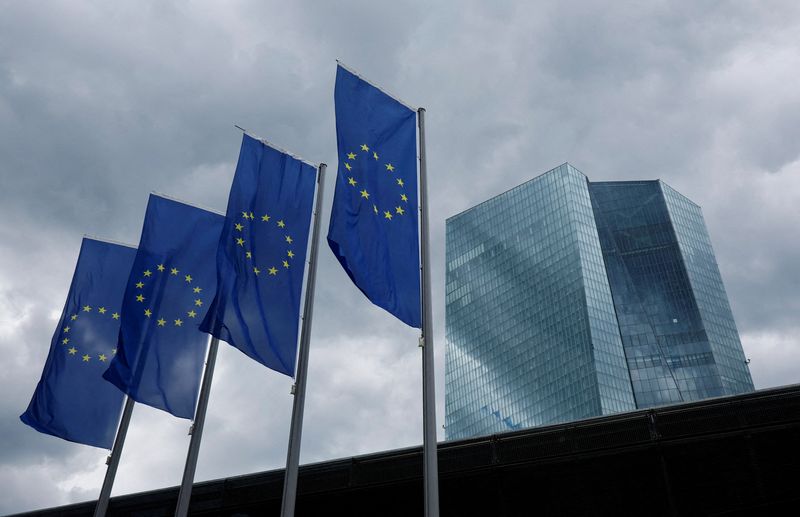
The ECB's Expected Interest Rate Hike
The European Central Bank (ECB) is expected to raise interest rates on Thursday, aiming to prevent higher inflation from becoming a more widespread issue in the euro zone economy. This move comes as inflation in the 21-country currency bloc has already surpassed 3%, significantly above the ECB's 2% target. Economic growth remains weak, creating a challenging environment for policymakers and economists who are divided on the need for tighter monetary policy.
Despite these concerns, ECB officials, some of whom had previously advocated for action in April, are likely to proceed with the rate hike. The decision is seen as crucial for managing inflation expectations and maintaining the bank’s credibility after its delayed response to the post-pandemic inflation surge in 2022.
Richard Portes, a professor at the London Business School, emphasized the importance of this step. He stated, "They have to raise rates this time, simply to manage expectations. If they don't, then the market's view will be that the ECB is willing to let inflation rip."
This would mark the first rate increase in nearly three years, raising the ECB's benchmark deposit rate to 2.25% from 2.0%. While sources suggest the ECB is unlikely to commit to further hikes in the immediate future, financial markets anticipate two more increases over the next year, with a potential move as early as September.
An 'Insurance Hike' That Underpins Expectations
Some ECB observers have described the expected rate increase as an "insurance hike," a precautionary measure that could be reversed if price pressures subside. This approach reflects the central bank's desire to remain flexible while addressing inflation concerns.
Supporting the case for the rate hike, the ECB is expected to revise its quarterly inflation projections upward, aligning them closer to its "adverse" scenario published in March. According to this scenario, inflation is projected to peak at 4.2% in the final quarter of this year before declining sharply in 2027.
Consumer, business, and investor expectations about price increases have also evolved, although medium-term expectations remain close to the ECB's target and far from the levels observed after Russia's invasion of Ukraine.
Stefan Gerlach, Chief Economist at EFG Bank in Zurich and former deputy governor of the Central Bank of Ireland, noted that the case for raising rates in June is not based on unmoored expectations but rather on the need to prevent such expectations from forming. He wrote, "Acting now is precisely what keeps them from doing so."
Heading for a Policy Mistake?
Not all economists are convinced by the need for a rate hike. Some warn that the ECB risks tightening its policy in an economy already struggling due to the Iran war. Berenberg's Holger Schmieding argued that the ECB is "heading for a policy mistake" given the stagnant labor market and weak consumer demand.
He suggested that the temporary surge in prices caused by the conflict is unlikely to lead to a prolonged inflation problem requiring higher rates. A review of earnings call transcripts by euro zone companies showed that only 40% of those outside the financial sector had raised prices or planned to do so, which is roughly half the share seen during the Ukraine war when energy prices surged in 2022.
Eric Dor, director of economic studies at France's IESEG School of Management, contended that the ECB may be overestimating its influence on household and business expectations, especially in a situation where inflation is driven by fuel costs rather than domestic demand.
However, the ECB has strengthened its messaging in favor of tighter policy. Chief Economist Philip Lane, typically seen as an inflation "dove," has stated that the Iran-related shock may have broader implications than the Ukraine crisis, as it affects global energy markets rather than just Europe.
This shift in tone has left most investors expecting further rate hikes. Henry Cook, a senior economist at broker MUFG in London, said, "We expect the ECB will leave the door open to more action but want to retain plenty of flexibility amid elevated uncertainty."
Post a Comment for "ECB Eyes 'Insurance Hike' as Iran Conflict Sparks Euro Zone Inflation"