
Teacher shortages rise as Labour's private school tax faces backlash
Teacher Numbers Decline Despite Labour's Tax on Private Schools
New official statistics reveal a significant drop in the number of teachers across the education system, despite the Labour government’s plan to introduce a tax on private schools to fund 6,500 additional teachers for state schools. The data shows that there were 466,372 teachers in 2025, a decrease of 1,900 compared to the previous year.
This decline was observed at both primary and secondary levels, with only special needs teacher numbers showing an increase. The Government attributed the reduction to a fall in pupil numbers caused by the declining birth rate and stated that primary schools were not included in the recruitment target. It also highlighted that teacher numbers have increased in further education settings, although these are not included in the statistics.
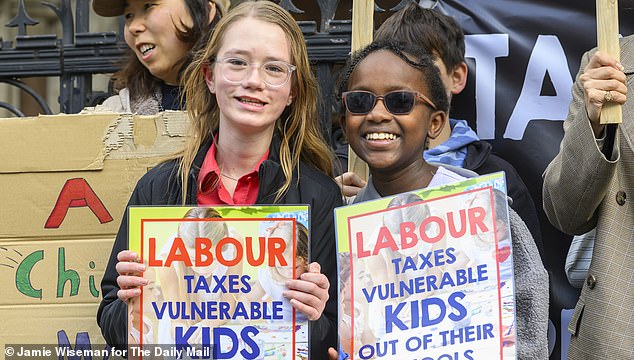
The new VAT on private school fees was introduced as a means to support state education. However, critics argue that this measure has not delivered the promised results. Laura Trott, Shadow Education Secretary, criticized the policy, stating that it has led to a decrease in teacher numbers while causing disruption through school closures and mid-year transfers. She described it as another broken promise from Labour, adding pressure to an already strained state education system.
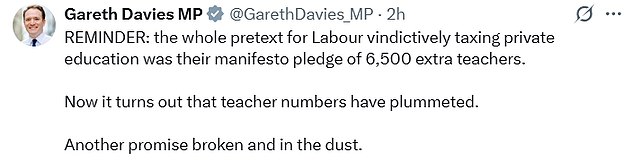
Gareth Davies, Shadow Business and Trade Minister, echoed these concerns, highlighting that the justification for taxing private education was based on the manifesto pledge of 6,500 extra teachers. He noted that the data now shows a plummeting number of teachers, calling it another broken promise.
Daniel Kebede, General Secretary of the National Education Union (NEU), agreed, stating that the situation "made a mockery of the Government's promise."
Breakdown of Teacher Numbers
According to the Department for Education (DfE) data:
- There were 212,800 teachers in state-funded nursery and primary schools, a decrease of 2,900.
- In secondary schools, the number of teachers dropped to 218,500, a decrease of 500.
- Special needs schools and pupil referral units saw an increase of 1,100 teachers, reaching 30,300.
- Centrally employed teachers by councils rose by 300, totaling 4,800.
The Government also reported an increase of 1,646 more teachers in further education, though this is not reflected in the statistics. It claimed that teacher retention is at one of its strongest levels on record, with around 2,100 fewer teachers leaving the profession compared to last year.
Government Response and Promises
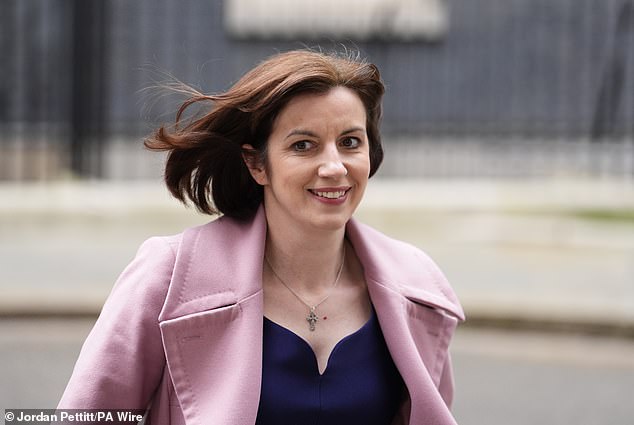
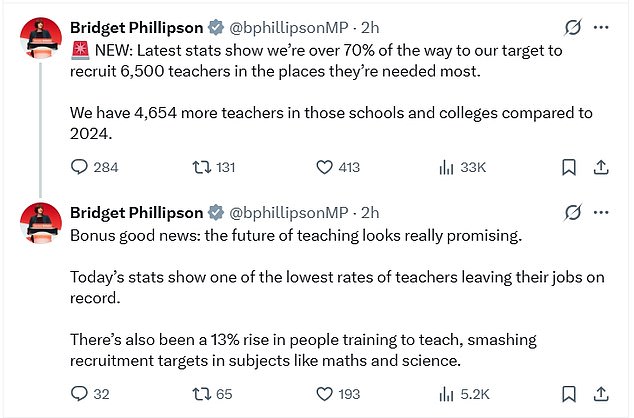
Education Secretary Bridget Phillipson highlighted the progress made towards the goal of recruiting 6,500 teachers. She stated on X that the country is over 70% of the way to meeting the target, with 4,654 more teachers in schools and colleges compared to 2024. She also noted a 13% rise in people training to teach, particularly in subjects like maths and science.
Despite the challenges, the Government maintains that it is still on track to meet its recruitment target. Ministers have long claimed that the £1.7 billion a year raised from the private schools tax would be directed towards state schools.
In December 2024, Chancellor Rachel Reeves emphasized that every penny from the tax would go into state schools to ensure children receive the best start in life, often through better teacher recruitment and retention.
However, recent events have sparked further criticism. In October, Education Secretary Bridget Phillipson faced backlash for mocking private school parents by saying: "Our state schools need teachers more than private schools need embossed stationery."
Impact on Private Schools and State Sector
Figures from the Independent Schools Council show that there are now 30,000 fewer pupils in private schools since Labour came to power in 2024. This has raised concerns about the impact of the tax on private education and where the money is being allocated.
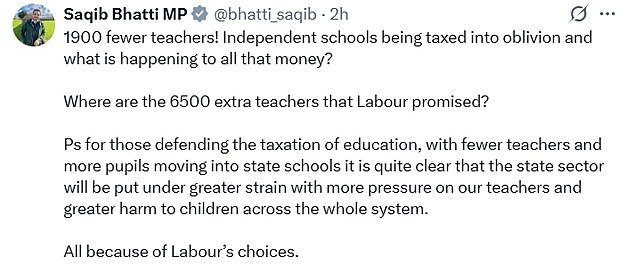
Shadow Education Minister Saqib Bhatti questioned the effectiveness of the policy, asking where the 6,500 extra teachers promised by Labour are. He warned that with fewer teachers and more pupils moving into state schools, the sector will face greater strain.
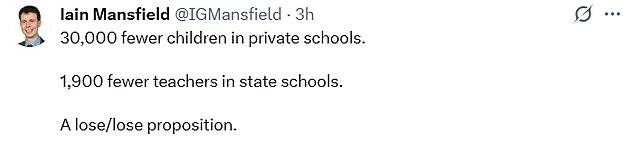
Iain Mansfield of the Policy Exchange think tank described the situation as a lose/lose proposition, noting the decline in both private school pupils and state school teachers.
Post a Comment for "Teacher shortages rise as Labour's private school tax faces backlash"