
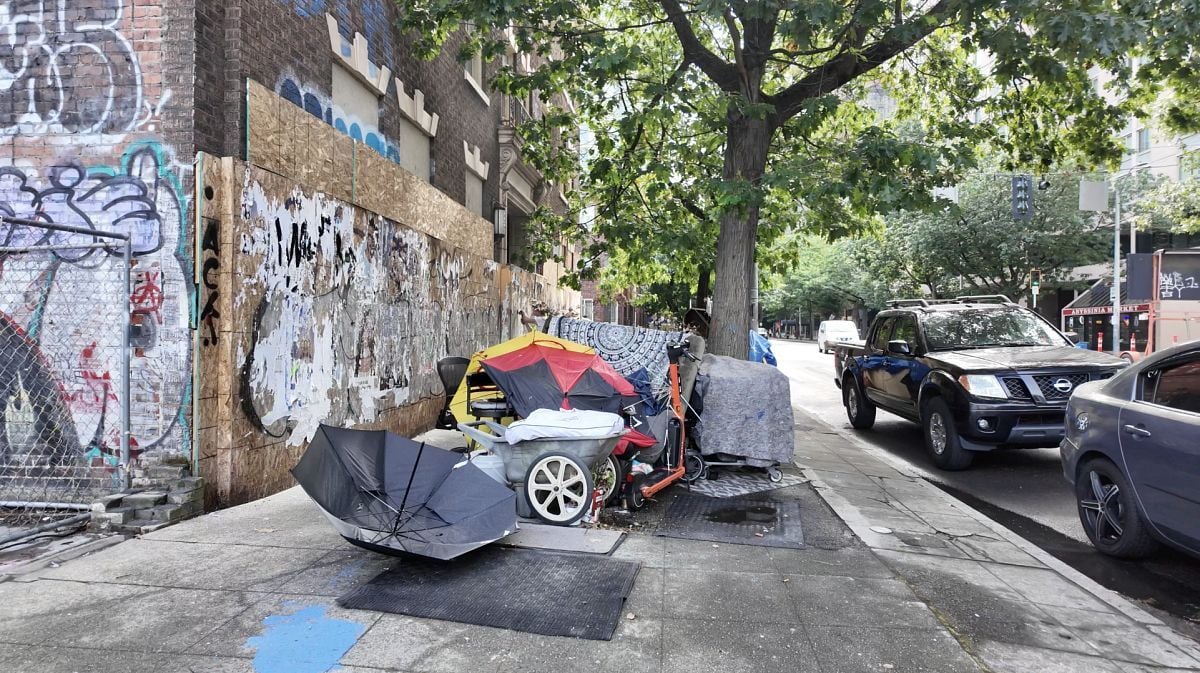
Rising Homelessness in Seattle Metro Area
As the homeless population continues to grow in the Seattle metro area, several factors are contributing to the worsening situation. A lack of available housing and permissive drug use policies are playing significant roles in exacerbating the crisis.
According to the latest Point-In-Time count data from the King County Regional Homelessness Authority (KCRHA), the homeless population in King County has increased by 9% over the last two years. The KCRHA's snapshot estimates that the total number of people experiencing homelessness in the region, anchored by Seattle, is now 18,365, up from 16,868 in 2024.
While the rate of growth has slowed compared to previous years, officials at KCRHA have noted this as a sign of progress, even though they emphasize that more needs to be done. "While homelessness continues to grow, this increase is substantially smaller than the 26 percent increase observed between 2022 and 2024," the authority stated in a recent news release.
William Towey, associate deputy of strategy at the KCRHA, highlighted that many homeless individuals are finding housing. "A lot of people are coming in and successfully exiting, but the inflow continues to grow," he said. Towey attributed the ongoing influx of homeless individuals to the lack of affordable housing in King County and Seattle.
However, Andreas Suarez, executive director of We Heart Seattle, a community organization focused on homelessness, argues that the real issue lies in the absence of requirements for drug treatment for drug-addicted homeless individuals. "Drugs are the real anchor keeping people on the streets: fentanyl, meth, and open use with zero consequences trap service-resistant individuals in addiction and chaos, blocking any meaningful path to treatment or self-sufficiency," she said.
Suarez also criticized Seattle and King County’s permissive policies, which she claims have turned the city into a magnet for homeless individuals from surrounding areas that are now enforcing basic rules against camping and dealing. "We’re not solving homelessness, we’re subsidizing and importing it," she added.
Unsheltered Homeless Population Rises
The new data shows a continuing increase in the number of homeless individuals who rely on makeshift shelter. According to the report, 64% of the county's homeless population lives unsheltered in places such as tents or vehicles. This number has risen by 6% from 2024, but more than 30% since 2022, when the rate of those living on the streets exceeded 50%.
Seattle Mayor Katie Wilson, a member of the KCRHA board, expressed concern about the high number of homeless individuals living without shelter. "We were already a national outlier having over 50% of our population unsheltered, now when it's up to two-thirds, that’s pretty shocking," she said.
The report also found that the number of people staying in shelters decreased slightly. However, according to the KCRHA, this decline is due to a reduction in available regional shelter beds between 2024 and 2026 rather than empty beds going unused.
Family shelter beds were particularly affected. Family emergency shelter capacity fell significantly between 2024 and 2026, down by about 11.8% region-wide, pushing more families onto the streets. The number of families living unsheltered has risen steadily, reaching 647 households in King County, representing 2,224 individuals.
Dominique Alex, CEO of the Seattle-based family homelessness nonprofit Mary's Place, explained that some homeless shelters had temporarily closed due to building renovations. "We get anywhere between 40 and 50 calls a day from families seeking shelter, and they are only able to bring in one or two of those families a week," she said.
Policy Implications and Federal Funding
Suarez pointed out that the increase in the Point-In-Time homeless count could carry significant policy implications under the Trump administration. She mentioned that the U.S. Department of Housing and Urban Development (HUD) is prioritizing grant allocations for communities that demonstrate a substantial reduction in homelessness.
King County and Seattle receive around $65 million to $67 million annually in federal funding through HUD. HUD officials have expressed serious concerns about low-barrier strategies utilized by Seattle and King County and nationwide, which provide housing without requiring alcohol or mental health treatment.


No comments:
Post a Comment