
Inside NASA's $1B plan to dismantle the ISS, latest leak raises evacuation fears
The Final Chapter for the International Space Station
Over 25 years since the first astronauts floated aboard the International Space Station (ISS), the orbiting laboratory is facing its final chapter. Recent events have raised concerns about the station’s future, with experts now outlining a detailed plan to bring the ISS down safely.
Last week, NASA astronauts were ordered to prepare for an emergency evacuation while Russian cosmonauts attempted to repair a 'worsening' leak. Although no escape flights were ultimately necessary, this incident has highlighted the growing risks associated with the aging station. Experts now believe that the ISS has reached the end of its useful lifespan and must be brought back to Earth in a controlled manner.
A $1 Billion Plan to Bring the ISS Down
At the ASCEND 2026 aerospace conference, Ryan Landon, director of Operations at NASA Johnson Space Centre, revealed that the ISS will be allowed to start falling to Earth sometime in 2028. With a mass of 450,000 kilograms—equivalent to 280 family cars—the station will slowly fall out of orbit if it isn’t periodically boosted upwards.
However, simply letting the station's orbit decay naturally would result in an uncontrolled re-entry that could scatter potentially deadly debris across Earth. To prevent this, NASA plans to push the station out of orbit, bringing the remaining material down at a remote location in the Pacific Ocean.
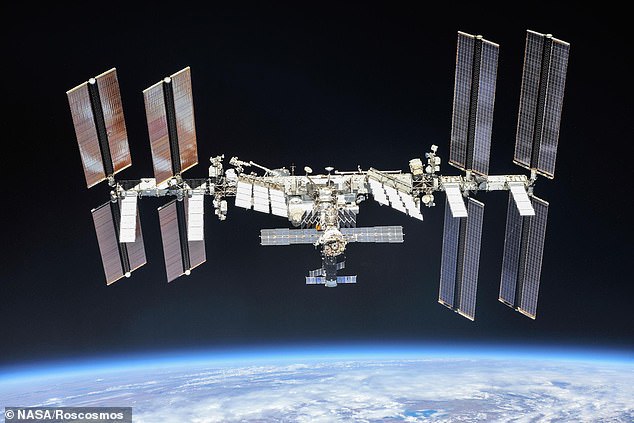
How the ISS Will Be Brought Back to Earth
The ISS and its crew of seven astronauts from around the world orbit at an altitude of 250 miles (400km) above the Earth. To maintain this relatively low orbit, the station travels at speeds of 17,500mph (28,000km/h) and whizzes over our heads 16 times a day. Normally, the station uses propellant to thrust back up into orbit and avoid tumbling into the thicker layers of the atmosphere.
Starting from 2028, NASA plans to let this process take its natural course. According to the latest plans published in 2024, the station will still be operational during this time, and on-board activities, including research, will continue as normal.
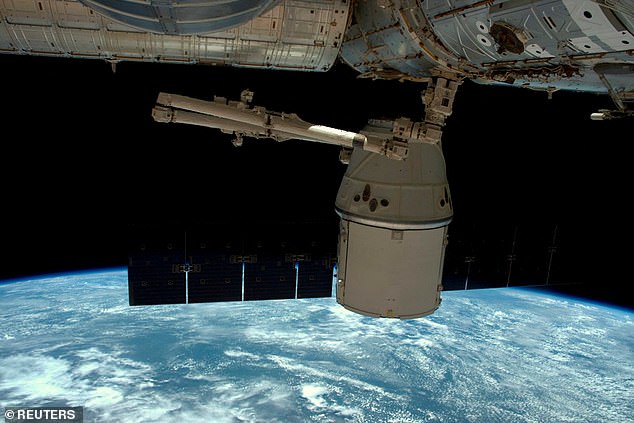
The Final Steps in the Deorbit Process
In 2029, the last human crew will depart the ISS and take anything of historical importance they can carry. As the ISS falls from 200 miles to 175 miles, a modified SpaceX Dragon capsule will dock with the station. Once the station hits the point of no return at 175 miles, the Dragon capsule will begin to guide the ISS into an elliptical orbit.
When the time is right, the space tug will deliver one last kick and push the station into Earth within less than half an orbit. The ISS and tug will hit the atmosphere at 17,000 mph and be destroyed.
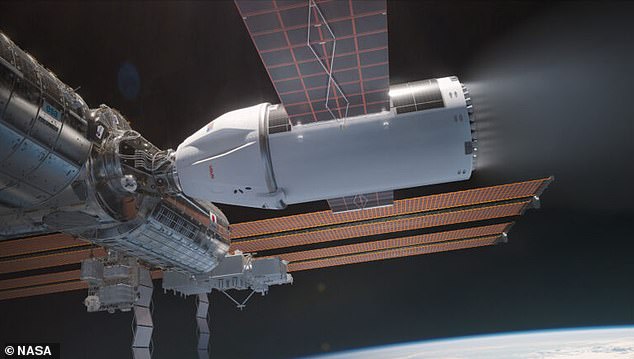
Controlling the Re-Entry
Dr James Beck, space debris expert and director of UK-based space consultancy Belstead Research, said: 'It is certain that parts will reach the surface of the Earth, and most likely quite a lot of parts.' He explained that there is an internationally agreed 'casualty risk limit' of one in 10,000 for any re-entry. This limit is typically reached once a spacecraft gets to a mass of around 500 to 1,000 kg, whereas the ISS weighs 450 tonnes.
To ensure safety, NASA needs to control exactly where the debris ends up so that no one gets hurt. This requires boosting the station backwards, slowing it down at a precise point in its orbit so that it eventually falls in an uninhabited area in the Pacific called Point Nemo.
Key Facts About the International Space Station
- Length: 356ft (109m)
- Weight (in Earth gravity): 419,725kg
- Average altitude: 250 miles (400km)
- Average speed: 17,500mph (28,000km/h)
- Earth orbits per day: 16
- Maximum docking capacity: Eight spacecraft
- Permanent crew size: Seven astronauts
- Maximum crew capacity: 13
The Role of SpaceX in the Deorbit Mission
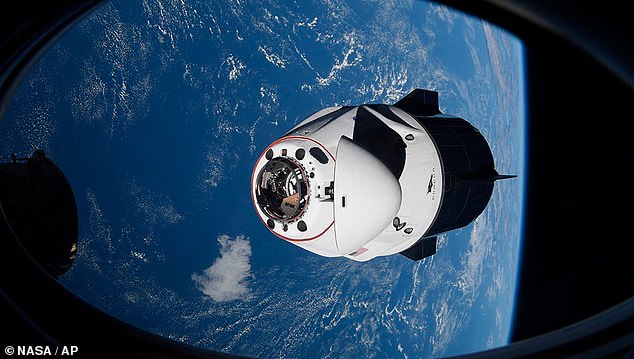
NASA awarded Elon Musk's SpaceX a contract worth slightly under $1 billion (£749.69 million) to build a 'tugboat' capable of delivering the push needed to bring the ISS down. This will be a modified version of the SpaceX Crew Dragon capsule used to deliver astronauts and cargo.
This vehicle will need to carry six times as much propellant and produce three to four times as much power as the current generation of SpaceX spacecraft. NASA officials now say that the last cargo capsule will depart the ISS around mid-2029, ahead of the official end of operations in 2030.
Once the last crew have gone, the station will continue to fall over several months until it reaches the 'point of no return' at an altitude of 175 miles (280 km). Roughly 18 months before the ISS crashes down in 2031, the modified Dragon capsule will dock with the station and prepare to deliver the finishing blow.
Lessons from the Past
In 1979, NASA's 75-tonne space station, Skylab, tore itself apart as it crashed through the atmosphere during a planned re-entry, sending debris falling over parts of Western Australia. However, NASA's assessment found that leaving the ISS in orbit is far more dangerous than attempting to bring it down intentionally.
The agency's 2024 assessment concluded: 'The International Space Station requires a controlled re–entry because it is very large, and uncontrolled re–entry would result in very large pieces of debris with a large debris footprint, posing a significant risk to the public worldwide.'
Ensuring the space station is well maintained continues to be the safest operational approach while also planning for deorbit at the space station’s end of life.
Post a Comment for "Inside NASA's $1B plan to dismantle the ISS, latest leak raises evacuation fears"