
Is Your Faraday Pouch Still Effective? Insurer Warns on Keyless Theft Devices
The Rise of Keyless Car Crime and the Role of Faraday Pouches
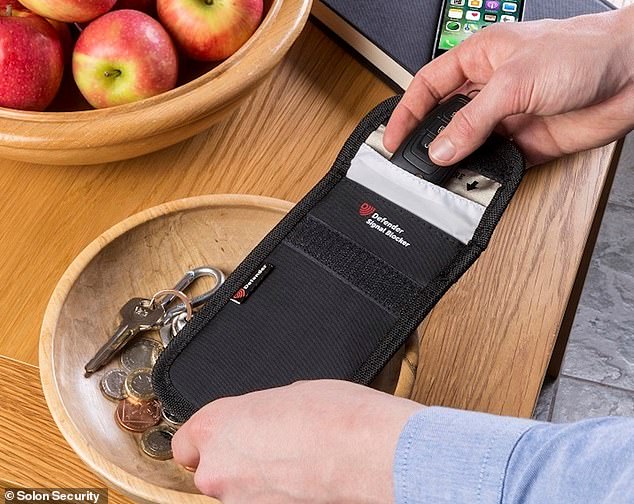
Over the past decade, the rise in keyless car crime has led to a significant increase in the use of signal-blocking Faraday pouches and bags. These devices are marketed as the ultimate defense against 'relay attacks,' a common method used by thieves to steal vehicles without triggering alarms. However, while these pouches offer effective protection, they are not infallible.
The conductive metallic mesh and fabric lining inside these pouches are designed to block electromagnetic signals such as Wi-Fi, Bluetooth, GPS, and cellular signals. However, repeated folding, overfilling with large key fobs, and damage from sharp-edged keyrings can cause the lining to degrade over time. This degradation leads to what is known as 'Faraday fatigue,' which compromises the pouch's ability to block signals and leaves vehicles vulnerable to theft.
According to a report by Tempcover and Halfords, more than a quarter of drivers believe that a Faraday pouch is a one-time purchase and do not check its functionality regularly. This misconception could put millions of drivers at risk, as the devices may no longer provide the necessary protection.
Admiral, a short-term car insurer, states that around 70% of vehicle thefts today involve keyless cars. Despite this, many drivers with Faraday pouches may be under the impression that their vehicles are fully protected. In reality, if the pouch is no longer functioning correctly, it could leave them exposed to theft.
Tempcover warns that expired or degraded Faraday pouches could become a legal liability for those who fall victim to their flaws. A poll of 2,000 drivers revealed that 27% believe these pouches are a 'buy-once' product and do not check or replace them over time. Additionally, half of the respondents wrongly believe that an expired pouch will still guarantee an insurance payout.
Jake Lambert, a temporary car insurance expert at Tempcover, explains: "Relying on a degraded pouch that no longer blocks a signal could be seen as a failure of duty. This doesn't just leave the vehicle vulnerable; it leaves the owner financially exposed, so it's important to ensure you're as protected as possible before a theft occurs by testing regularly."
The Popularity and Usage of Faraday Pouches
Faraday pouches are used by approximately 13% of drivers, equating to about 4.5 million of the 34.5 million cars on the road. However, the same poll found that only a quarter of users test their signal blockers monthly, while 27% admit to never checking whether the pouch is effectively blocking their vehicle's signal. One in 14 drivers only tests the effectiveness once a year or less often.
Halfords reported a threefold increase in sales of its 'Anti-Theft Car Key Signal Blocker' from 2024 to 2025. Despite this, the average driver is still using a pouch that is over two years old, with 14% having owned theirs for up to five years.
Claudia Rennie from Halfords notes: "Faraday pouches are a tried-and-tested technique, but they experience degradation driven by wear and tear, not time on the shelf. The inner metallic lining—usually a blend of nickel and copper—is what blocks the radio frequency, but it can degrade, crack and rip over time through constant folding."
New Legislation to Combat Keyless Car Theft
A new law has recently been introduced to address the growing issue of keyless car theft. The Crime and Policing Act 2026, which received Royal Assent last month, makes it a criminal offence to manufacture, import, supply, adapt, or possess any electronic device that can be used to steal cars. This includes signal relay, repeater, or amplifier devices commonly used by organized thieves.
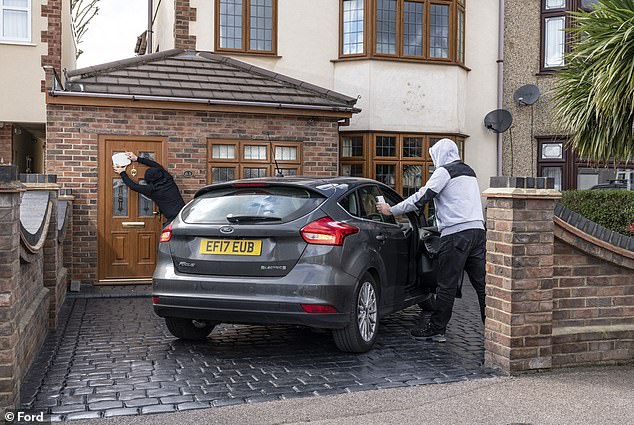
These gadgets allow criminals to pick up the signal from a key fob of a keyless car and remotely unlock and start the vehicle without breaking into a premises. The law also extends to signal jammers, often used in car parks to prevent a vehicle’s doors from locking when the owner presses the electronic button on the key fob, and illicit tracking devices attached to victims’ cars to monitor their movements.
Legislative changes introduced as part of the Act also grant police additional powers to enter premises to search for and seize stolen cars that have been electronically tracked.
Top 5 Tips to Avoid Faraday Failure
-
Test frequently
Every few months, place your key inside the pouch, seal it, and stand next to your car. If the door unlocks, the pouch needs replacing. -
Keep it dry
Moisture compromises conductivity, so keep it dry and never put it in the wash. -
Protect the inner lining
Be careful with sharp objects or loose coins, as they can easily rip the delicate inner conductive lining (nickel/copper). -
Avoid overstuffing
Filling your pouch to the brim can impact its performance and strain the seams. If you have multiple keys, use separate pouches. -
Park 'Nose-In'
Continue to park 'nose-in' against a wall or garage door where possible. This acts as a physical deterrent against technical attacks like 'headlight hacking,' making it significantly harder for thieves to reach the wiring used to bypass security.
Post a Comment for "Is Your Faraday Pouch Still Effective? Insurer Warns on Keyless Theft Devices"