
Rare jaguar spotted near US-Mexico border sparks hope for species revival
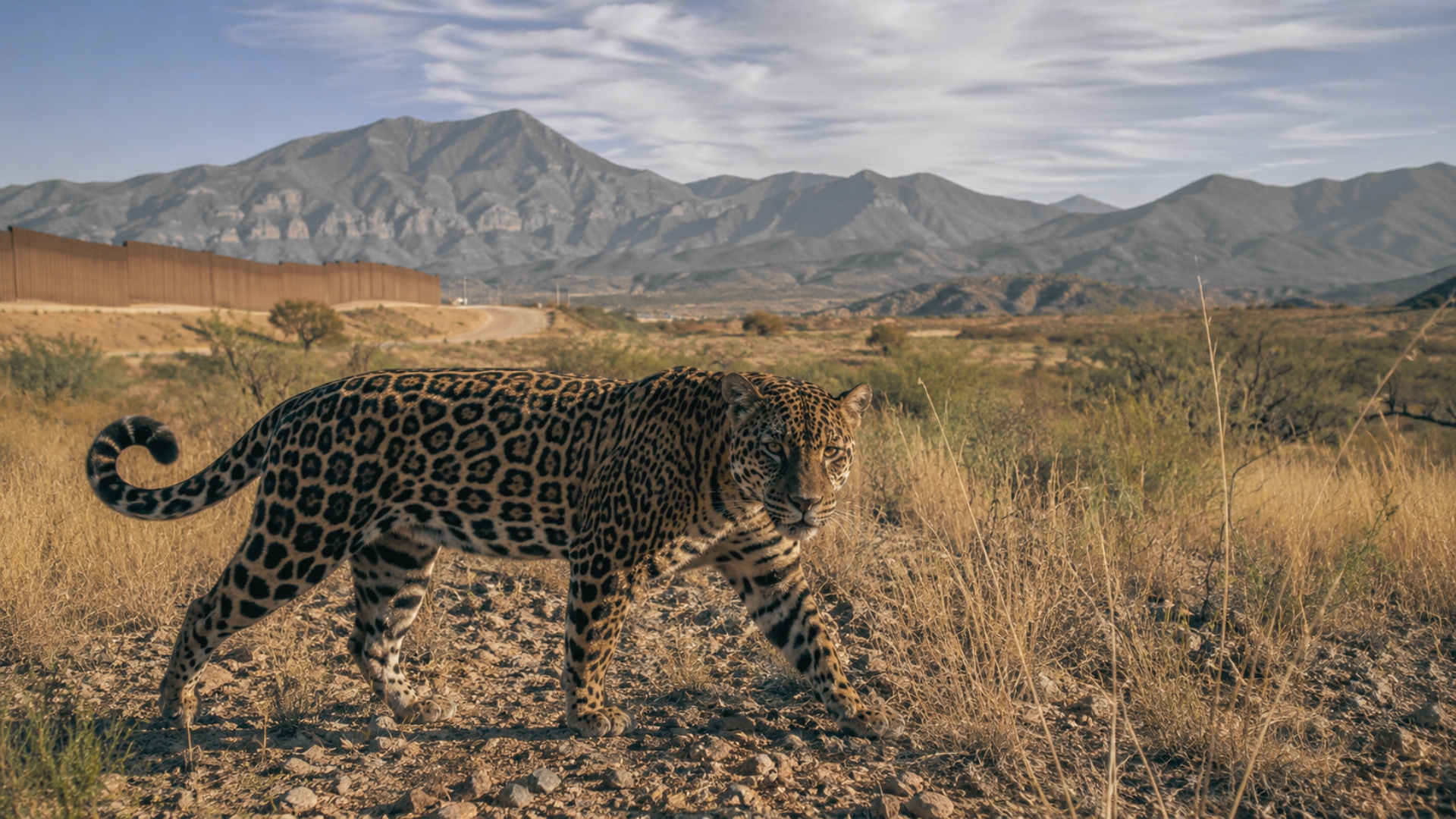
A Rare Glimpse of One of North America's Most Elusive Predators
Wild jaguars are among the most difficult animals in the Americas to observe. Secretive, wide-ranging, and often active in remote landscapes, they can pass through vast territories without ever being seen by people. That is why newly released footage of a jaguar near the U.S.–Mexico border has generated such excitement among researchers and conservationists.
The video offers a rare look at a species that once roamed much farther across the American Southwest but now survives primarily in Mexico and Central and South America. For those working to protect large carnivores, every confirmed sighting provides valuable information about where jaguars still travel and what they need to survive.
The Largest Cat in the Americas
The Jaguar is the largest cat in the Western Hemisphere and the third-largest feline species in the world after tigers and lions. Historically, jaguars ranged from Argentina north into parts of the present-day United States, including Arizona, New Mexico, and Texas. Habitat loss, hunting, and conflicts with humans gradually reduced their range, eliminating breeding populations from the U.S. decades ago.
Today, most jaguars are found in tropical forests, wetlands, and other habitats farther south. Occasional sightings in border regions therefore attract considerable scientific interest.
Why Border Jaguars Matter
A jaguar appearing near the international border is more than a wildlife curiosity. These animals can travel enormous distances and require extensive connected habitat. The borderlands between the United States and Mexico contain mountain ranges, desert grasslands, river corridors, and other landscapes that can function as movement routes for wide-ranging wildlife.
Conservationists view these areas as particularly important because they may allow animals to disperse, find mates, and maintain genetic diversity. Even if breeding populations are not currently established north of the border, individual jaguars moving through the region demonstrate that ecological connections still exist.
Camera Technology Is Changing Conservation
Many of the most important jaguar discoveries now come from remote cameras. Motion-triggered camera traps allow researchers to monitor wildlife without disturbing animals. These devices have revolutionized the study of elusive species by capturing images and videos that would otherwise be nearly impossible to obtain.
For jaguars, camera traps help scientists identify individuals based on their unique spot patterns, track movements, estimate population sizes, and document habitat use. A single video can provide valuable insights into where a cat traveled and how it uses the landscape.
Habitat Connectivity Is Critical
One of the biggest challenges facing jaguar conservation is fragmentation. Large carnivores require extensive territories and often move across vast distances. Roads, urban development, agricultural expansion, and other human activities can divide habitat into isolated patches.
When populations become disconnected, genetic diversity may decline and long-term survival becomes more uncertain. Conservation groups increasingly emphasize habitat corridors that allow wildlife to move safely between protected areas. Maintaining these connections is considered especially important for species like jaguars that depend on large, uninterrupted landscapes.
A Symbol of Ecological Recovery
The jaguar occupies a unique place in conservation discussions. As an apex predator, it plays an important ecological role in regulating prey populations and maintaining ecosystem balance. Because it requires extensive habitat, protecting jaguars often benefits numerous other species that share the same environment.
For this reason, the jaguar is frequently viewed as an umbrella species, one whose conservation can help safeguard entire ecosystems. Each confirmed sighting near the border therefore carries significance beyond a single animal.
Challenges Remain
Despite encouraging sightings, jaguars continue to face substantial pressures across much of their range. Habitat loss remains a major concern, while conflicts with livestock producers can sometimes lead to retaliatory killings. Illegal hunting and infrastructure development also create obstacles for long-term conservation.
Researchers caution that occasional sightings do not necessarily indicate a fully recovered population. Instead, they represent pieces of a larger puzzle that scientists are working to understand.
Why the Footage Matters
The newly documented jaguar offers a reminder that wildlife can persist in places where many people assume it has disappeared. For conservationists, the video provides evidence that large carnivores continue to navigate landscapes shaped by political boundaries, roads, and human development. For the public, it offers a rare glimpse of one of the Americas' most iconic predators.
Perhaps most importantly, the footage highlights the value of protecting connected habitats that allow animals to move freely across the landscape. The jaguar's future in the border region remains uncertain. But every confirmed appearance demonstrates that the possibility of recovery still exists and that some of North America's wildest stories are still being written in the mountains and deserts along the international frontier.
Post a Comment for "Rare jaguar spotted near US-Mexico border sparks hope for species revival"