
A Rising Star in the World of Racing Simulators
Nestled among the rolling fields of Bristol lies a company that is rapidly making its mark on the global motorsport scene. Dynisma Motion Generators, a firm with 180 employees, has become one of Britain’s fastest-growing businesses, powering up to half of the Formula 1 grid. The company works closely with prestigious teams such as Ferrari, Alpine, and Cadillac, and has been a leader in the industry since its inception in 2017.
At the helm of this success is Ash Warne, an aerospace engineering graduate who once worked as a banker before venturing into the world of motorsport. His journey began in 2007 when he spotted an aero modelling job advert in an old magazine, leading him to join McLaren. After six years at the Woking-based team, he moved to Ferrari, where he spent four years as an engineer before launching Dynisma.
A Visionary Approach to Innovation
Warne’s experience in the industry gave him a unique perspective on the challenges faced by racing teams. “When I moved back to the UK, I had an opportunity to take a little bit of time and really think about what I wanted to do,” he explained. “I realized, having spoken to people, that nobody had really nailed it. So I just took time, spent the first 18 months working out what the game plan was, and came up with the technology that we're still using today.”
This innovative approach has positioned Dynisma as the go-to simulator provider for not only Formula 1 teams but also squads competing in Formula 2, Formula E, the World Endurance Championship, and even IndyCar in the United States. The company offers a ready-made platform that teams can use instead of investing up to £10 million in building their own in-house models.
The Importance of Reliability and Performance
According to Warne, the key advantages of Dynisma’s simulators are their responsiveness, high bandwidth, and low latency. “The time delay between action and response is critical,” he said. “Teams want to focus on developing the car, not on building a simulator team.”
He emphasized that while Dynisma is not the cheapest option, the reliability and proven performance of their technology make it a worthwhile investment for teams looking to rely on it for the next decade. “They need to be able to invest in something that they trust,” he added.
Expanding Access to Motorsport Technology
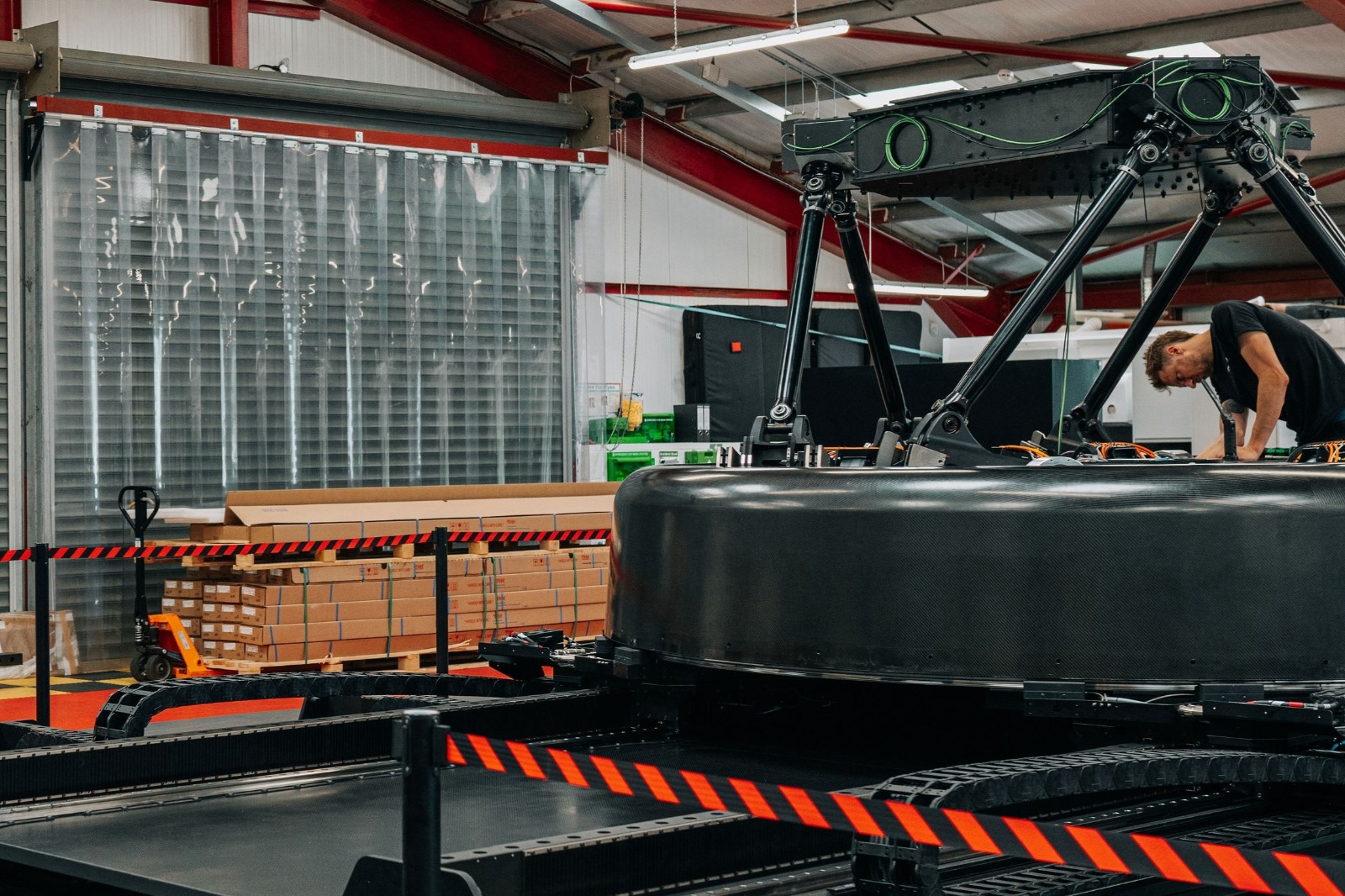
Now, Dynisma is taking its innovations to a broader audience with the launch of its latest product, the DMG-S. This new model, priced within the upper echelons of the six-figure range, is the company’s third in the motion simulator space, following the DMG-1 and the DMG-360XY, which is trusted by F1 teams.
The DMG-S is designed to be more accessible, targeting karting and customer racing teams. It uses the same advanced technology as its predecessors, featuring a latency of fewer than 5ms and a motion bandwidth above 50Hz. Its compact design allows for easy installation and comes in two configurations: GT and touring car applications, as well as single-seaters.
Realistic Experiences for Drivers
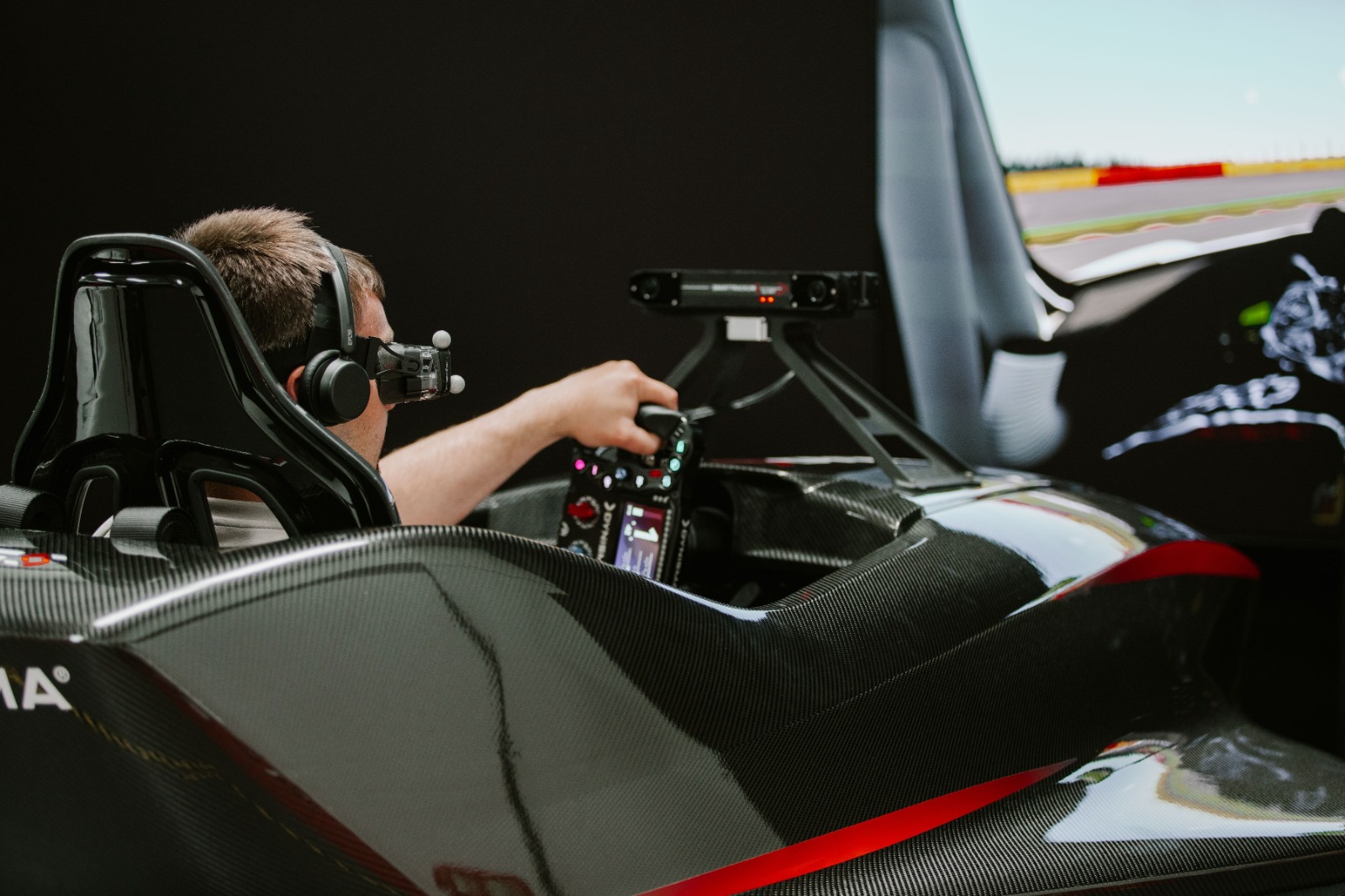
During a test run at Dynisma HQ, the realism of the simulator was striking. With a virtual reality headset on, the writer was placed in the cockpit of a Ferrari F2004 at Spa, experiencing the smoothness of the corners and the intensity of the Eau Rouge section. The Porsche GT3, however, proved more challenging, offering a more intense driving experience that tested the limits of even seasoned drivers.
The effects of the simulator’s movements were clearly felt, from the vibrations of the kerbs to the rough terrain of the gravel. Unlike console games, the physical feedback made the experience much more immersive.
A Future Focused on Accessibility
With the introduction of the DMG-S, Dynisma is aiming to bring its technology to the grassroots level of motorsport. “Our vision is that everyone who comes into motorsport, if they get where they want to go in F1, they're probably going to be using a simulator,” said Warne. “We would like to be able to offer that journey to start even earlier.”
The company is confident that the DMG-S will help develop drivers in a more accessible environment, making high-quality simulation technology available to a wider range of motorsport enthusiasts. As Warne concluded, “DMG-S is the first time we’ve really focused, not only on how to bring the cost down, but how to make the manufacturing that much faster.” He added that the company expects to export the simulators globally in the near future, with a busy few years ahead.
No comments:
Post a Comment