
Rise in AI-Related Job Postings and the Concept of "Messy Jobs"
Chinese companies are increasingly seeking fresh university graduates with backgrounds in artificial intelligence (AI) this year. This trend is driven by the widespread use of AI, which is making their operations more efficient. According to a recruitment portal based in Beijing, Maimai, in the first five months of this year, nearly four out of every 10 job postings targeting fresh graduates were AI-related. This marks an increase from nearly three out of 10 in the same period last year.
Maimai founder and CEO Lin Fan highlighted that AI has created disparities in operational efficiencies across different companies. As a result, competition for AI and embodied AI talent has become a central focus in the recruitment market.
Beijing leads the mainland in terms of appetite for AI talent, with five out of 10 graduate job openings tied to the technology. Meanwhile, the unemployment rate for those aged 16 to 24, excluding students, fell to 15.6 per cent in May from 16.3 per cent in April. In May last year, it was 14.9 per cent.
To address the issue of unemployment, the Ministry of Human Resources and Social Security launched an online recruitment month. This initiative aims to match internet firms' demand with the supply of graduates. Data released on Thursday indicated that the campaign had led more than 5,000 enterprises to post a combined 200,000 vacancies for graduates.
The recruitment campaign highlights a structural shift in newly posted openings. Xinhua quoted the Zhaopin recruitment platform as stating that hiring demand "was no longer confined to software roles" and that "intelligent manufacturing" had emerged as a high-growth track. Zhaopin noted that more than one-fifth of graduate vacancies for AI engineering stemmed from the high-end equipment and intelligent manufacturing sectors.
In April, the Ministry of Education and other government agencies issued guidelines centered on "AI+ Education." The goal is to integrate AI into all undergraduate education and ensure students emerge with technological literacy.
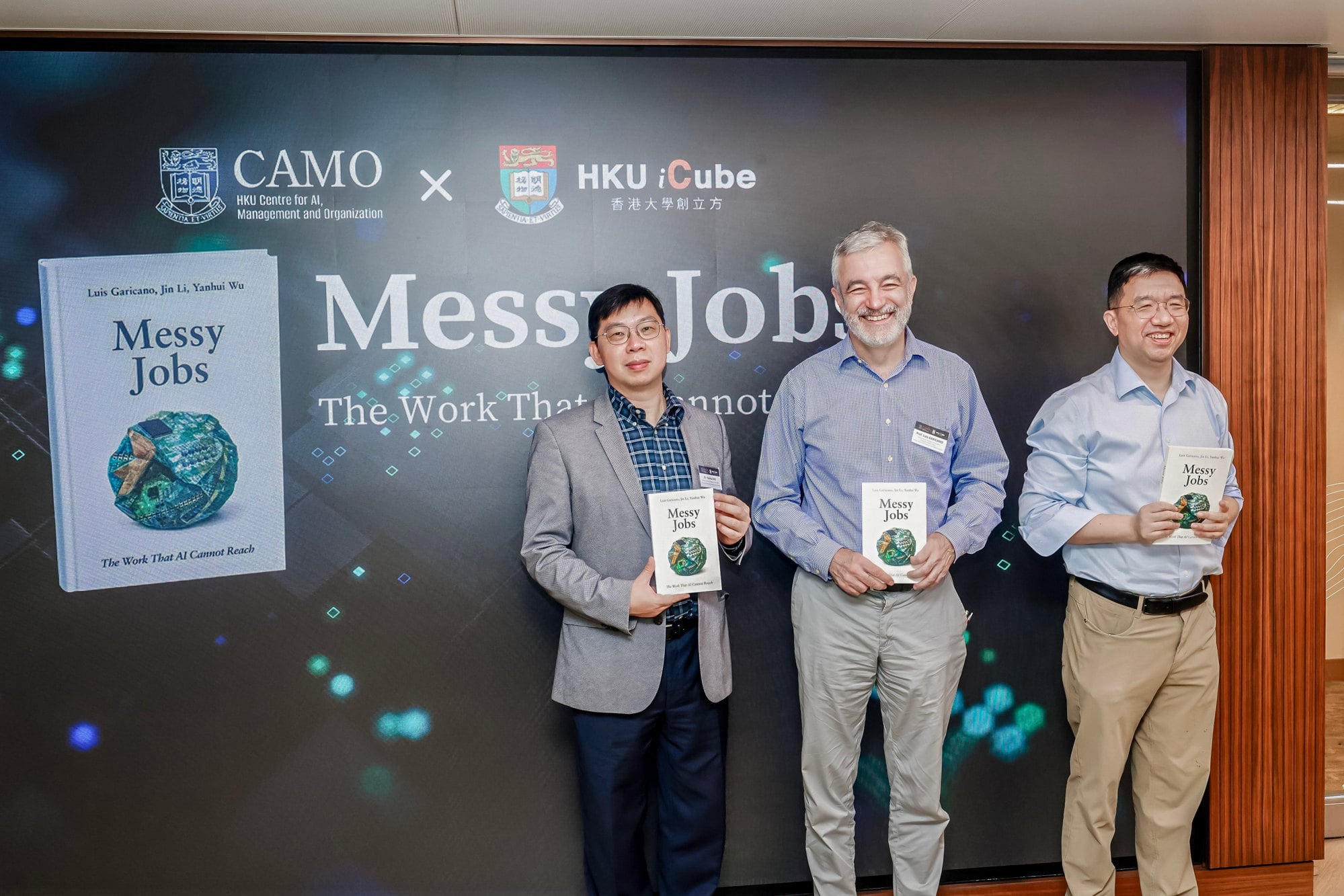
As concerns grow over AI displacing workers, two economics professors at the University of Hong Kong, Li Jin and Wu Yanhui, argue that the technology is more likely to reshape jobs rather than eliminate them. According to the professors, jobs that combine a wide range of tasks—such as interacting with clients, coordinating teams, exercising judgment, and solving unexpected problems—are far harder for AI to replace than "clean" roles built around routine, well-defined tasks.
This idea underpins Messy Jobs, a book co-written by the duo with Luis Garicano, a public policy professor at the London School of Economics. The book was published last month.
The HKU professors caution that such "messy" work is often inaccessible to entry-level employees, making it harder for fresh graduates to build the broader experience that makes workers more resilient to the challenges posed by AI. They emphasize that education and training should focus not only on teaching narrowly defined skills but also on developing students' ability to handle complex, multidimensional work—what they call "messy jobs."
Wu added that educators and employers should aim to "make young people's jobs 'messier.'" While Wu notes that so far, AI itself has not had a major direct impact on employment, Li warns that some firms might cite AI as a convenient justification for cutting jobs, even when the underlying reasons are elsewhere.
Key Trends in AI Recruitment
- Increased Demand for AI Talent: More than 40% of job postings for fresh graduates in the first five months of this year were AI-related.
- Regional Focus: Beijing leads the mainland in the demand for AI talent, with 50% of graduate job openings linked to AI.
- Structural Shifts in Hiring: Companies are expanding their hiring beyond traditional software roles to include areas like intelligent manufacturing.
- Government Initiatives: The Ministry of Human Resources and Social Security launched an online recruitment month to match graduates with available jobs.
Implications for Education and Workforce Development
The concept of "messy jobs" emphasizes the need for a more holistic approach to education and workforce development. As AI continues to evolve, the focus should be on preparing students for complex, multifimensional roles rather than just technical skills.
Educators and employers must collaborate to create opportunities that allow graduates to gain experience in diverse and challenging environments. This will help build resilience against the potential disruptions caused by technological advancements.
Moreover, while AI may not directly impact employment in the short term, there is a need for vigilance. Some companies might use AI as a pretext for reducing staff, even if the real reasons are unrelated. Therefore, continuous monitoring and adaptation are essential to ensure that the workforce remains adaptable and competitive in an AI-driven economy.


No comments:
Post a Comment