
How Drones and Submarines Will Replace Ground Troops and Tanks
A New Era of Warfare
A new era of warfare was introduced with the release of the Defence Investment Plan (DIP), which outlines Labour's uncosted strategy for enhancing the country's security. Traditional methods of defence, such as ground troops and manned tanks, are being replaced by crewless systems that have proven to be highly effective in Ukraine.
Over four years, an additional £15 billion will be spent on defence, bringing it to 2.68 per cent of GDP by 2030. The Navy is set to become what the First Sea Lord General Sir Gwyn Jenkins calls 'the Hybrid Navy', with similar transformations planned for the RAF and Army. Spending on 'wider security' will also increase to 4.2 per cent of GDP, potentially including efforts towards Net Zero and managing small-boat crossings.
Drones and AI-Driven Systems
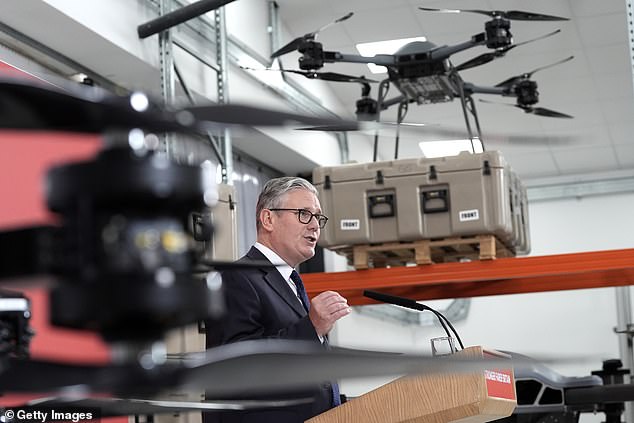
The DIP includes a £5 billion investment in drones, which some critics argue is insufficient. This investment covers uncrewed systems across land, sea, and air domains. The future of the Navy, RAF, and Army will be driven by AI.
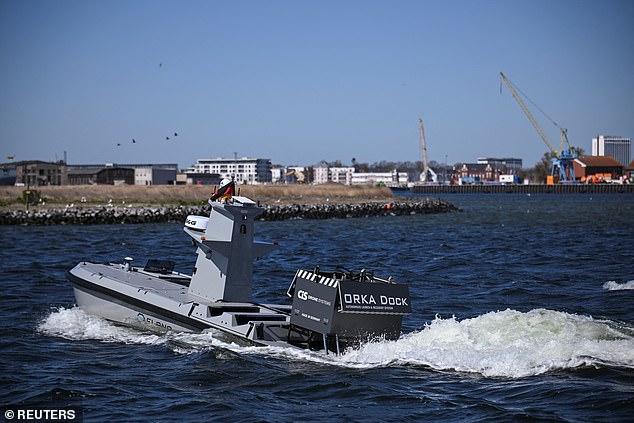
The Navy's hybrid fleet will feature uncrewed missile barges (Type 91) and submarines (Type 93). Autonomous seabed warfare systems, costing £230 million, will also be developed to counter Russian attacks on communication infrastructures.

Warships and Submarines
Manned warships will serve as motherships for fleets of surface and subsurface vessels. To reduce costs, the UK has entered into shipbuilding programmes with the Netherlands and Norway. The country will also strengthen its submarine partnerships with the US and Australia as part of the Aukus group's plan to build up to 12 nuclear-powered attack submarines.
In response to the crisis in the Strait of Hormuz, £1.3 billion will be allocated for mine-hunting capabilities. An additional £120 million will be spent this financial year on high-speed boats.

Tanks and Helicopters
The £6 billion Ajax armoured vehicle, despite its issues, will receive an additional £1 billion to ensure its deployment. There will be a £150 million shift towards uncrewed ground vehicles and £210 million allocated for long-range, one-way munitions and attack drones.
Another £1 billion will be spent on the Challenger 3 battle tank, while £2.2 billion will go towards the 8x8-wheel Boxer all-terrain vehicle.
Nuclear Deterrence
£63.6 billion will be invested in improving the UK's nuclear deterrent, including 16 more submarines, a replacement for the Mk4 warhead, the establishment of a nuclear fuel cycle, and improved dock facilities. The nuclear deterrent will be prioritized through investments in current and future warheads and submarine programmes, along with infrastructure upgrades.
The Defence Nuclear Enterprise (DNE) will support a supply chain involving 6,000 UK-based companies and 65,000 jobs by 2035. The proportion of the defence budget devoted to the DNE is expected to rise to between 20 and 25 per cent.
The DIP states: "We are building new attack submarines, new ballistic missile submarines, new warheads and new infrastructure as well as a new nuclear fuels programme. This work is a national endeavour with central and local government, industry and academia working together to deliver vital programmes."
The Government will also fund the 'nuclear triple lock' – consisting of four Dreadnought submarines, a nuclear warhead programme, and the transformation of manufacturing sites.
Air Defences
Britain's coastline will be strengthened by the Integrated Air and Missile Defence system, with Typhoon and F-35 jets defending the skies. Counter-drone capabilities will be supported through £750 million invested in short-range programmes, such as Sky Hammer and Rapid Sentry.
The number of Sky Sabre air defence missile systems will be doubled.
Weapons and Munitions
Around £190 million will be spent on short-range ballistic missiles, while £400 million will be directed towards the Land Lethality Pipeline to develop weapons that enhance the Army's killing power by tenfold.
There will also be a 12 per cent increase in Special Forces funding, though the equipment it will pay for and the precise sum remains classified. The UK Military Intelligence Services will be a 'global leader', according to the DIP, by delivering cutting-edge data and anticipating threats.
Aircraft
The UK is set to continue its partnership with Japan and Italy to build the sixth-generation £8 billion GCAP stealth jet. There had been speculation about the UK seeking to exit the commitment due to rising costs and changes to the Tempest jet's role.
Apache helicopters will be protected by scores of armed drones flying in formation.
Housing
In a setback for military families, a scheme to regenerate housing has been delayed. Repairs to 14,000 deteriorating properties will take place between 2030 and 2035, not before. The delays affect Single Living Accommodation for unmarried personnel.
However, £470 million will be invested in base security, reflecting the domestic terror threat following break-ins at sites such as RAF Brize Norton.
Post a Comment for "How Drones and Submarines Will Replace Ground Troops and Tanks"