
Prescribed Burns Contribute Over 20% of Fine Particle Pollution in Southeast US
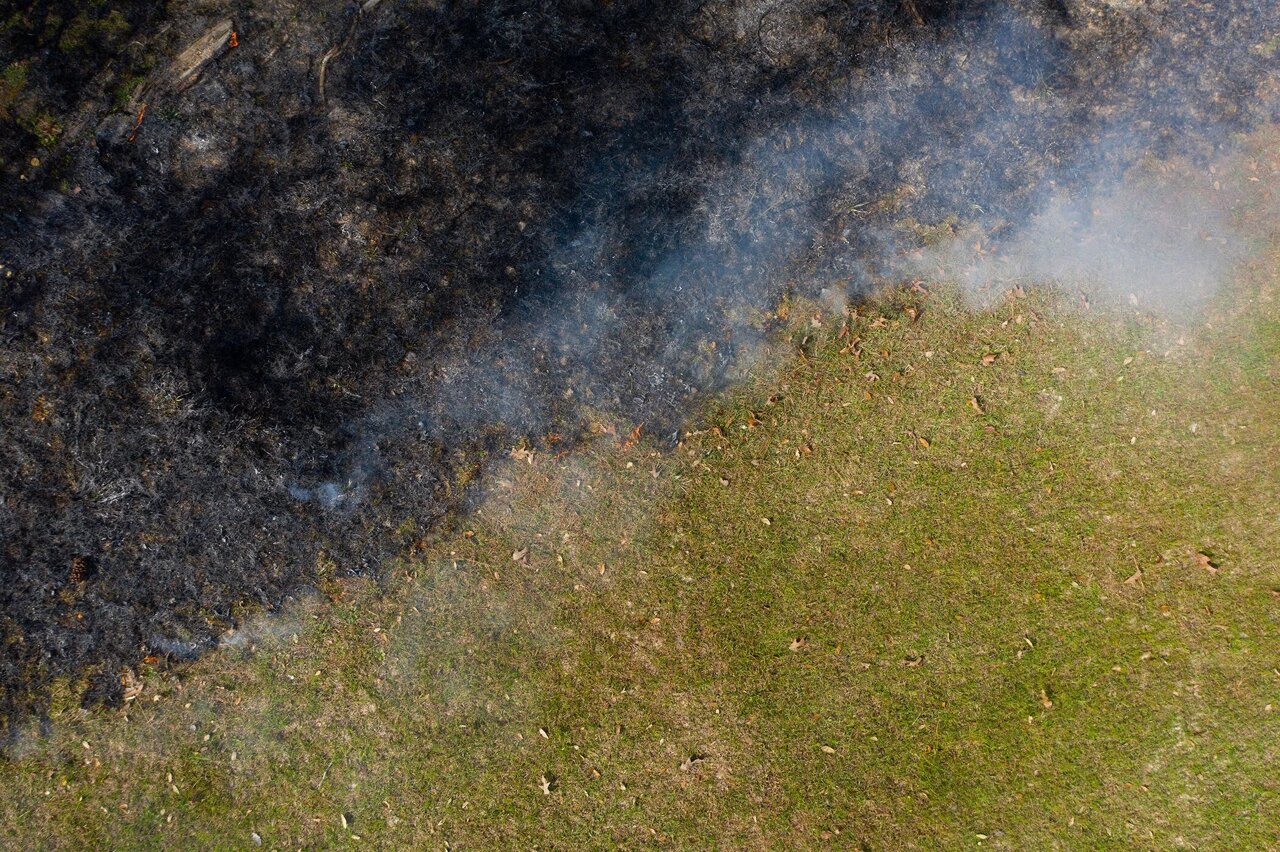
The Role of Prescribed Fires in Forest Management
Prescribed fires play a crucial role in managing forest ecosystems and reducing the risk of devastating wildfires. These controlled burns are used to clear underbrush, promote biodiversity, and maintain healthy forest conditions. However, recent research from the University of Georgia highlights a significant downside: prescribed fires contribute to air pollution and smoke exposure, posing potential health risks to nearby communities.
The study found that 60% of all prescribed fires in the United States occur in the southeastern region, making it a focal point for understanding the environmental and public health impacts of these controlled burns. In this area, over 20% of fine-particle pollution can be traced back to prescribed fire activity.
Understanding Fine-Particle Pollution
Fine-particle pollution, also known as soot, consists of tiny solid and liquid particles that can be inhaled and enter the bloodstream. Exposure to these particles is linked to various health issues, including respiratory problems, heart attacks, and even cancer. This type of pollution is generated not only by wildfires but also by prescribed burns, which release large amounts of particulate matter into the air.
Jingting Huang, a postdoctoral researcher at the University of Georgia and lead author of the study, emphasized the growing importance of prescribed fires as a climate adaptation tool. "As its use expands, we also need to understand how prescribed fire smoke affects nearby communities," she said.
Regional Variations in Smoke Exposure
The study analyzed burn permit records from Georgia, Florida, and South Carolina, using a multistage air quality model to capture thousands of small, short-lived prescribed burns that are often missed by satellites or federal fire inventories. The findings revealed that Georgia experiences the highest population exposure to fine-particle pollution, with more than 40 smoke-impacted days annually. On these days, smoke from prescribed fires increased the amount of pollution people inhaled, even when overall air quality did not reach hazardous levels.
In contrast, many of Florida's burns were located away from heavily populated areas, resulting in less smoke exposure for residents. South Carolina had a smaller burned area overall, contributing to lower smoke impact levels.
The Importance of Detailed Burn Permit Records
One of the key innovations of this study is the use of state burn permit records to account for smaller, often-missed fires. Traditional satellite-based methods may not capture these low-intensity burns, which are common in the southeastern U.S. By integrating detailed permit data into their models, researchers were able to gain a more accurate understanding of prescribed fire activity and its associated smoke impacts.
Christina H. Fuller, co-author of the study and an associate professor at UGA, highlighted the significance of this approach. "We can use this new model to estimate the impacts of policy changes on fine-particle concentrations and people's exposure," she said. "This is important because we would like to maximize prescribed fire use for conservation while also reducing people's exposure to smoke."
Challenges and Future Directions
While the study provides valuable insights, it also acknowledges limitations. In regions where permit records are incomplete, unavailable, or not comparable across jurisdictions, satellite observations remain essential for tracking fire activity and estimating smoke impacts. Holly Nowell, co-author of the study and director of the smoke science program at Tall Timbers, noted this challenge.
Jeffery Cannon, another co-author of the study, expressed optimism about the future applications of this research. "One exciting aspect of this study is that we'll now be able to simulate how individual landowners—and potentially new burn policies—can reduce smoke impacts overall," he said.
Conclusion
The findings of this study underscore the complex relationship between prescribed fires, air quality, and public health. While these controlled burns are essential for forest management, their impact on air pollution cannot be ignored. As the use of prescribed fires continues to grow, it is crucial to develop strategies that balance ecological benefits with the need to protect human health. This research provides a foundation for informed decision-making and policy development in the southeastern United States and beyond.
Post a Comment for "Prescribed Burns Contribute Over 20% of Fine Particle Pollution in Southeast US"