
USMCA Extension in Doubt, Trade Pact Countdown Begins
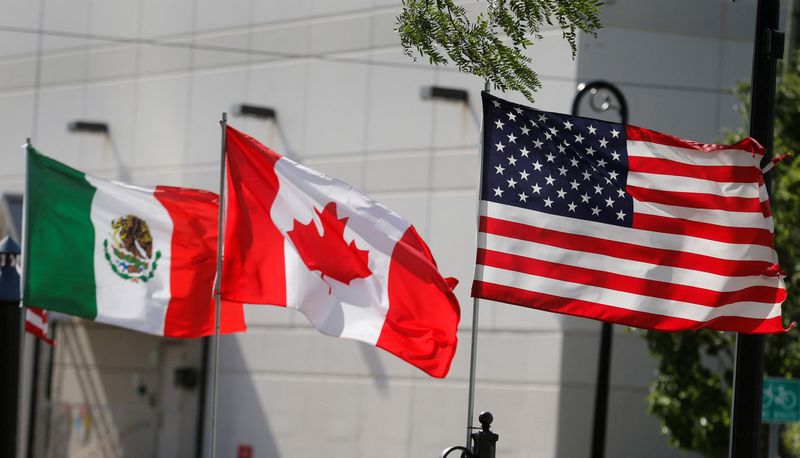
The U.S. Trade Pact Faces Uncertain Future
U.S. President Donald Trump's administration is preparing to announce that it will not extend the U.S.-Mexico-Canada Agreement (USMCA), setting in motion a decade-long process to potentially dismantle the 32-year-old North American free trade zone. This decision comes as the three nations continue to negotiate over proposed changes to the agreement, including demands for increased regional content in automotive production and trade protections against Chinese goods.
The announcement will initiate a six-year review period, which is part of a "sunset clause" negotiated during Trump’s first term. However, this move is unlikely to significantly impact ongoing negotiations, especially regarding key issues such as boosting U.S. and regional content in North American automotive production and implementing trade protections to block Chinese goods from benefiting from USMCA.
Trade officials from the U.S., Mexico, and Canada are set to meet virtually on Wednesday to determine whether they want to extend the pact for an additional 16 years. While U.S. Trade Representative Jamieson Greer has not officially announced his stance, he has scheduled a third round of negotiations with Mexico for the week of July 20, indicating his intent to push for changes.
Greta Peisch, a former USTR general counsel now at Wiley Rein, said she expects the U.S. to not confirm its wish to extend the agreement by July 1st. She also noted that it remains unclear whether the U.S. will publicly state its specific demands in the statement expected after the meeting.
Mexican President Claudia Sheinbaum recently signed a letter calling for USMCA to be extended for 16 years. Canadian Prime Minister Mark Carney expressed hope for a "constructive exchange" between the three countries but emphasized that no agreements would be signed immediately.
"The priority is to get a new deal," Carney stated. "We're ready to negotiate an improvement of this agreement."
Tariffs and Retaliation
Trump has already imposed tariffs of 25% on Canadian and Mexican autos and parts, as well as 50% on steel and aluminum from both countries. This move prompted retaliation from Canada. Although Canada has not yet participated in formal negotiations with the U.S., Carney mentioned that technical talks on aluminum, steel, autos, and softwood lumber have led to some improvements.
"So we're ready to continue those discussions but that will take time, which we've known for a while," Carney added.
If no agreement is reached on revisions to USMCA, the trade pact will remain in indefinite limbo, with annual review sessions for the next 10 years, after which the North American trade pact would expire on July 1, 2036.
The review and sunset process, which was controversial when enacted, is separate from a termination clause that could allow any of the three leaders to withdraw from the pact within six months.
Trump's Stance on USMCA
Trump initially hailed the launch of USMCA in 2020 as "the fairest, most balanced, and beneficial trade agreement we have ever signed into law." However, he quickly became dissatisfied as the U.S. goods trade deficit with Mexico expanded, partly due to companies shifting supply chains away from China after he imposed steep tariffs on Chinese goods. Trump has consistently expressed his desire not to renew USMCA, favoring instead the tariffs he has imposed on Mexican and Canadian autos, steel, and aluminum.
Bilateral Negotiations and Challenges
Currently, the U.S. is conducting formal negotiations with Mexico only, leaving Canada out amid a range of bilateral trade issues, including Canada's restricted dairy market and Canadian provinces removing American liquor from store shelves. Greer has not scheduled formal negotiations with Canada, though he continues discussions with his Canadian counterpart, trade minister Dominic LeBlanc.
North American automakers have urged the Trump administration to maintain the trilateral trade pact, citing the complex flow of parts across borders before vehicle assembly. Matt Blunt, president of the American Automotive Policy Council, emphasized the need for a swift and durable resolution to provide investment certainty and a level playing field.
"North American economic integration enables enormous competitive benefits for the region, and American Automakers are encouraged by ongoing negotiations with the U.S., Mexico and Canada," Blunt said in a statement. "U.S. automakers currently face a disadvantage versus imports from countries whose exports face a flat 15 percent tariff and are not subject to comparable rules of origin."
Ongoing Discussions and Concerns
In the Mexican negotiations, the U.S. has demanded that all North American-built vehicles contain 50% U.S.-specific content, which would drive regional required content up to 82% to qualify for U.S. benefits. Vehicles assembled in Mexico and Canada would still likely face some level of tariffs, according to Greer.
A Mexican official noted that the U.S. and Mexico have discussed the idea of a universal global tariff of 15% on autos, with a lower rate for vehicles from Mexico and Canada if they agree on stricter rules of origin. The official added that Mexico and the U.S. broadly agree on USMCA’s problems: a steady decline in U.S. manufacturing jobs, falling U.S. content in autos as Asian parts increase, and concerns over increasing transshipment.
"Mexico and the U.S. are in agreement about the goals. What we are discussing is how to reach them," the official said.
Post a Comment for "USMCA Extension in Doubt, Trade Pact Countdown Begins"