
USMCA's Decade-Long Countdown Begins as US Considers Exit
The U.S. Trade Pact and the Path Forward
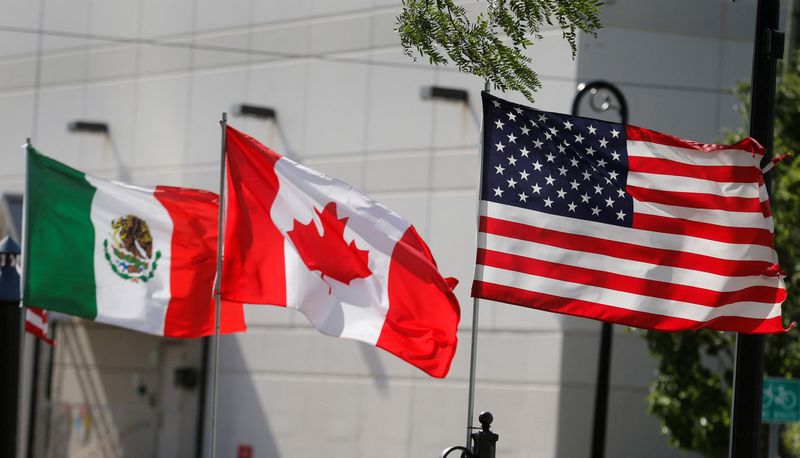
The United States is preparing to make a significant move in its trade relations with Mexico and Canada. According to recent reports, the administration of former President Donald Trump is expected to announce that it will not extend the U.S.-Mexico-Canada Agreement (USMCA), initiating a decade-long process to potentially phase out the 32-year-old North American free trade zone. This decision comes as the three countries continue to negotiate over proposed changes to the agreement.
This declaration marks the start of a six-year review period, which is part of a "sunset clause" that was negotiated during Trump's first term. However, this move may not significantly impact the ongoing discussions about the pact's future. Key issues include demands for increased U.S. and regional content in North American automotive production and trade protections aimed at preventing Chinese goods from benefiting from USMCA.
Negotiations and Expectations
Trade officials from the U.S., Mexico, and Canada are set to meet virtually to discuss whether they wish to extend the pact for an additional 16 years. U.S. Trade Representative Jamieson Greer has already planned a third round of negotiations with Mexico for the week of July 20, indicating his commitment to pushing for changes.
Greta Peisch, a former USTR general counsel, expressed her belief that the U.S. will not confirm its desire to extend the agreement. She noted that it remains unclear whether the U.S. will publicly state its requirements in a statement following the meeting.
Mexico’s economy minister, Marcelo Ebrard, stated that he does not anticipate the trilateral trade agreement being scrapped. Additionally, Mexican President Claudia Sheinbaum signed a letter advocating for the extension of USMCA for 16 years.
Potential Outcomes and Challenges
If an agreement on revisions to USMCA is not reached, the trade pact could remain in a state of indefinite limbo, with annual review sessions for the next 10 years. After that, the North American trade pact would expire on July 1, 2036.
The review and sunset process, which was controversial when it was implemented, is separate from a termination clause that Trump or his counterparts in Mexico and Canada could use to withdraw from the pact within six months.
Trump initially praised USMCA as "the fairest, most balanced, and beneficial trade agreement we have ever signed into law." However, he later became dissatisfied as the U.S. goods trade deficit with Mexico grew, partly due to companies shifting supply chains away from China after he imposed tariffs on Chinese goods. Trump has consistently expressed his desire to not renew USMCA, favoring high tariffs on Mexican and Canadian autos, steel, and aluminum instead.
Bilateral Talks and Trade Disputes
Currently, the U.S. is engaging in formal negotiations with Mexico alone, excluding Canada. This is due to a range of bilateral trade issues, including Canada's restricted dairy market and Canadian provinces removing American liquor from store shelves. Although Greer has not scheduled formal negotiations with Canada, he continues to hold discussions with his Canadian counterpart, Trade Minister Dominic LeBlanc.
The U.S. has demanded that all vehicles built in North America contain 50% U.S.-specific content, which would raise the regional required content to 82% to qualify for U.S. benefits. Vehicles assembled in Mexico and Canada may still face some level of tariffs.
A Mexican official mentioned that the U.S. and Mexico have discussed the possibility of a universal global tariff of 15% on autos. A lower rate could be applied to vehicles from Mexico and Canada if they agree on stricter rules of origin.
The official added that both Mexico and the U.S. agree on USMCA’s challenges: a decline in U.S. manufacturing jobs, falling U.S. content in autos, and concerns over increasing transshipment. They are aligned on the goals but differ on how to achieve them.
Post a Comment for "USMCA's Decade-Long Countdown Begins as US Considers Exit"