
Will Fujian Be China's First Carrier to Defeat Western Subs with Anti-Torpedo Tech?
Introduction to China's Fujian Aircraft Carrier and Its Advanced Anti-Torpedo System
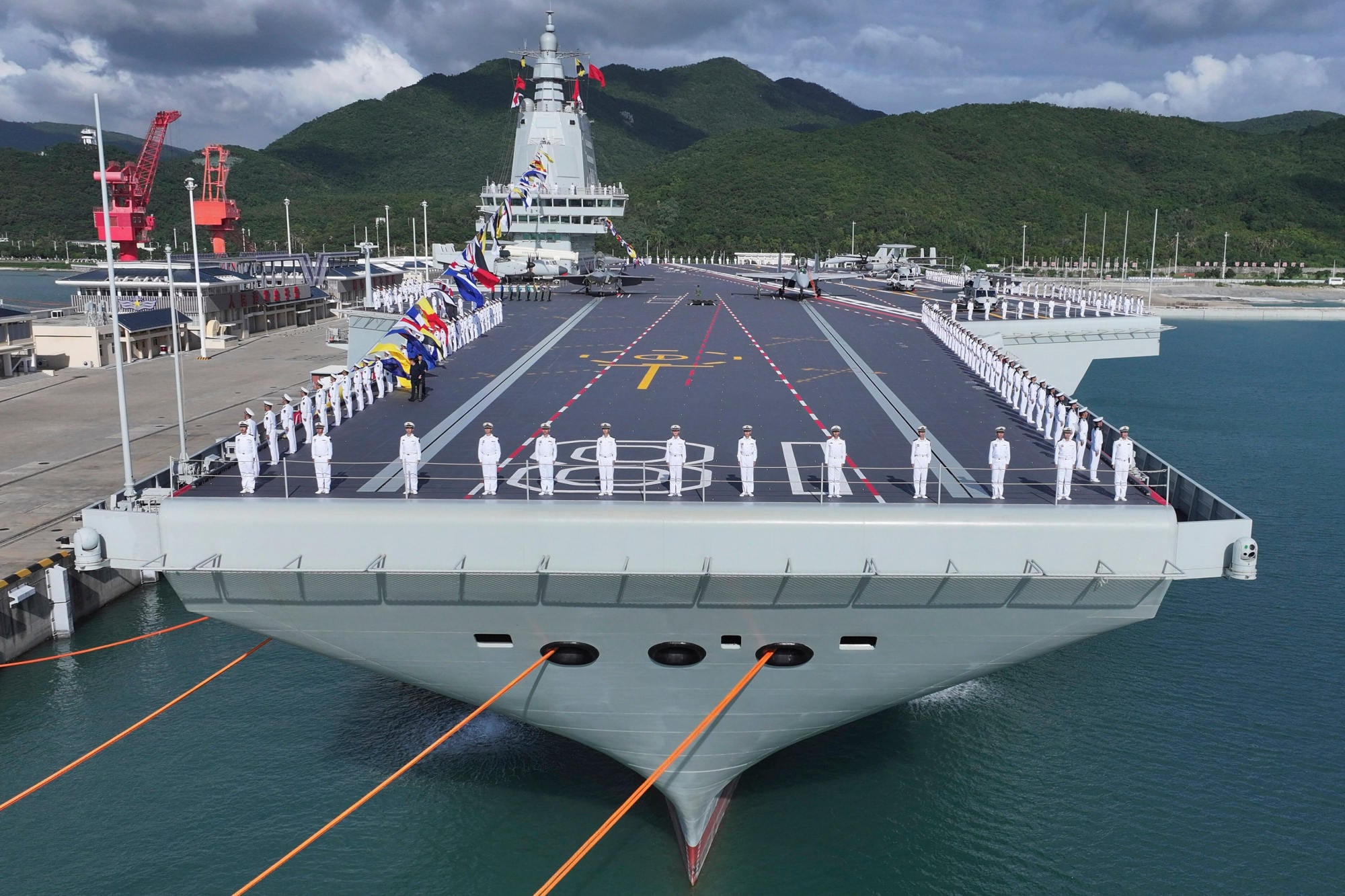
China's Fujian, the country's third aircraft carrier and the first designed entirely domestically, is making waves in the global naval landscape. According to a recent analysis by a Chinese military magazine, the Fujian is likely to be the world's first aircraft carrier equipped with an anti-torpedo torpedo (ATT) system. This development marks a significant leap in hard-kill capabilities for the People's Liberation Army Navy (PLA Navy).
Evolution of Torpedo Launchers on Chinese Carriers
The Fujian represents a departure from its predecessors, the Liaoning and Shandong, which were based on the Russian Kuznetsov-class design. Instead of the 12-tube depth charge launchers used on these earlier carriers, the Fujian features a six-tube 324mm (12.8-inch) lightweight torpedo launcher. This change is seen as a strategic move to enhance the carrier's defensive capabilities against modern threats.
The Significance of the ATT System
The article highlights that the ATT system on the Fujian is believed to be the first of its kind in active service on an aircraft carrier globally. It is described as a response to the "severe threat" posed by U.S. Navy submarines, such as the Seawolf-class and SSN(X) submarines. The system is expected to keep pace with modern naval warfare and provide a robust defense mechanism for China's large surface combatants.
Historical Context and Development
China demonstrated an earlier version of the ATT system in 2016. The new system on the Fujian is expected to reach a world-class level in detection accuracy, damage reliability, and system integration. The article notes that the U.S. Navy's anti-torpedo torpedo defense system (ATTDS) project in the 2010s had failed, and its new hard-kill program is still under development.
Technical Advancements in the ATT System
The ATT is powered by a combined propulsion system consisting of a small rocket booster for high initial velocity and a rare-earth permanent magnet synchronous direct-drive pump-jet thruster. This propulsion system allows the ATT to accelerate to speeds of 50 to 60 knots within 3 seconds, with precise power regulation and minimal noise to ensure effective operation of its own sonar.
The system's ultra-fast response time enables near-instantaneous maneuvering, rapid course corrections, and the ability to track complex S-turns and sharp depth changes made by highly maneuverable torpedoes like the U.S. MK48. The ATT is fitted with a broadband sonar array on its head, capable of distinguishing real targets from decoys and precisely locating vulnerable areas on enemy torpedoes.
Communication and Networking Capabilities
The ATT uses high-speed, two-way wireless acoustic communication technology, which has been proven sufficient for complex military operations. This ensures a stealthy, reliable link with the carrier and enables networking among multiple interceptors.
Defensive Mechanisms and Supercavitation Technology
To break the hull of modern heavy torpedoes, the ATT employs both directional shaped charge penetration and high-energy overpressure water shock waves generated by close-range explosions. Additionally, the system may incorporate ATTs with supercavitation technology similar to that used in some offensive torpedoes, enabling speeds of up to 200 knots.
This extreme velocity is invaluable for countering close-range high-speed torpedoes, where the outcome of the engagement could be decided in seconds.
Conclusion
The Fujian's advanced ATT system signifies a major advancement in China's naval capabilities. With its cutting-edge technology and strategic design, the Fujian is set to redefine the future of aircraft carrier defense systems. As the PLA Navy continues to innovate, the Fujian stands as a testament to China's growing maritime prowess.
Post a Comment for "Will Fujian Be China's First Carrier to Defeat Western Subs with Anti-Torpedo Tech?"