
Would You Trust These Faces? AI-Generated Faces Seen as More Honest, Study Reveals
The Challenge of Distinguishing Real Faces from AI-Generated Ones
In an age where artificial intelligence is becoming increasingly sophisticated, the ability to distinguish between a real human face and one generated by AI has become more challenging than ever. A recent study conducted by researchers at Lancaster University reveals that people are not much better than chance when it comes to identifying AI-generated faces. This finding raises serious concerns about the potential misuse of such technology in areas like identity fraud and online deception.
The study highlights that individuals often find AI-generated faces more trustworthy than actual human faces, which could make them powerful tools for scammers and disinformation campaigns. According to lead author Alexis McGuire, a PhD student at Lancaster University, this perception of trustworthiness can significantly enhance the effectiveness of online scams. For instance, a text-based scam may become more convincing if it is accompanied by an image of a face that people instinctively trust.
How Accurate Are People in Identifying AI Faces?
To explore this issue, the researchers conducted a study involving 169 participants who were asked to assess a collection of 96 real and fake faces. Each participant was shown a randomly selected face and asked to determine whether it was AI-generated or real. On average, participants were only correct 58.4% of the time, which is barely better than a coin flip. The accuracy varied depending on ethnicity and the specific AI model used, but the overall trend remained consistent.
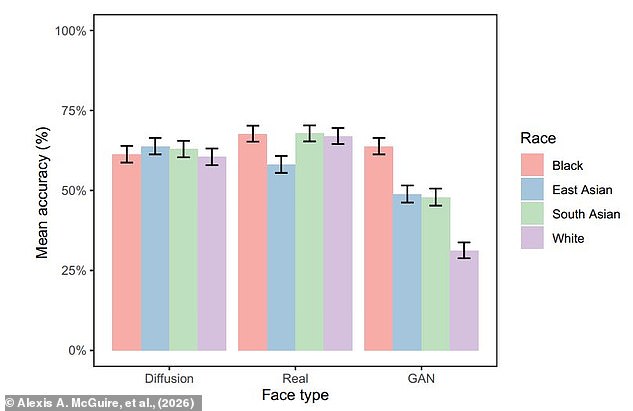
Interestingly, the study found that the newest generation of AI models, known as diffusion models, produced faces that were easier to spot compared to those created by older generative adversarial network (GAN) models. However, the most surprising result came from a follow-up test where participants rated the trustworthiness of the faces. Real human faces were consistently rated as the least trustworthy, scoring just 4.04 on a scale from one to seven. In contrast, GAN-generated faces scored 4.36, while diffusion model faces received the highest score of 4.7.
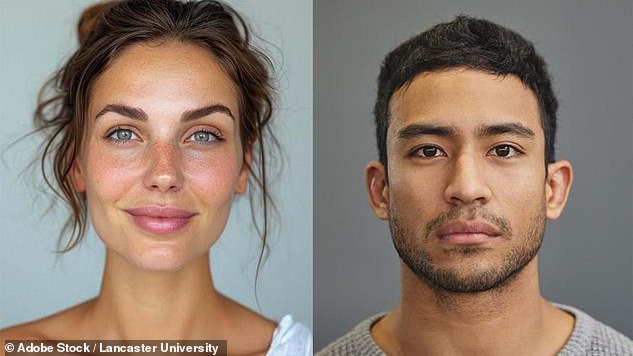
This paradox suggests that people may be influenced by different psychological mechanisms when judging realism versus trustworthiness. One possible explanation is that AI-generated faces tend to cluster around the "average" human face. When we encounter certain facial features frequently, our brains form a mental representation of what a typical face should look like. New faces are then assessed in relation to this cluster, and the closer they fall to the average, the more familiar they seem.
Additionally, AI-generated faces are often "polished, idealized" versions of real faces, which people tend to find appealing. Research has shown that attractive individuals are often perceived as more trustworthy. This combination of factors could make AI-generated faces particularly effective at gaining the trust of unsuspecting users.
Implications for Online Security
The findings of this study have significant implications for online security. As AI-generated faces become increasingly realistic and trusted, the risk of falling victim to identity fraud or catfishing grows. Scammers could use these faces to create convincing fake profiles, making it harder for people to discern the truth.
Ms. McGuire emphasizes the importance of staying informed about the latest developments in AI technology. If people do not continually update their knowledge about what to look for, they may develop a false sense of security, which could make them more vulnerable to scams.
For those interested in participating in similar research, the University of Lancaster has created an online survey available at the following link. This survey allows participants to test their ability to identify AI-generated faces and contribute to ongoing studies in this field.
Post a Comment for "Would You Trust These Faces? AI-Generated Faces Seen as More Honest, Study Reveals"