
Blair's Truth: This is Our War with Iran
The question echoing across the globe, from the United States and the Gulf to the furthest reaches of international diplomacy, is stark: Where was Britain? This sentiment is particularly pertinent when reflecting on the events of January and February of this year. While the United States was demonstrably assembling a formidable naval armada off the coast of Iran, the precise nature of their strategy remained opaque at that critical juncture.
Britain, with its extensive diplomatic presence in Washington D.C. and its highly regarded security and intelligence services, possessed the means to ascertain these unfolding developments. The critical query then becomes: did they? Did the opposition leadership, for instance, possess the foresight and courage to directly question President Donald Trump about the escalating situation? A failure to do so suggests a lamentable deficit in strategic curiosity, a missed opportunity to engage with crucial international affairs.
There exists a profound chasm between the execution of limited tactical strikes against Iranian military installations, intended as a catalyst for nuclear negotiations, and a full-scale offensive aimed at eliminating significant figures within the Iranian regime. Had Britain actively participated in the discussions and planning stages, the nation could have posed vital questions, perhaps illuminating avenues of thought that War Secretary Pete Hegseth might not have considered. Crucially, with Britain's deep-seated understanding of the Gulf region, the opportunity to shape President Trump's strategic thinking was readily available.
Britain's Historical Ties and Missed Opportunities in the Gulf
It is a historical fact that Britain played a pivotal role in the establishment of many of the Gulf monarchies. In some instances, within living memory – as recently as the early 1970s – Britain held colonial authority over these nations. For better or worse, the United Kingdom was instrumental in the genesis of modern Iran. The depth of understanding regarding the culture and politics of the Middle East, a hallmark of the Foreign, Commonwealth and Development Office, was a significant national asset. This historical context, coupled with a fundamental grasp of regional geography, should have positioned Britain as a key player in any significant developments.
If Britain had been present at the strategic discussions – a position it ought to have occupied – it could have raised essential questions. For example, what was the contingency plan should Iran, as has long been predicted, retaliate to a large-scale attack by attempting to close the Strait of Hormuz? Was there preparedness for a significant deployment of ground troops? The potential for finding oneself in an unenviable and complex predicament, to borrow a phrase from an advisor to a former Republican president, was a tangible risk.
As the second most significant member of NATO and a nation that prides itself on being the United States' closest, most enduring, and most reliable ally, Britain's apparent inaction regarding the Iran situation is perplexing. Despite the obvious and considerable risks posed to Britain and the global economy, no discernible effort was made to influence the American approach. This stands in stark contrast to previous administrations.
Margaret Thatcher and Tony Blair were deeply involved in the preparatory stages for both the 1991 and 2003 Gulf Wars. While the merits of those conflicts are open to debate, they were undeniably characterized by immediate military successes, clearly articulated objectives, and rapid achievement of those goals. The question remains: where was Britain this time? Why was the opposition leader not actively seeking a seat at the table, even if an invitation was not forthcoming? It was arguably a duty to secure such a position.
Delayed Response and Support for Gulf Allies
Instead of active engagement, the responsibility of whispering in President Trump's ear fell solely to Benjamin Netanyahu, the Israeli leader whose own agenda is well-documented. This abdication of diplomatic responsibility represents a monumental failure of statecraft. Reflecting on that period earlier this year, one is prompted to question the activities of Britain's former US Ambassador, Peter Mandelson.
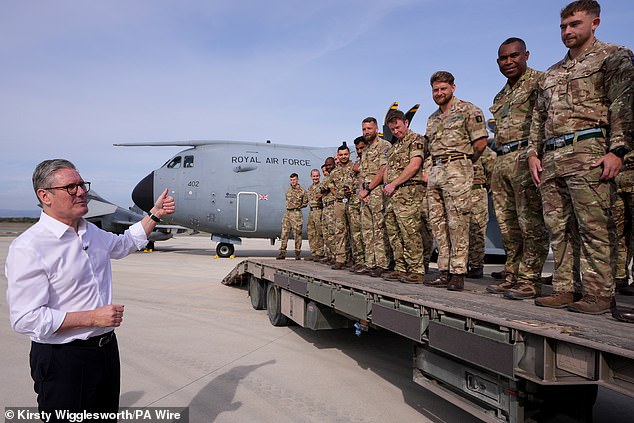
The prevailing sentiment suggests a passive approach, a characteristic that has unfortunately defined the current Prime Minister's tenure. This passivity continued even after the outbreak of hostilities. Britain's response to Iranian bombardments of UK bases in Cyprus and Diego Garcia was lamentably slow. More critically, the nation failed to offer timely assistance to its steadfast allies in the Gulf. Saudi Arabia, Qatar, Kuwait, the United Arab Emirates, Bahrain, and Oman have all endured highly destructive drone attacks originating from Iran.
While four Typhoon fighter jets have belatedly been deployed from the UK base in Cyprus to intercept Iranian drones, the provision of anti-aircraft defences appears to be lacking. Furthermore, at a time when Bahrain feels most vulnerable and in need of support, Britain has chosen to scale down its naval presence in Bahrain, leading to the withdrawal of British ships and sailors.
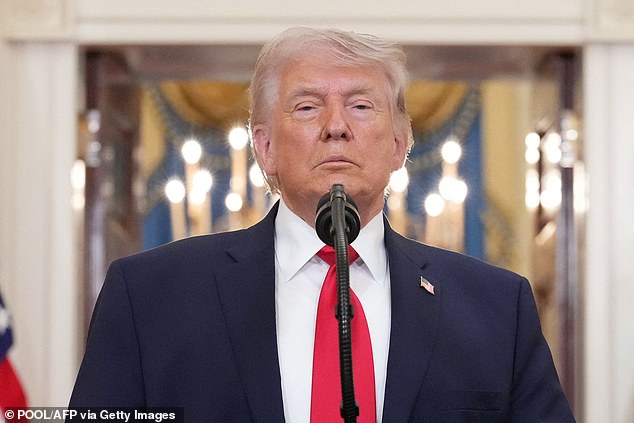
Compounding these issues, when President Trump requested allied assistance in securing the Strait of Hormuz, the response from the opposition leader was the now infamous and arguably ill-judged declaration: "This is not our war."
Scrutiny of the "Not Our War" Stance
The assertion that "this is not our war" is particularly contentious. At a time when energy prices are escalating and the cost of living is placing a significant burden on households across the UK, can such a conflict truly be dismissed as unrelated? The threat of economic hardship, exacerbated by existing domestic policies, casts a long shadow over every family in the nation. Moreover, when some of Britain's closest international partners are subjected to daily aerial assaults, the notion of detachment becomes untenable.
Does the opposition leader comprehend the scale of investment from Gulf nations in the United Kingdom? A public address from the steps of Number 10 Downing Street, acknowledging the billions of pounds the Gulf has channelled into the UK's capital, would be a stark reminder of the interconnectedness of economies and the potential repercussions of perceived indifference. The question of whether these relationships will remain as robust following such a stance is a significant concern.
It is understandable that many, both within the UK and internationally, might derive a degree of satisfaction from President Trump's predicaments. His consistent criticism of European nations on issues ranging from Greenland to trade tariffs and military contributions has fostered a sense of resentment. The sentiment that Mr. Trump is now facing the consequences of his own actions is prevalent.
Similarly, the desire within the Labour Party to express defiance towards President Trump is palpable. The opposition leader, in particular, appears constrained by the influence of the Muslim vote within the UK. However, strategically distancing the nation from its most crucial ally, the United States, represents a profound long-term error.
The Path Forward and the Importance of Alliances
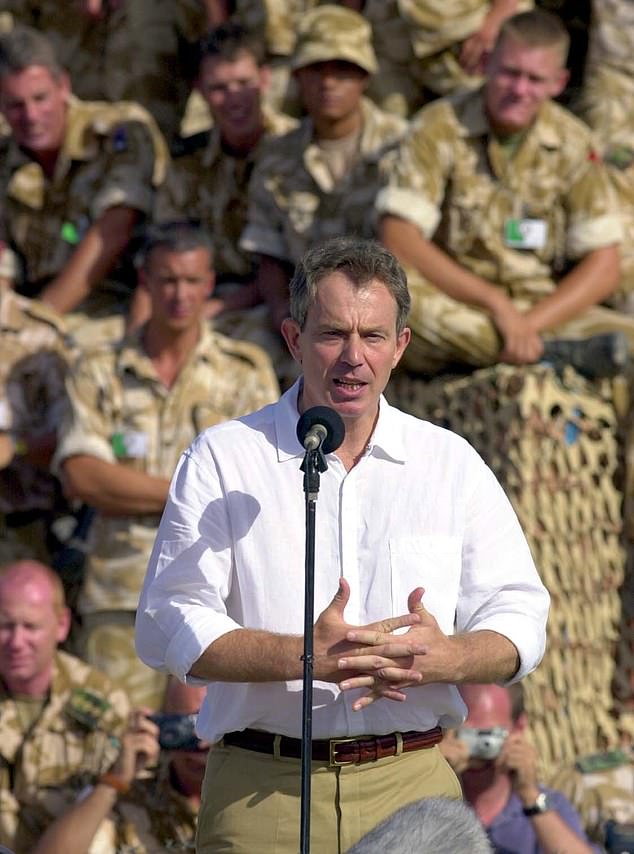
While the current conflict presents significant challenges, there remains a genuine prospect for positive change in Iran. However, Britain would be far better positioned to facilitate this change and to mitigate further missteps if it were to reoccupy its traditional role as a loyal and dependable ally. Former Prime Minister Tony Blair's assertion that Britain should have immediately offered its bases and naval assistance to clear the Strait of Hormuz holds considerable weight. Such actions would have enhanced Britain's ability to bring the conflict to an early conclusion and to persuade President Trump to declare victory, demonstrating to Iran that the United States can indeed rely on its allies during times of crisis.
The notion of burying one's head in the sand, as the opposition leader has attempted, is a dangerous delusion. Equally misguided is the belief that a purely European alliance can serve as a substitute for NATO. The transatlantic alliance has been a cornerstone of global geopolitical stability for the past 150 years, founded on the principle of mutual support and shared responsibility.
The Inescapable Consequences and Historical Parallels
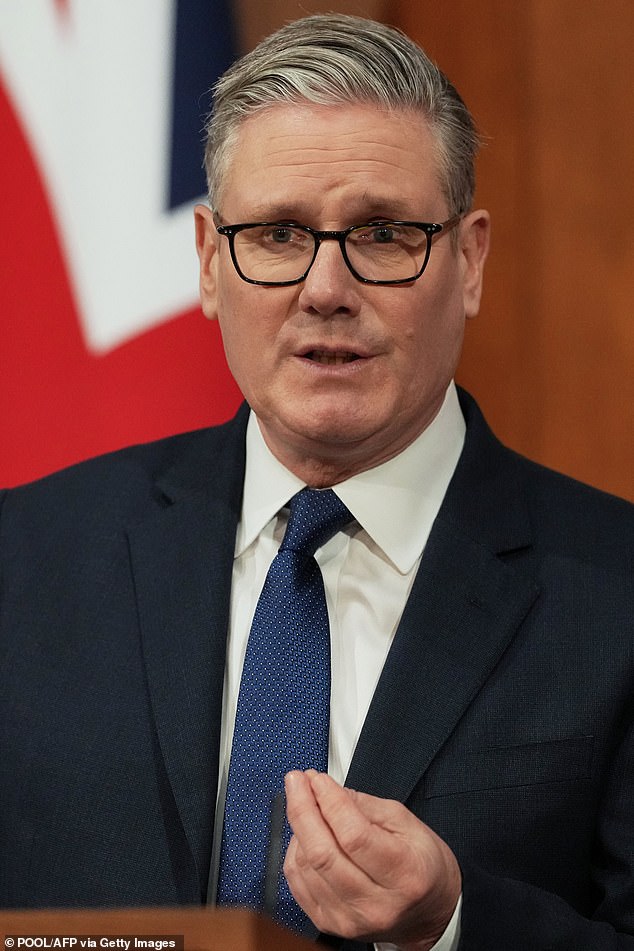
The opposition leader's assertion that "this is not our war" may hold true in terms of its initiation and the UK's advisory role had it been involved from the outset. However, the consequences of the conflict are now inescapable for Britain. It is imperative to remember the immense commitment the United States has consistently shown to the UK's security.
Consider the Falklands War or the interventions in Bosnia and Kosovo. In both instances, American assistance was instrumental to success, and the US was not responsible for the genesis of either conflict. A visit to the beaches of Normandy, where thousands of young Americans from across the United States made the ultimate sacrifice in 1944, serves as a powerful reminder of their commitment to European freedom. Many isolationist voices in America at the time argued it was not their war, yet they played a crucial role in its conclusion – a fact for which history is profoundly grateful. The current conflict, though originating from different circumstances, necessitates a similar recognition of shared responsibility and the enduring value of alliances.
Post a Comment for "Blair's Truth: This is Our War with Iran"