
3-Year Milestone: Politics Overshadows Governance as Cong's Kerala Move Strengthens Siddu's Standing
A Milestone for the Congress Government in Karnataka
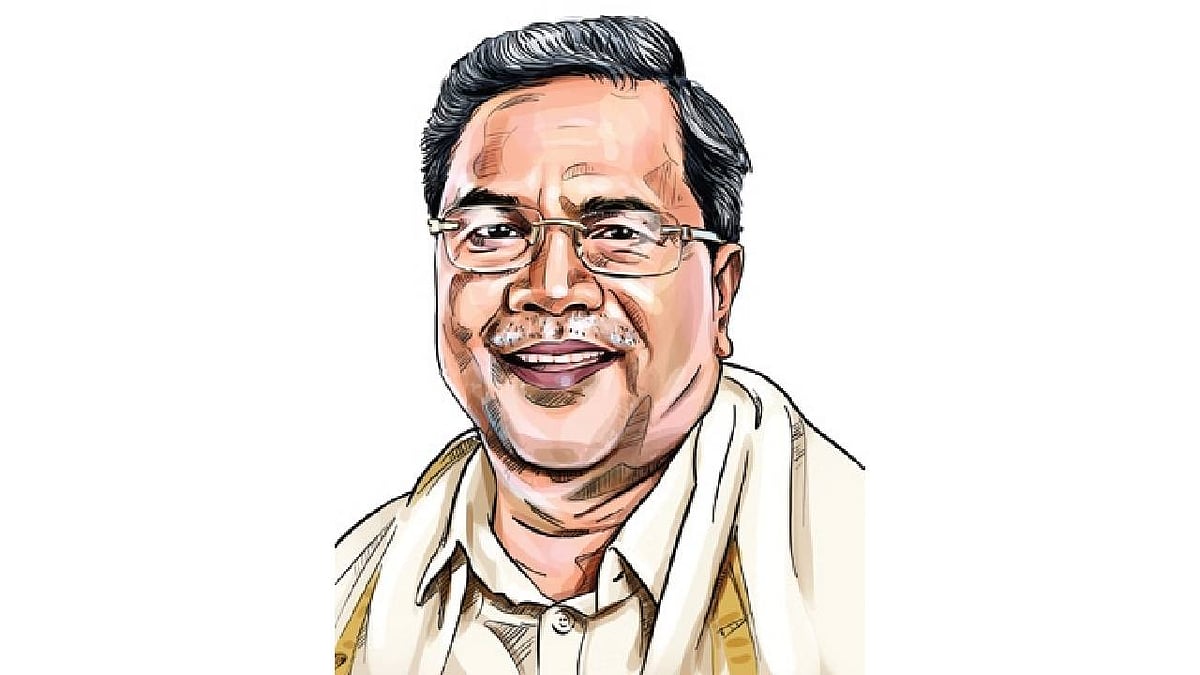
The Congress government in Karnataka is set to mark its third anniversary in power on May 20. The celebrations, however, are being held a day early in Tumakuru, aiming to highlight the government’s achievements and emphasize Chief Minister Siddaramaiah’s leadership. This event is not just a celebration but also an opportunity to showcase the party's performance and reaffirm its commitment to governance.
Despite the festive atmosphere, internal politics within the Congress have overshadowed the government’s accomplishments, particularly over the past year. The lack of clarity regarding leadership has created uncertainty, placing the Chief Minister in a precarious position even though the party holds an absolute majority in the 224-member state assembly.
Siddaramaiah, who is the longest-serving CM in Karnataka and has presented the most state budgets, appears to be struggling with his former vigor. Neither he nor his party leaders have been able to provide clear statements on the leadership issue, which continues to loom like the sword of Damocles.
Recent developments in the Grand Old Party concerning the selection of the chief minister in Kerala seem to have bolstered Siddaramaiah’s standing with the party’s central leaders. There were indications that the central leadership wanted to appoint KC Venugopal as the CM in Kerala. However, due to pressure from local leaders, VD Satheesan was chosen instead. This decision reflects the influence of local factors over the high command's preferences.
Senior party leaders in Karnataka believe that the situation here is similar to that in Kerala. The Kerala experience shows that even if the party brass considers making changes, it is unlikely to be a smooth process. It is a different matter if Siddaramaiah voluntarily steps down from his position.
Given the current dynamics, it seems that Siddaramaiah is not inclined to relinquish the post. By frequently stating that he will abide by the high command’s decisions, the CM has shifted the responsibility to them. Unseating a CM could be more challenging than appointing one, as seen in cases like Kerala or Karnataka in May 2023.
The way the high command handled the post-election scenario in Kerala highlights the importance of broader consultations among senior leaders when addressing critical issues like leadership. Strong local leaders may not easily accept decisions made by the central leadership, and the central leadership tends to avoid risks in states where it is in power.
While the uncertainty surrounding leadership is expected to persist, finding a resolution seems to be a long and drawn-out process. It remains unclear whether Deputy CM DK Shivakumar was promised the CM post during the latter half of the government’s five-year term. Shivakumar, along with Siddaramaiah, played a crucial role in the party’s victory in 2023. He is credited with reviving the party’s fortunes after becoming the state Congress president in 2020. Some senior leaders in the state believe that the high command had assured him the top post, and he should be appointed as CM.
The party’s failure to resolve the leadership conflict has affected the government’s image and administration. As the government reaches the three-year milestone, the implementation of the five guarantee schemes stands out as its major achievement. However, it has faced serious allegations of corruption, unemployment, and infrastructure failing to meet growing demands. The government has not made appointments to all state boards and corporations and has delayed urban local body elections. It is dragging its feet on holding polls for five corporations in the Greater Bengaluru Authority (GBA), despite Supreme Court directions.
The Siddaramaiah government is also accused of continuing its policy of minority appeasement, a charge it vehemently denies. Its latest decision to withdraw the 2022 government order on school uniforms, which restricted religious attire such as hijab, raised many eyebrows. The government’s explanation that this was done in response to the April 24 incident involving students writing the Common Entrance Test (CET) is hardly convincing.
This move is seen as an attempt by the government to placate the minority community, which sent a clear message in the recent Davanagere South Assembly bypoll that the Congress cannot take their support for granted. The split among minority voters gave the ruling party jitters, as it won the seat with a narrow margin of 5,708 votes. The SDPI candidate secured over 18,000 votes.
It is also viewed as Siddaramaiah’s efforts to strengthen his core support base, AHINDA, a coalition of minorities, backward classes, and Dalits. According to party insiders, the hijab issue was not discussed in detail at the party forum before withdrawing the 2022 order. Prior to this, the government approved a Rs 600 crore action plan for the development of minority-dominated areas in city corporations and also took a decision on implementing internal reservation among the Scheduled Castes. On its part, the opposition BJP is likely to use the latest issue to sharpen its criticism of Siddaramaiah.
While Congress-BJP politics continues, now that elections to five states are over and the leadership issue in Kerala is resolved, will the Congress high command turn to Karnataka to end the internal tussles or let it take its own course?
Post a Comment for "3-Year Milestone: Politics Overshadows Governance as Cong's Kerala Move Strengthens Siddu's Standing"