
Israel Strikes South Lebanon Amid Ceasefire Extension
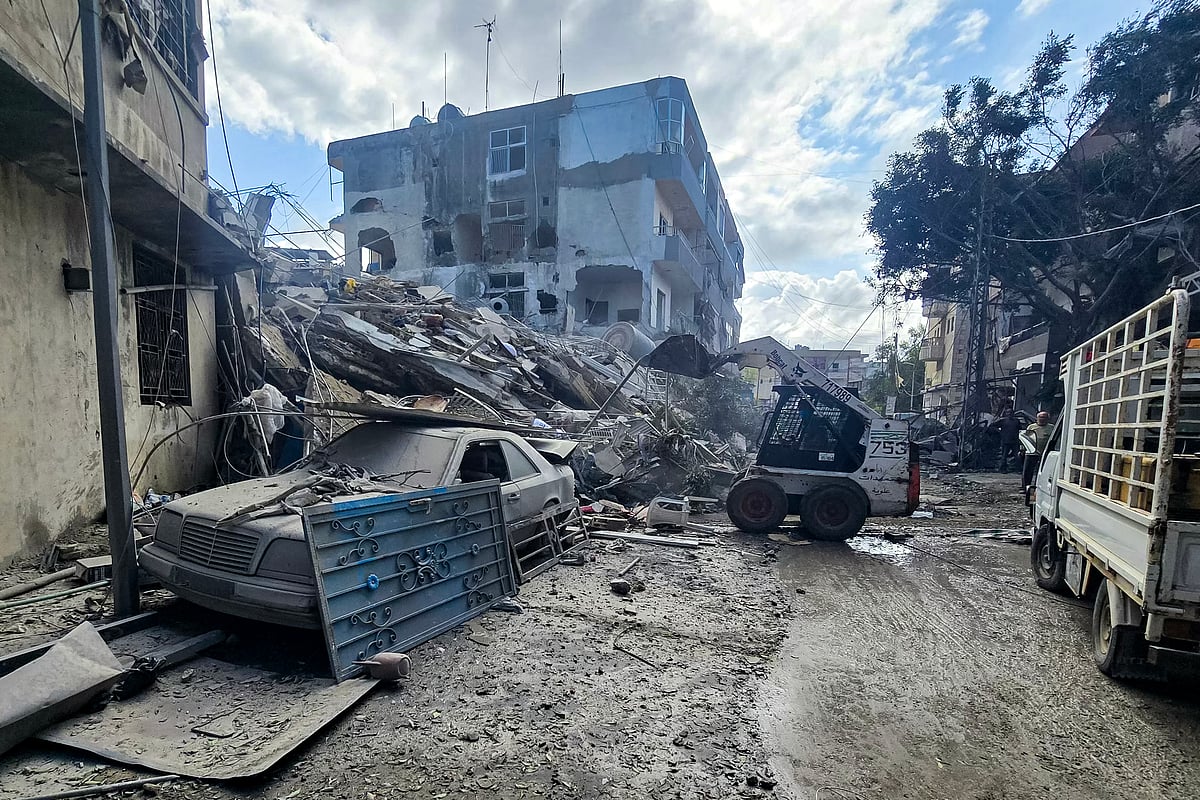
Escalation of Violence Despite Truce Extension
BEIRUT: Israel launched a massive series of airstrikes on southern Lebanon on Saturday, despite an extension of the truce between the two countries. The strikes were preceded by an evacuation warning covering nine villages, raising concerns about the effectiveness of the ceasefire.
Israel claims it is targeting Hezbollah, but the continued bombardment has only increased skepticism among the many thousands of Lebanese who have been driven from their homes in the south. Lebanon's state-run National News Agency (NNA) reported strikes on more than two dozen villages on Saturday, including one more than 50 kilometers (30 miles) from the border. The attacks have also led to a new exodus of residents towards the southern city of Sidon and the capital Beirut.
Later Saturday, Hezbollah announced it had struck a military target in northern Israel. The group claimed its fighters had targeted "the Ya'ara barracks... with a swarm of attack drones," following multiple operations against Israeli forces in southern Lebanon.
On Friday, the two countries agreed to extend a ceasefire that began on April 17 but has been marred by numerous violations for another 45 days. UN chief Antonio Guterres welcomed the extension and urged all actors to fully respect the cessation of hostilities. However, despite the ceasefire, Israel continues to conduct strikes in Lebanon, and its forces are occupying territory near the border.
Hezbollah, meanwhile, regularly claims attacks on northern Israel and against the Israeli military in southern Lebanon, including multiple attacks on Israeli forces on Saturday. Israel's military reported that one of its soldiers died in combat in southern Lebanon, bringing its losses to 21 personnel since the war with Hezbollah began in early March.
High Casualties Despite Ceasefire
Israeli strikes on Lebanon have killed 380 people, despite the ceasefire. The situation has raised questions about the true nature of the truce. Since the start of the war, Israeli attacks have killed more than 2,900 people in Lebanon, including more than 400 since the truce took effect, according to Lebanese authorities.
The latest strikes come after envoys from Israel and Lebanon held negotiations in Washington, following the first direct talks in decades between the two countries, which do not have diplomatic relations. They agreed to extend the ceasefire. However, Iran-backed Hezbollah opposes the negotiations and claimed an attack against Israeli troops in the Lebanese town of Khiam on Saturday.
The group justified their action by accusing Israel of ceasefire violations and "attacks that targeted villages in southern Lebanon." In a statement on Saturday, the group called the proposed establishment of a US-facilitated security track a fresh addition "to the series of free concessions" the Lebanese government "offers the enemy."
Displaced Residents Question the Truce
Displaced residents from southern Lebanon say the truce is not being implemented. "This is not a truce as long as Israeli attacks continue against the south and its people, with deaths, injuries and destruction," said Ali Salameh, 60, from a school in Beirut where he has been displaced since the start of the war.
Others said they backed Hezbollah to keep fighting Israel in retaliation for its attacks. "What kind of truce is this when they have just threatened villages and people are being displaced? Where is the state? We stand only with the resistance," said Nawal Mezhir, also displaced from the south.
A Path Toward Stability?
Lebanon's negotiating delegation in Washington on Friday welcomed the truce extension and the creation of the US-facilitated security track, saying they "provide critical breathing space for our citizens, reinforce state institutions and advance a political pathway toward lasting stability."
Lebanon was dragged into the Middle East war on March 2 when Hezbollah fired rockets at Israel in retaliation for the killing of Iran's supreme leader Ali Khamenei. On Friday, Israel struck the southern city of Tyre. An AFP correspondent saw significant destruction at the targeted site near the coastal city's ancient ruins.
"They destroyed the entire neighbourhood," said Ibrahim Kahwaji, a tailor who was wounded in the leg. "They are emptying the south of its population... It's a real occupation. We want a solution."
The ongoing conflict has worsened Lebanon's economic crisis, leading to job losses, price gouging, and slow business. The situation remains dire for many families who have been forced to flee their homes and face uncertain futures.
Post a Comment for "Israel Strikes South Lebanon Amid Ceasefire Extension"