
Suvendu Adhikari Ends Bengal's Impunity Era
A New Era at Nabanna
The walls of Nabanna, the state secretariat of West Bengal, have seen their fair share of political drama over the years. However, the seven days following Suvendu Adhikari's swearing-in marked a distinct shift in tone. Adhikari, the first Chief Minister of West Bengal from the BJP, brought with him a sense of purpose and intensity that signaled a fundamental change in the state's political landscape.
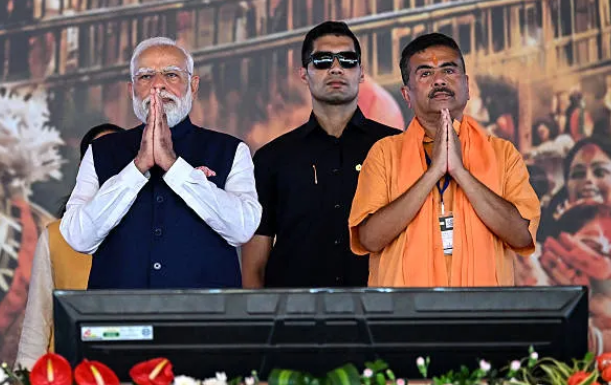
Adhikari was sworn in on May 9 at the Brigade Parade Ground, where he was joined by Prime Minister Narendra Modi, Union Home Minister Amit Shah, and other Chief Ministers from BJP/NDA-ruled states. His tenure began with a series of decisive actions that set the stage for a new administration.
Immediate Actions and Appointments
By the end of the week, Adhikari had convened his first Cabinet meeting, unlocked four stalled CBI investigations, suspended three senior IPS officers over the R.G. Kar case, installed a new generation of technocrat administrators, and issued orders covering various areas, including cattle slaughter and school morning prayers.
Even before the Cabinet met formally, Adhikari made strategic appointments to his inner circle. On the day of his swearing-in, retired IAS officer Subrata Gupta was appointed as an adviser to the Chief Minister. Gupta, a 1990-batch IAS officer and alumnus of IIT Kharagpur, had played a key role in ensuring a transparent polling process during the Assembly elections.
Two days later, Manoj Kumar Agarwal, the state's Chief Electoral Officer, was named Chief Secretary. Despite controversy surrounding the Special Intensive Revision of voter rolls, Agarwal was praised for overseeing a peaceful election with high voter turnout.
Governance and Security Focus
Addressing the media after his first Cabinet meeting, Adhikari emphasized "good governance, security, and double-engine government." Several decisions carried immediate symbolic weight.
The Bharatiya Nyaya Sanhita, a new criminal law framework, was adopted immediately. The previous TMC government had refused to implement it. On national security, the Cabinet moved swiftly to transfer nearly 600 acres of land in border areas to the BSF for border fencing, setting a 45-day deadline for completion.
Officers from the IAS, IPS, and WBPS were now to be sent regularly for training. A five-year age relaxation was ordered for candidates who missed government job opportunities due to recruitment scams.
Dramatic Acts and Investigations
The week's most dramatic act came on Friday when three senior IPS officers were suspended for alleged mishandling of the R.G. Kar hospital rape-murder case. Adhikari declared that the protectors had become predators, and a crackdown was underway.
A raid on Presidency Correctional Home recovered 23 mobile phones and over 30 SIM cards, leading to the suspension of the prison superintendent and chief controller. The R.G. Kar shadow also loomed over a Health Ministry meeting, signaling an end to administrative cover-ups.
Legal and Cultural Measures
On May 13, Adhikari announced CBI sanction to proceed against officials in four cases blocked by the previous TMC government. He charged that the previous administration had deliberately withheld permissions to shield corrupt bureaucrats.
Two orders issued on May 14 carried cultural and administrative weight. Vande Mataram became mandatory in all government and aided schools, replacing the Banglar Mati Banglar Jol tradition. Another directive invoked a decades-old law to ban public cattle slaughter, restricting it to designated facilities.
Opposition and Challenges
The velocity of decisions has not gone unchallenged. Veteran TMC politician Sovandeb Chattopadhyay emerged as the principal voice of dissent, warning that he would scrutinize each decision. TMC MP Sagarika Ghose criticized the appointments, suggesting a quid pro quo that cast doubt on the fairness of future elections.
Other TMC leaders echoed these concerns, alleging post-poll violence and damage to their offices. Adhikari responded briskly, comparing the situation to the 2021 events.
The Vande Mataram and cattle slaughter orders faced criticism as attempts to enforce cultural conformity. Senior TMC voices warned they risk inflaming communal sentiment.
Conclusion
Whether Bengal's bureaucracy will match Adhikari's pace and whether opposition challenges in courts and the Assembly will slow the march of decisions remain open questions. For now, the message from Nabanna is clear: in Suvendu Adhikari's Bengal, accountability has a new address, and impunity has an expiry date.
Post a Comment for "Suvendu Adhikari Ends Bengal's Impunity Era"