
Where civil rights began, groups stand firm for Black political power
A Rally for Voting Rights in Montgomery
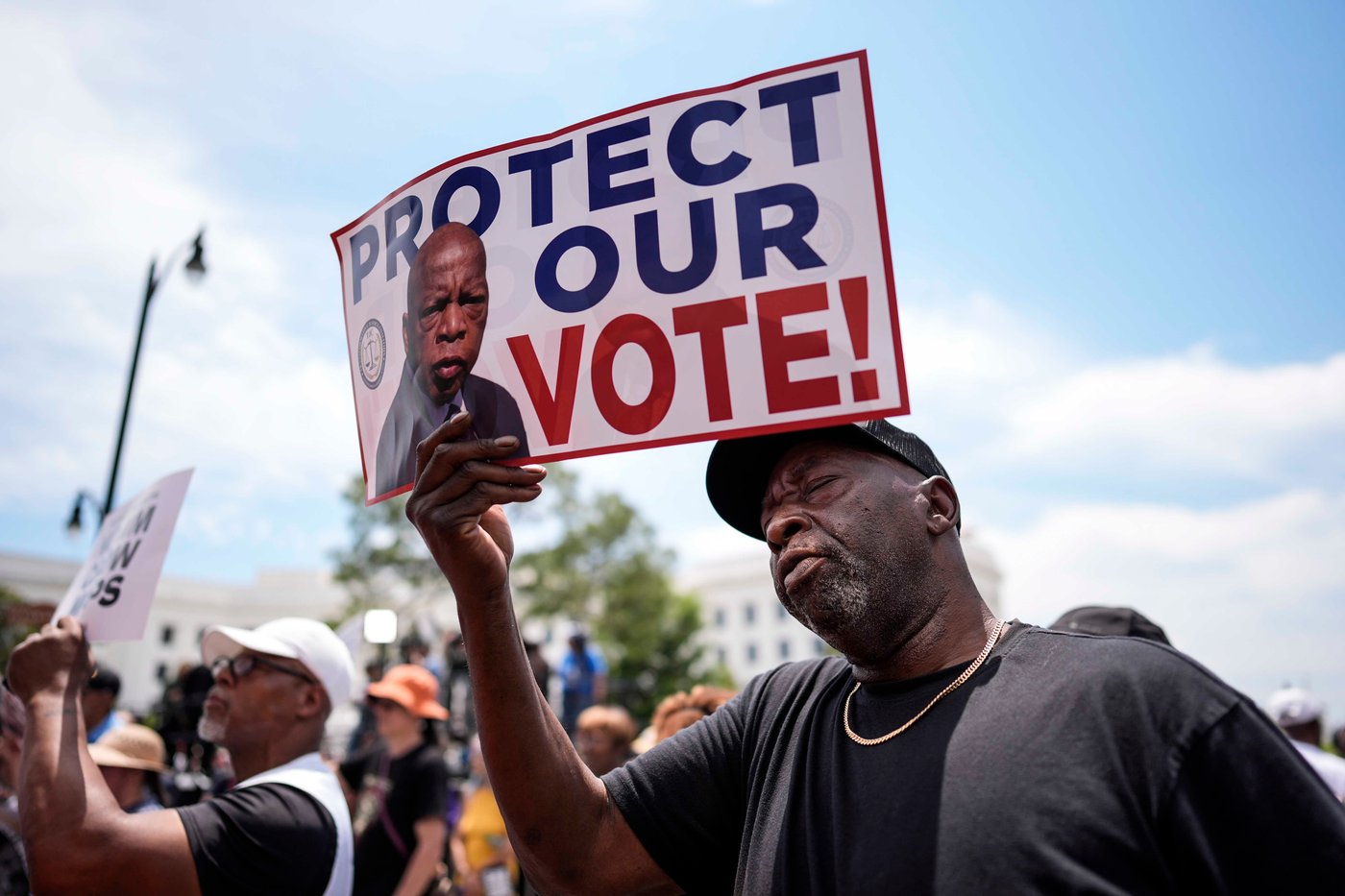
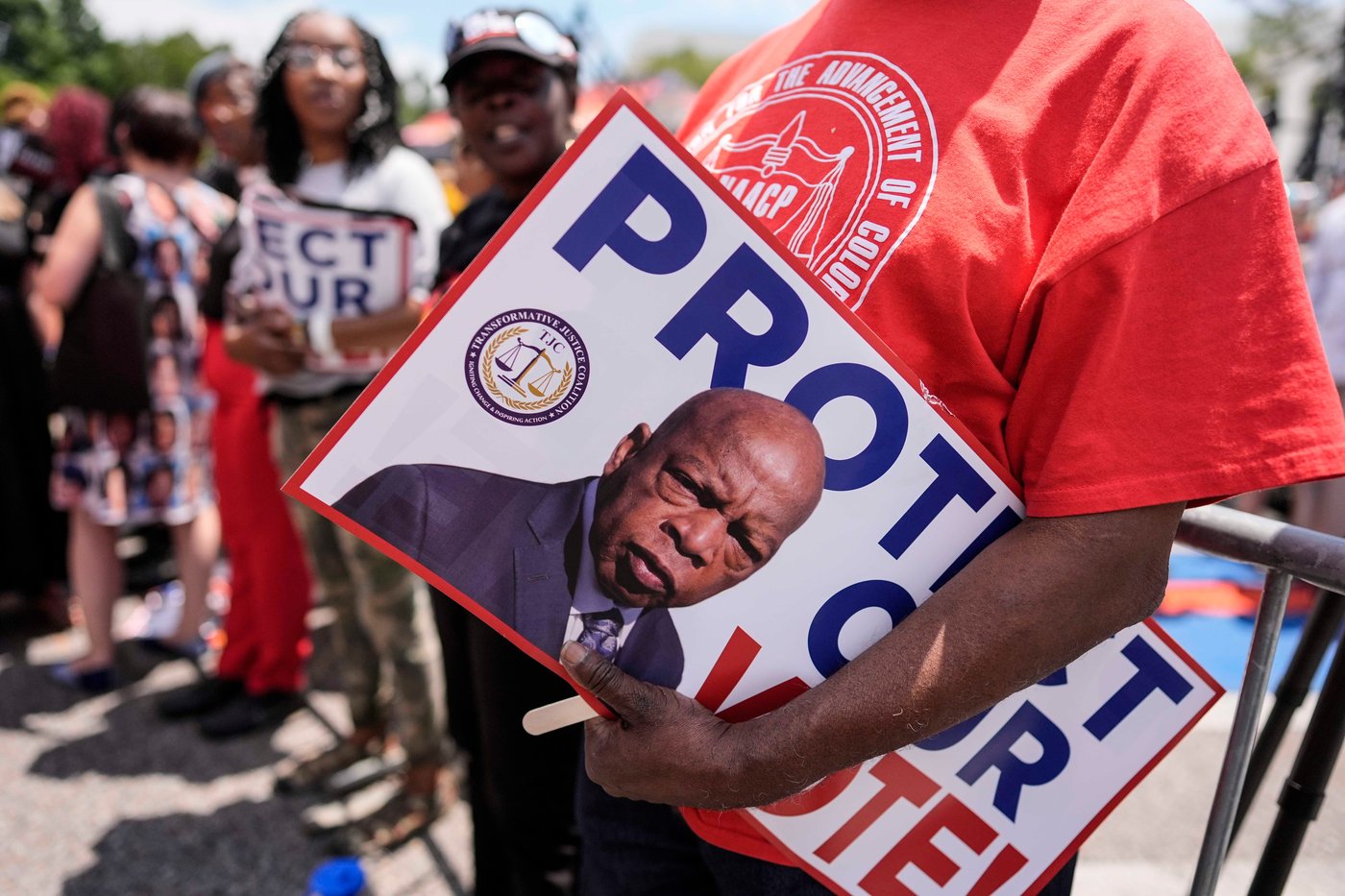
Thousands of people gathered in Montgomery, Alabama, on Saturday to stand up against efforts by conservative states to undermine the voting rights of Black Americans. The event took place in a city that has long been at the heart of the Civil Rights Movement, serving as a symbol of both struggle and progress.
The rally was organized in response to a U.S. Supreme Court ruling that weakened the Voting Rights Act, which had previously protected the right to vote for marginalized communities. This decision has led to a wave of redistricting efforts across southern states, aimed at diluting the political power of Black voters.
A Legacy of Resistance
Speakers at the event emphasized the importance of returning to the site where the fight for civil rights began. Montgomery is known for the Montgomery Bus Boycott and the Selma-to-Montgomery voting rights march, both pivotal moments in the movement for equality.
The Rev. Bernice King, daughter of the Rev. Martin Luther King Jr., addressed the crowd near the spot where her father once spoke about voting rights. She highlighted the significance of the gathering, calling it a return to a "hallowed place" to reclaim and redeem the legacy of those who fought for justice.
“Sixty-one years later, we come back as new generations to this same hallowed place to reclaim and redeem that legacy because the recent Supreme Court decision demands our presence,” King said. “It was not only a legal decision, y’all, it is a moral disgrace and a shameless assault on Black political power.”
Voices from the Frontlines
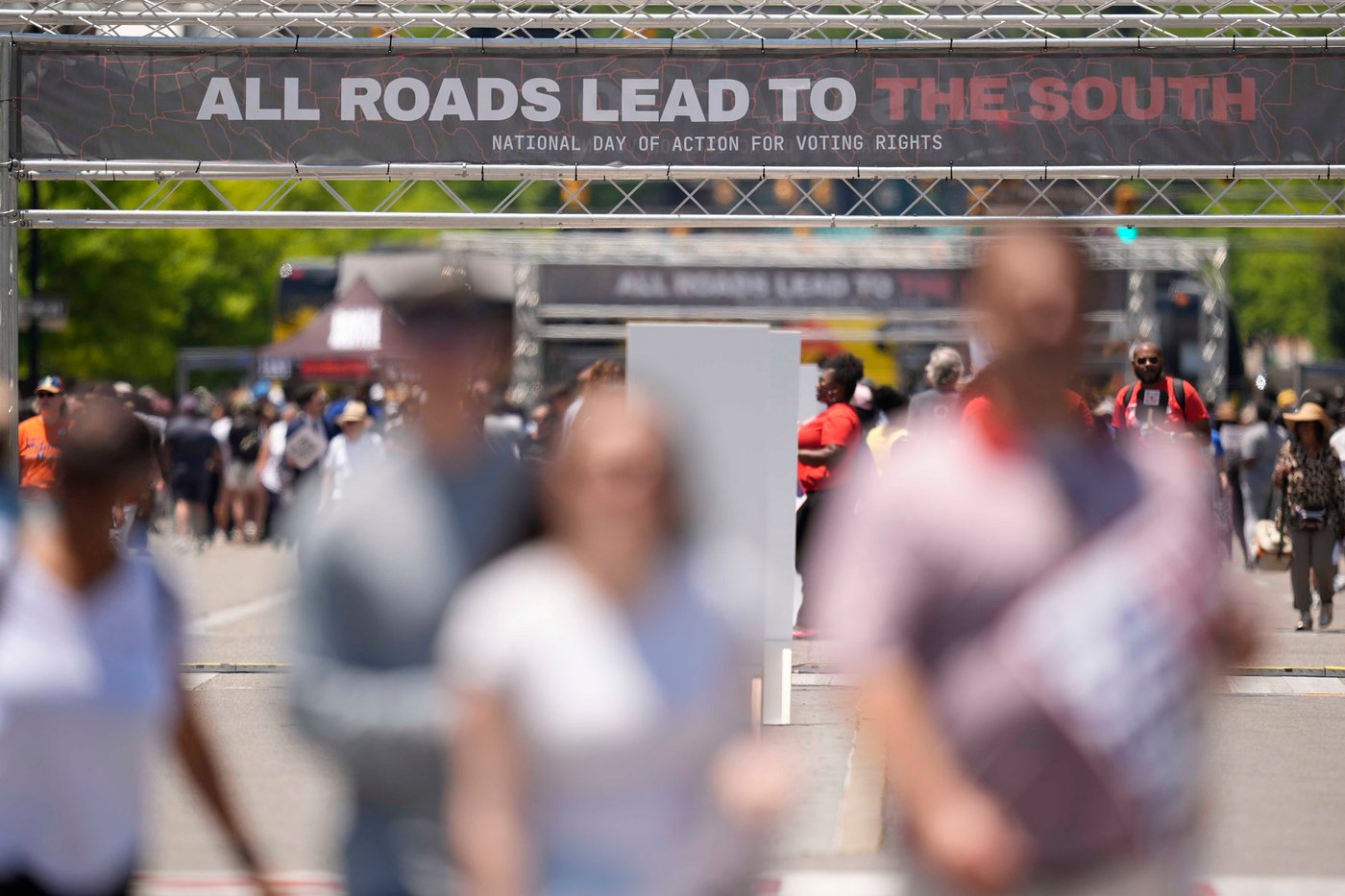
Civil rights leaders, Democratic members of Congress, union leaders, and pastors participated in the rally, which was titled “All Roads Lead to the South.” The event took place in front of the Alabama Capitol, a location with deep historical significance. It was here that the Confederacy was formed in 1861 and where the elder King spoke in 1965 at the end of the voting rights march.
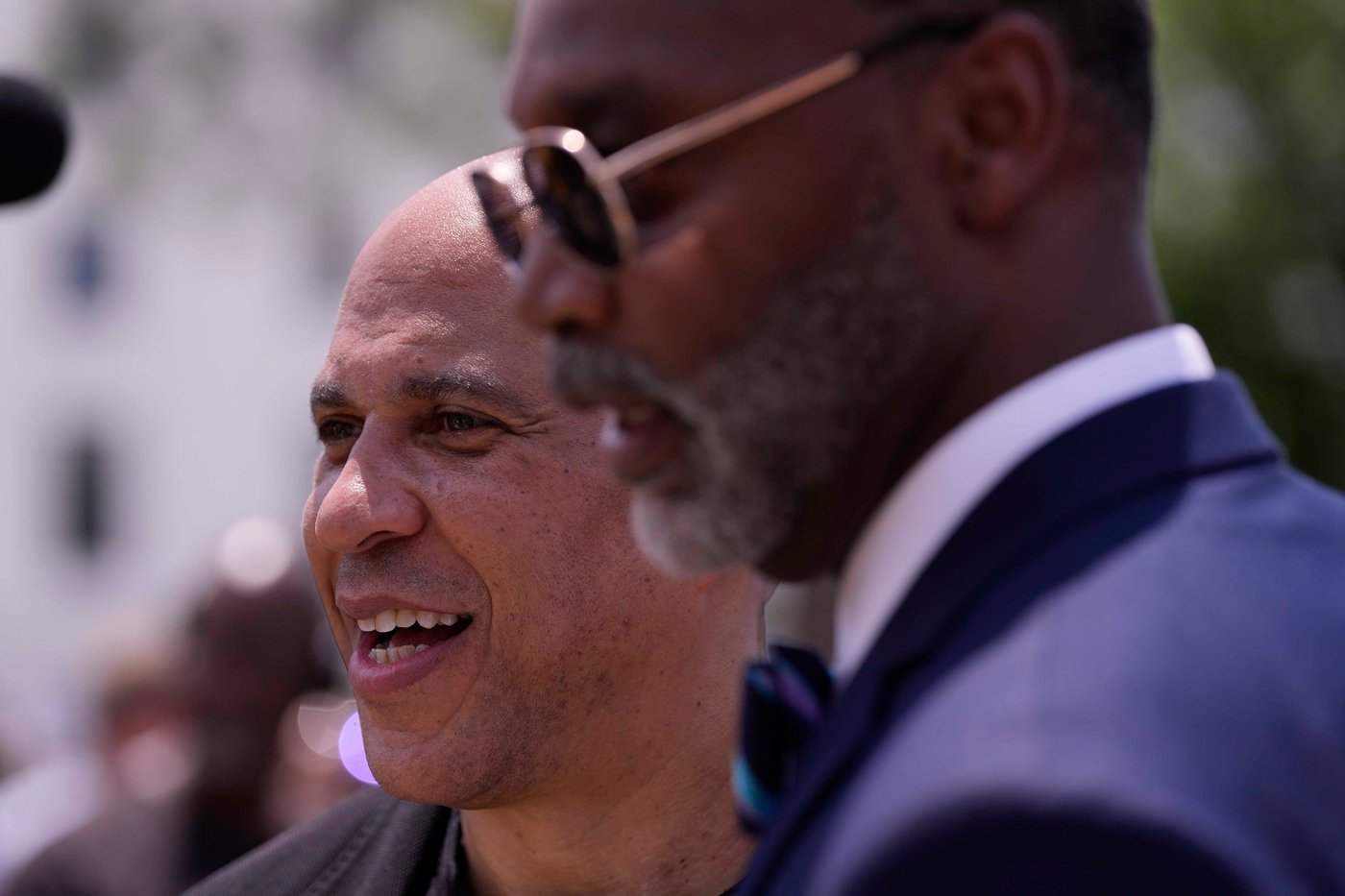
U.S. Sen. Cory Booker of New Jersey called Montgomery “sacred soil” in the fight for civil rights. U.S. Rep. Terri Sewell of Alabama described the gathering as more than a protest—it was “a call to action.” Speakers urged voters to use their voices at the ballot box.
“They think they can draw us out of power. They do not know the sleeping giant that they just awakened,” said U.S. Rep. Alexandria Ocasio-Cortez, a Democrat from New York.
Echoes of the Past
Attendees stood for hours in the summer heat, chanting slogans like “we won’t go back” and “we fight.” Many felt that the current efforts to redraw voting districts echoed the struggles of the past.
Camellia A Hooks, 70, of Montgomery, reflected on the events of the 1960s. “We lived through the ’60s. It takes you back. When you think that Alabama’s moving forward, it takes two steps back,” she said.
The recent Supreme Court ruling involving Louisiana has further weakened the Voting Rights Act, which had already been weakened by a 2013 decision. This has led to stricter voter ID laws, registration restrictions, and limits on early voting and polling place changes—measures that disproportionately affect Black voters.
A Fight That Never Ends
Veterans of the Civil Rights Movement are alarmed by the speed at which these protections have been rolled back. Kirk Carrington, 75, was a teenager during the 1965 Selma march, when he witnessed violent attacks on peaceful protesters. He said it was disheartening to see the same issues persist after more than six decades.
“It’s really just appalling to me and all the young people that marched during the ’60s, fought hard to get voting rights, equal rights and civil rights,” Carrington said. “It’s sad that it’s continuing after 60-plus-odd years that we are still fighting for the same thing we fought for back then.”
The Impact on Montgomery
Montgomery is home to one of the congressional districts that is being altered following the Supreme Court ruling. A federal court in 2023 redrew Alabama’s 2nd Congressional District after finding that the state had intentionally diluted the voting power of Black residents.
The court ruled that there should be a district where Black people are a majority or near-majority, giving them a fair chance to elect their candidate of choice. However, the Supreme Court’s decision has opened the door for a different map that could allow the GOP to reclaim the seat.
A Battle for Representation
U.S. Rep. Shomari Figures, who won the district in 2024, emphasized that the dispute is not about him but about the opportunity for representation. “People tell us that we are not who we once were,” Figures said. “That is true, but we certainly aren’t where we need to be."
Alabama House Speaker Nathaniel Ledbetter, a Republican, said the ruling provided an opportunity to revisit a map that was imposed by the federal court. “There’s been a push through the courts to try to overtake some of these red state seats, and that’s certainly what happened in that one,” he said.
A Continued Struggle
Shalela Dowdy, a plaintiff in the Alabama redistricting case, vowed that the fight will continue both inside and outside the courtroom. A three-judge panel has scheduled a May 22 hearing on a request to stop Alabama from switching maps.
“We are not going down without a fight. We are not going back to Jim Crow maps,” Dowdy said.
The Road Ahead
As the battle over voting rights continues, the people of Montgomery remain steadfast in their commitment to justice. Their voices echo the same determination that fueled the Civil Rights Movement, proving that the fight for equality is far from over.
Post a Comment for "Where civil rights began, groups stand firm for Black political power"