
The tactic that ended the zero break
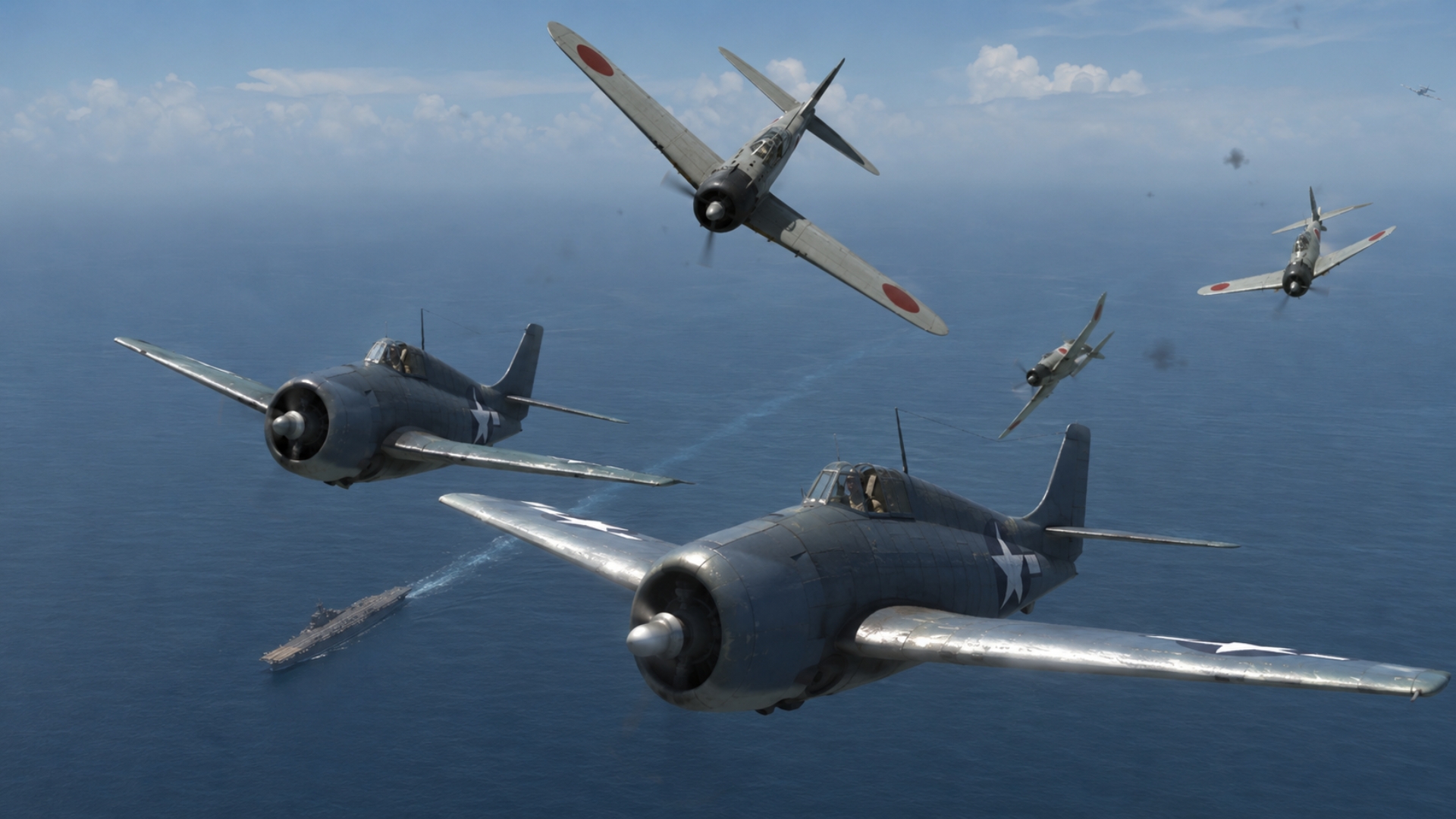
The Zero Changed the Rules of the Fight
In the early months of the Pacific War, the Mitsubishi A6M Zero presented a formidable challenge to American fighter pilots. This aircraft was lighter, more agile, and capable of tighter turns than the Grumman F4F Wildcat. Japanese naval aviators were also among the most skilled pilots globally, many with combat experience from operations in China. In a slow turning fight, the Zero's advantages could be devastating.
Despite its weaknesses, the Wildcat had several strengths. It was durable, able to withstand more damage than the Zero, and equipped with powerful .50-caliber machine guns. However, these advantages only mattered if the pilot survived long enough to use them.
The lesson became clear: American pilots could not engage the Zero as they would an ordinary opponent. Attempting to match the Zero in a turning contest meant playing into the enemy’s hands.
John Thach Saw a Geometry Problem
Lieutenant Commander John S. “Jimmy” Thach, who commanded Fighting Squadron Three, recognized the danger before many pilots had fully experienced it. According to the National Naval Aviation Museum, Thach is one of the most renowned figures in naval aviation due to his development of the "Thach Weave," a defensive fighter tactic designed to counter the Japanese Zero.
Thach's insight was straightforward yet effective. A single Wildcat could be outmaneuvered by a Zero. However, two Wildcats working in tandem could change the dynamics of the engagement. If one American fighter was pursued, it would turn toward its wingman instead of away. The two aircraft would cross paths, and as the Zero followed the targeted Wildcat, it would fly into the line of fire of the second Wildcat.
The objective was not to out-turn the Zero but to make the Zero pay for committing to the chase.
The Matchsticks Became a Survival System
A well-known story tells of Thach using matchsticks to demonstrate the maneuver, highlighting what made the tactic unique. It did not require a new aircraft or additional speed, horsepower, or climb performance. Instead, it demanded discipline and trust. Two pilots had to fly toward each other at high speed, cross safely, reverse, and repeat the pattern without breaking apart into isolated duels.
This approach went against a pilot’s natural instincts. When attacked, the urge was to escape individually. Thach's solution required the opposite: turning toward the other aircraft and tightening mutual support.
The tactic later became known as the Thach Weave, or beam defense position. Standard summaries describe it as a formation where two or more friendly aircraft weave across each other’s paths, drawing an attacker into the firing line of the wingman.
The idea was elegant because it transformed the Wildcat’s weakness into a trap. While the Zero could still turn tighter, a tighter turn no longer guaranteed safety.
Midway Gave the Weave Its Real Test
The maneuver’s most significant early combat test occurred during the Battle of Midway in June 1942. Thach flew from the USS Yorktown during one of the battle’s critical days. In combat against Japanese Zeros, his Wildcats used the weaving tactic to protect one another and disrupt attacks. Naval History and Heritage Command highlights that Thach’s work provided U.S. Navy fighter pilots with practical tactics to counter enemy fighters with superior speed and maneuverability.
Midway did not prove the Wildcat was suddenly superior to the Zero in every aspect. It showed something more practical: the Wildcat could survive and fight if flown as part of a coordinated team.
This was crucial because carrier air combat was not a series of clean duels. It involved escort, interception, defense, confusion, and split-second decisions. A tactic that denied the Zero an easy tail shot could save aircraft, pilots, and ships.
The Weave Did Not Make the Zero Harmless
It is important to recognize that the Thach Weave was not a miracle solution. The Zero remained a dangerous opponent. Japanese pilots adapted over time, sometimes avoiding the trap, attacking from multiple angles, or forcing the defending pair to break their rhythm. Later combat experiences showed that the weave was not invincible, especially when used poorly or when outnumbered.
However, it changed the psychology of the fight. Before the weave, a Zero pilot who got behind a Wildcat could expect the American to turn, climb, dive, or run alone. After the weave spread, a tail chase became riskier. The pursued Wildcat might be bait, and the wingman might be waiting with six .50-caliber guns.
That uncertainty was significant. A tactic does not have to destroy every attacker to be valuable. It only needs to make the enemy hesitate, break off, or choose a less effective attack.
Teamwork Replaced the Duel
The deeper lesson of the Thach Weave was that the era of the pure individual dogfight was coming to an end. The Wildcat could not become a Zero, and it did not need to. American pilots learned to emphasize mutual support, formation discipline, altitude, speed, and teamwork. The weave fit into this broader adaptation.
It also aligned with the Wildcat’s real strengths. The aircraft was tough, stable, and heavily armed. If it could create even a brief firing opportunity, it could inflict serious damage on the lighter Japanese fighter.
The Zero was a superb individual dueling machine. The Wildcat became more dangerous when it refused to fight alone.
The Tactic That Saved Time and Lives
The Thach Weave did not win the Pacific War by itself. No single tactic could achieve that. Its significance lies in what it represented. American pilots faced a superior turning fighter and could not immediately replace their aircraft. Thach did not pretend the Wildcat was something it was not. He studied the problem, accepted the aircraft’s limitations, and found a way to make two weaker positions stronger together.
That is why the maneuver became famous. It took the Zero’s greatest strength — its ability to get behind an opponent in a turn — and made that commitment dangerous. It turned the wingman from a nearby friendly aircraft into the center of a defensive trap.
The Zero did not stop being deadly. But after the Thach Weave, American pilots had a way to make it break off. And in the Pacific sky of 1942, survival was the first step toward victory.
Post a Comment for "The tactic that ended the zero break"