
Vodafone refuses to refund £942 for cancelled deal from six years ago: Sally resolves it
A Story of a Mistake and a Lesson Learned
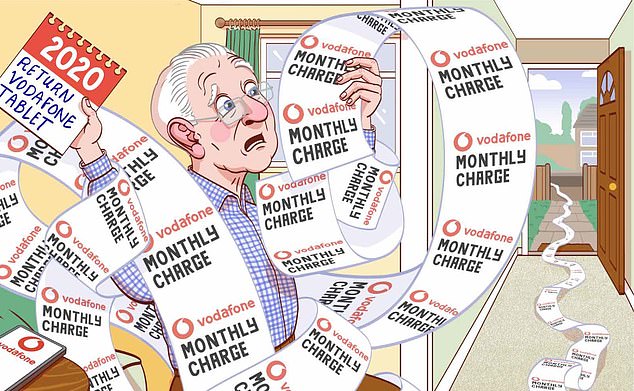
A few years ago, I received a cold call from Vodafone offering me a cheaper mobile tariff as well as an offer of a free tablet, which I accepted. The tablet arrived but I realized there was an extra monthly charge for this device, so I didn’t want it. I rang Vodafone and it was agreed I could return it. I thought that was the end of the matter. Recently, I discovered I had been paying a monthly sum for this unwanted item all this time and Vodafone won’t refund me. I must have paid hundreds of pounds for something I never used.
I am a disabled 85-year-old and feel I’ve been taken advantage of. Please help. T. W., Denbighshire.
Sally Hamilton replies:
It was only when discussing various financial affairs with your family that you realized your monthly mobile phone tariff appeared excessive. You dropped into your local Vodafone store to see if it could shed some light on the inflated bills. When the assistant looked at your account on his computer, he landed the bombshell that on top of your mobile phone bill, you were paying about £15 a month for a device plan that you thought you’d canceled.
You asked the assistant to cancel this contract immediately, but he said he was unable to do this and handed you a number to call. The person you spoke to did then process the cancellation. But after speaking with another department, they told you there would be no refund of the overpayments. You were horrified.
Once I asked Vodafone to investigate your case, it discovered that it wasn’t a tablet you had received but a dongle. A dongle is a gizmo that plugs into a laptop or PC and gives it access to the internet via the mobile phone network. Monthly charges apply, as they do with a mobile phone. It doesn’t matter what item it was – you didn’t want it and were being charged for something you didn’t use.
I put it to Vodafone that something had clearly gone wrong at its end and that it should work out how much you had paid and refund you without delay. A few days later, the firm put its hands up to a mistake. It confirmed you had been offered the dongle in May 2020, which you had initially agreed to but a few days later, when you realized it wasn’t something you needed, you arranged with Vodafone to return it. This request was set in motion and the dongle sent back. At this point, an error was made at Vodafone, with the return request canceled rather than actioned, leaving the dongle line active.
Vodafone contacted you directly to apologize for its blunder and confirmed the line is now disconnected and your £942 overpayments repaid. It added a further £150 as an apology. You were delighted and thanked me for my intervention.
A spokesman for Vodafone says: “We’re sorry for the inconvenience caused to our customer due to an error on our behalf. We can confirm that we have resolved the issue for the customer and that they have been fully refunded.”
Your case is an example of why we all need to keep an eagle eye on bank statements, especially when there has been a situation where a contract may have been set up and quickly canceled. Under Consumer Contracts Regulations, customers have 14 days to change their mind, so long as the arrangement was made online, over the phone or by post. When it is set up in a shop, the right to cancel is not automatic, though many providers offer a 14-day cooling-off period. Even canceling a contract that has been actively used can cause issues if customers don’t take the correct steps.
When a particular deal ends or a direct debit is canceled, this doesn’t mean the contract will automatically end. Customers routinely get moved on to a rolling contract and will be billed monthly until they contact the company to cancel. Providers typically ask for a 30-day notice before ending a contract, so it is wise to make a note on the calendar to get the timing right and avoid extra bills. It is best to do this either online or by phone as it may not be possible to do in person at a store, as T.W. discovered when they tried to unravel the dongle deal. Watch out when canceling early as exit charges usually apply.
A Trapped Parcel and a Problem with a Locker
For over six weeks, a parcel of mine containing a rare football shirt has been trapped inside a parcel locker operated by Yeep (Delivering London Limited) in Witney, Oxfordshire. The locker accepted the parcel, but it was never collected by the DPD courier network. The item is not lost but is in the locker. I have made multiple attempts to resolve this. It seems unreasonable a customer can be prevented from retrieving their property from a known location, with no timeframe or accountability. Please help. O. J., Oxfordshire.
Let Me Know
Have you got a conservatory in your home? I’d love to hear about the unusual ways people are using the space or how you’ve added value to it. Email: sally@dailymail.co.uk
Sally Hamilton replies:
Parcel lockers have surged in popularity in recent years because they are a nifty way of avoiding the need to be at home when a package arrives. They are also used to send or return items, with a courier firm picking up from the locker. You restore old shirts and had arranged to have this one collected by DPD from the locker and then delivered to the buyer. The convenience of Yeep’s locker service went out the door when your courier, DPD, couldn’t access it and nor could you retrieve it.
You deposited it on February 10 but six weeks later you still weren’t permitted to pick it up as you had been told the locker had been ‘switched off’ and required an engineer to come and unlock it. You were on the point of taking legal action but decided to ask if I could persuade the firm to retrieve your package. While I was in the process of chasing Yeep, you received news an engineer had got to the locker and your parcel retrieved, with arrangements being made for a return. Though relieved your package had been rescued, you wanted me to elicit an explanation from Yeep. On investigation, it told me that it was not, in fact, a technical fault, it was the locker’s position in a multi-storey car park that was to blame.
Yeep says: “Due to access constraints at the location, specifically vehicle height restrictions within a multi-storey car park, DPD drivers were unable to service the locker as required. We acknowledge that we should have acted more promptly once we became aware of the situation.”
Straight to the Point
In July 2024, I bought a phone charger from my local O2 shop but it recently broke. It had a two-year warranty, so I took it back to the store, but staff said I had to return it to the manufacturer. When I said my contract was with them, the manager said the cable had been stretched, so it couldn’t be exchanged. I paid only £10 for it, but surely O2 are under obligation to honor the guarantee? A. M., via email.
O2 says the warranty is a product warranty, so it is the responsibility of the manufacturer. You should contact them directly.
Our electricity supply was cut off for eight hours in February for vital repairs. However, we had to leave our home to find somewhere to have a hot meal and drinks. I contacted our operator, Electricity North West, and asked for compensation, but it refused. A customer service agent later called and said a cheque for £30 would be sent, but I am still waiting for it months later. S. M., via email.
Electricity North West says it has sent you multiple cheques in the months since February, but you have not received them. It has now increased its offer to £50 as an apology and will send it via bank transfer.
In October last year, a connecting flight with Avianca Airlines was canceled. When I complained, Avianca told me this cancellation was due to adverse weather. But airport staff announced it was due to a mechanical problem. The Civil Aviation Authority has said I have a case for compensation and it has contacted the airline. Avianca has had ten weeks to respond, but I’ve not heard anything. G. H., via email.
Unfortunately, Avianca has failed to respond. I suggest you take your case to the Passenger Advice and Complaints Team (run by the CAA) if you have not already, or consider legal action.
Post a Comment for "Vodafone refuses to refund £942 for cancelled deal from six years ago: Sally resolves it"