
Calgary Library's First AI Artist-in-Residence
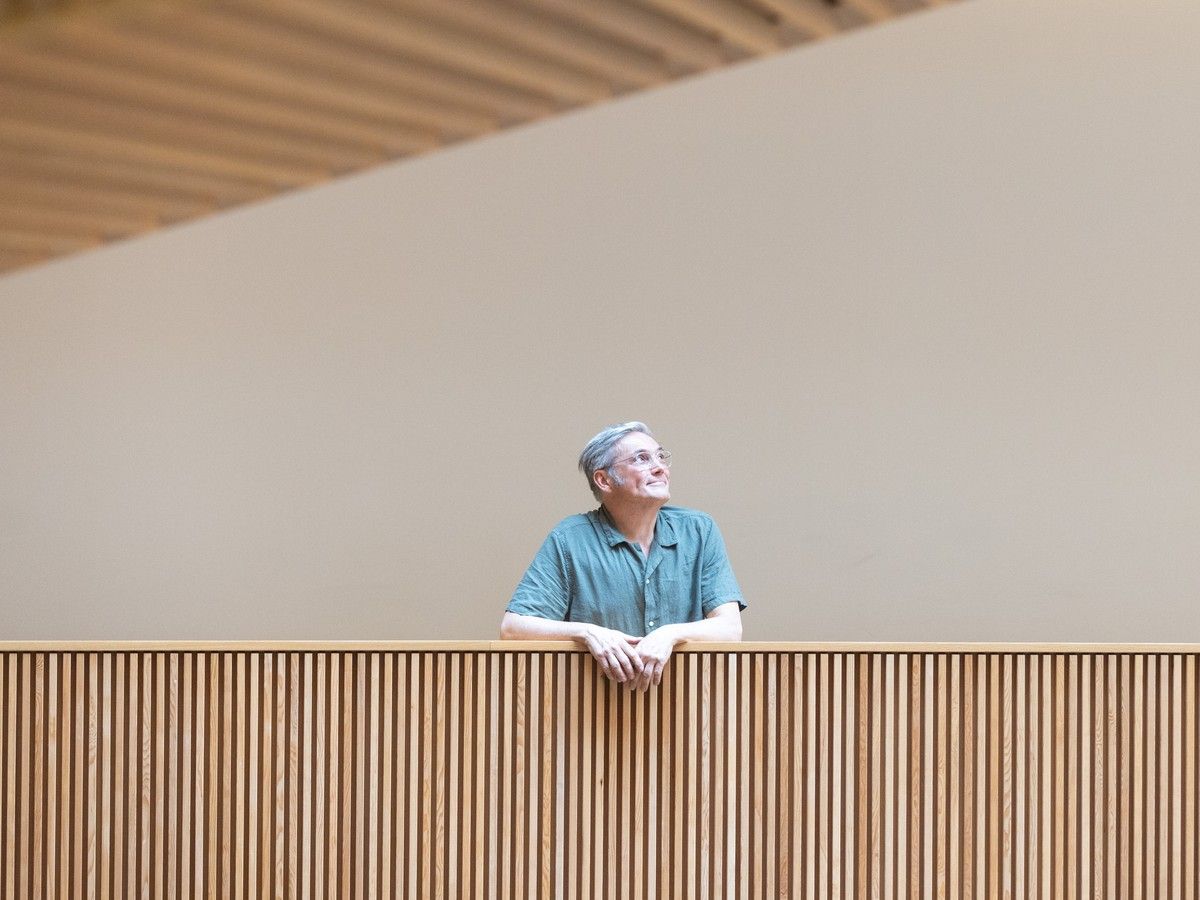
A New Approach to AI Art
It’s Tuesday afternoon, and Paul Freeman is already on his second day as the Calgary Public Library’s creative in residence, exploring the intersection of artificial intelligence and art. Every Tuesday and Wednesday until Labour Day, Freeman will be available in his office for the public to learn more about his work and to ask questions about AI art.
“I’m here not as an AI defender or an AI advocate, but more as someone who’s interested in asking these questions and open to other ideas about AI, art, and what it could be,” Freeman said. “I’m definitely here to be a resource to the library and to the city. I’ve developed this provocative practice, and I’m eager to share it and look forward to the public debate.”
Freeman, a Calgary-born artist and graduate of AUArts (formerly ACAD), first became involved with stable diffusion and the concept of using AI to generate images in 2002. Prior to this residency, he has been exploring ways to creatively engage with the technology while being mindful of the controversies surrounding AI art.
The Challenge of Using AI in Workshops
One of Freeman’s main challenges was finding a way to use AI in a public workshop that “didn’t just suck.” He wanted to avoid putting AI in the position of “you tell me and I’ll do it for you,” which he believes is one of its fundamental problems.
“If we want to use AI as a shortcut, as an easy way out, or as a way of avoiding doing things ourselves, it invariably turns around and bites us pretty hard,” Freeman explained. He emphasizes the importance of human intention in the creative process.
Collaborative Tools and Human Intention
Through his tenure as the library’s creative in residence, Freeman wants people to understand how AI can be used as a collaborative tool. The controversy surrounding the role of AI in art is undeniable, but what sets AI art apart from the “slop” found online is when human intention is removed from the product.
“If you take critical thought, desire, and intention out of it, anyone can create a lot of junk real fast,” Freeman said. His approach involves using prompts to generate several images, layering them together, and combining them before sending them through AI again to morph into something new.
These works can be over 5 billion pixels in scale, and his ambition is to create an image with great detail that can cover a wall. “I feel like what distinguishes what I’m doing from other stuff that might be out there is there is a ton of work involved,” Freeman said. “There are thousands and thousands of decisions that have been made by the time this thing has grown to a billion pixels, and that’s the same as what a painter is doing, pushing mud around on a canvas.”
Engaging in Conversations About AI
Freeman is also interested in having conversations about the broader implications of AI in art. A fundamental question all artists face is how to prevent their work from being stolen by AI — something that needs to be addressed at a policy level, according to Freeman.
He hopes to convince those who raised concerns about the position through his tenure and the works that will be created. At the end of his term, he will showcase the work he created while at the library.
“I’m also really interested in having those conversations with people and I’ve written a few pieces,” Freeman said. “One of them aims itself at helping people who’ve decided they hate AI to maybe broaden their view of it a little bit. Another piece of writing brings ancient ideas like Narcissus, Icarus, and Daedalus, old myths about power, and how they could be applied to AI today.”
Creating Space for Dialogue
The Calgary Public Library has always been an important space for challenging conversations and ideas, said Mary Kapusta, executive director of communications engagement. Working with a wide range of creatives through the residency program brings in new perspectives and allows for these processes to take place.
“We don’t have to have all the answers, but we can create space for conversation and for learning,” Kapusta said.
For more information on Freeman’s residency, upcoming works, and workshops, visit calgarylibrary.ca.
Post a Comment for "Calgary Library's First AI Artist-in-Residence"