
Scientists Create Self-Sustaining Cells, Closer to Building Life From Scratch
A New Step Toward Creating Life from Scratch
For decades, scientists have been striving to create life from non-living materials. This pursuit has led to the development of artificial cells that can perform some of the functions typically associated with living organisms. Recently, a team led by synthetic biologist Kate Adamala from the University of Minnesota has made significant progress in this area.
Their research, published on the preprint server bioRxiv, describes the creation of simple artificial cells that can feed, grow, multiply, and even compete for resources. While these synthetic cells are not fully alive—they cannot reproduce indefinitely or produce all their necessary components—they exhibit many characteristics of life. According to Adamala, this is a proof of principle that molecules can reconstitute behaviors previously thought to be exclusive to natural cells.
How the Artificial Cells Were Created
The researchers started by attempting to recreate natural cell division, but they eventually shifted their approach to building cells from the ground up. This allowed them to understand each component in detail. The team created synthetic cell membranes that could gather proteins from the environment. When enough proteins were collected, the membrane would warp inward and split into two.
To build a whole cell, they began with water-filled spheres enclosed by oily membranes called liposomes. They then inserted DNA encoding only 36 genes for essential functions, taken from a virus and the bacterium Escherichia coli. (E. coli has about 4,400 genes.)
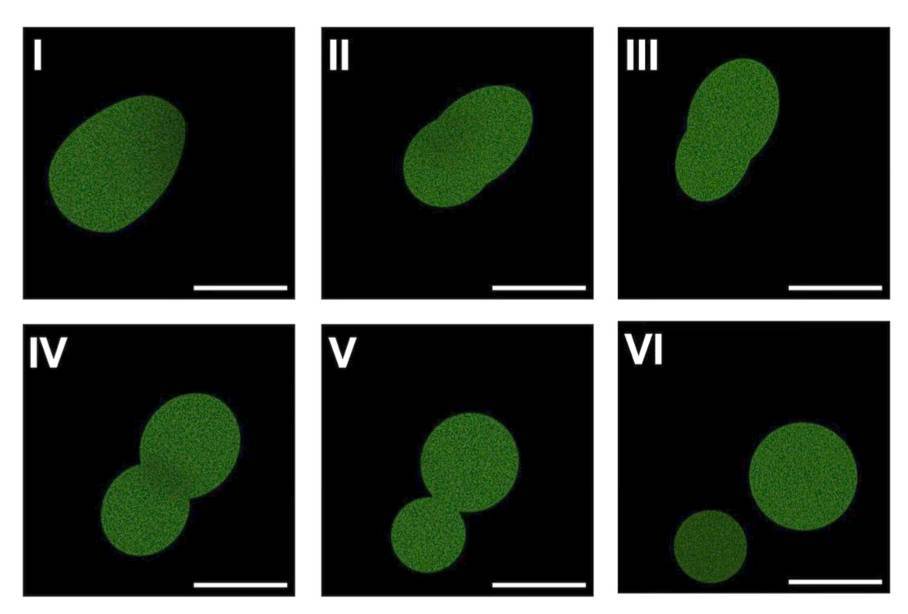
The resulting cells, named SpudCells due to their potato-like appearance, were an homage to Sputnik and Adamala’s Polish heritage. As they floated in laboratory flasks filled with a nutrient-rich soup, the SpudCells began behaving like living organisms. They consumed ATP, the primary energy currency for all known life, and fused with “feeder” liposomes containing larger necessities such as enzymes.
As the SpudCells consumed nutrients, they expanded and eventually replicated using the same cell division technique that had initiated the project. Special proteins were added to trigger membrane splitting, resulting in new cells that continued to grow.
Evidence of Evolutionary Potential
The synthetic cells also demonstrated a rudimentary capacity for evolution. When pitted against a mutant strain designed to bind more tightly to feeder bubbles, the mutants outcompeted the original SpudCells over five generations. This suggests that the cells could potentially evolve under selective pressures.
Despite these achievements, SpudCells are far from perfect replicas of natural life. Although they contain the necessary genes, they currently lack the ability to produce their own ribosomes—the cellular factories responsible for protein synthesis. Scientists manually supply them with E. coli ribosomes via feeder liposomes, but even then, the protein-making machinery stops functioning after five to ten generations.
Mixed Reactions from the Scientific Community
Not everyone is optimistic about the implications of this research. Seraphine Wegner, a biochemist at the University of Münster in Germany, calls the paper “very cool” but questions whether it brings scientists closer to creating a fully synthetic cell. John Dupré, a philosopher of biology at the University of Exeter in England, wonders if these engineered structures will ever surpass modified bacteria in manufacturing drugs, food, fuel, or other materials. He also questions whether they will reveal much about the foundations of life.
However, Adamala remains hopeful that SpudCells could one day produce substances that natural cells cannot, such as new medicines. She has partnered with Drew Endy, a synthetic biologist at Stanford University, to establish a nonprofit research organization called Biotic. This group aims to foster collaboration on scientific advances, including artificial cells.
Endy compares SpudCells to the Wright brothers’ first controlled flight in 1903. “The Wright flyer flying for 12 seconds doesn’t get you a 737,” he says. “This is just the beginning.”
Future Prospects
While the current work represents a significant milestone, there is still much to learn and improve upon. The development of fully functional, self-sustaining artificial cells remains a distant goal, but the progress made by Adamala and her team offers a glimpse into what may be possible in the future. As research continues, scientists may uncover new insights into the nature of life itself and the potential for creating entirely new forms of biological systems.
Post a Comment for "Scientists Create Self-Sustaining Cells, Closer to Building Life From Scratch"