
Tourism Boosts Housing Prices in Spain by €3,800 per Home
The Impact of Air Travel on Housing Markets in Europe
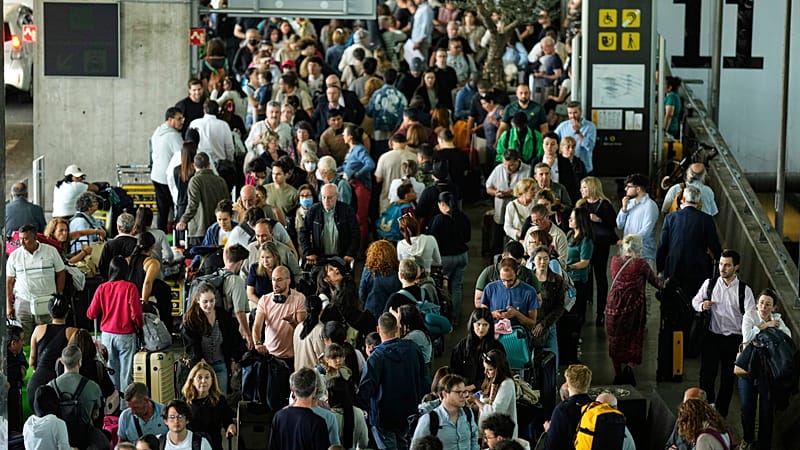
The influx of tourists arriving by air has been identified as a contributing factor to the rising rents and house prices across Europe, with Spain being particularly affected. A study conducted by the New Economics Foundation (NEF) and commissioned by the European Federation for Transport and Environment (T&E) highlights this connection. The findings have been supported by various campaign groups that are critical of property speculation, especially regarding short-term rentals and the purchase of homes by foreign buyers.
According to the analysis, there is a clear correlation between the increase in air travelers in seven European countries—particularly Spain, Portugal, Italy, and Greece—and the rise in both rental prices and home purchase costs between 2019 and 2025. The reverse trend is also observed: in countries where this type of tourism has declined, such as Belgium, Denmark, Germany, the Netherlands, and Poland, house prices have also decreased, albeit to a lesser extent.
In Spain specifically, the 12.8% increase in air travelers over the past seven years is estimated to have raised the average home purchase price by €3,800 and increased rental prices by up to €236 (a 1.7% rise). Analysts predict that rents could go up by an additional €217 by 2031 due to this factor.
However, as noted in another analysis of the Spanish housing situation by the Bank of Spain, the impact varies significantly between cities and regions depending on their level of tourist demand. This means that the effects are not uniform across the country. For instance, central Valencia may experience different outcomes compared to Lugo.
The Bank of Spain’s own research has already pointed out the issue of homes used for tourist or seasonal rentals, which number around 400,000, and second homes purchased by Spaniards or foreigners, with an average of 50,000 dwellings bought each year. While these factors contribute to the problem, they do not fully explain the challenges faced in maintaining purchasing power in Spain and other parts of the world.
Housing Shortages and Bureaucratic Challenges
The shortage of housing in Spain, especially in cities and autonomous communities under the most pressure, combined with bureaucratic hurdles, overlapping regulations between different levels of government, inadequate urban planning, and a lack of labor, all contribute to rising prices.
Rising Prices and Environmental Concerns
The T&E study also reveals that both Madrid-Barajas airport and El Prat in Barcelona are expected to surpass Schiphol in Amsterdam in terms of tourist arrivals in the coming years. Barcelona, in particular, plans to expand its terminals through a controversial redesign that could affect the La Ricarda wetlands. However, the regional government led by Salvador Illa insists that the project has been reworked to avoid any negative impact.
Using data from Eurostat and media reports, analysts estimate that over the past five years, there were 9.2 tourists for every resident in the Balearic Islands, 4.9 for every resident of the Canary Islands, and 2 for every inhabitant of Catalonia, while the European average stands at 0.9. Spain has invested €12.9 billion in airport infrastructure at Barajas and El Prat.
They also note that in 2025, Spain and Italy exceeded their pre-pandemic aviation emissions, standing 14% and 10% above 2019 levels respectively. The tourism sector was responsible for 8.8% of global carbon emissions in 2019.
Wages and Productivity Disparity
Moreover, wages and productivity are not keeping pace with the increase in tourist numbers. In 2023, the study notes that hospitality accounted for 10% of all hours worked in Spain but only 5% of national gross value added, indicating low productivity in the sector. Between 2008 and 2024, real wages in Spain’s hospitality industry recorded a slight decline despite the sharp increase in foreign tourist arrivals and the progressive rise in the minimum wage over the past eight years.
Post a Comment for "Tourism Boosts Housing Prices in Spain by €3,800 per Home"